
In the year 2026, the landscape of science fiction horror is being reshaped by a singular, terrifying force: Hulu's Alien: Earth. Already hailed as a masterpiece, whispers are growing louder that this chilling series is not just content with being the next great Alien chapter—it's audaciously positioning itself to become the spiritual successor to Jurassic Park. For decades, these two titans of terror have ruled their respective domains: one with genetically resurrected dinosaurs, the other with a perfect, biomechanical killing machine. But what if the lines between them are about to blur into a horrifying, exhilarating new frontier? The stage is set on Neverland Island, and the result could be the most terrifying theme park disaster since guests stopped being the customers and started being the menu.
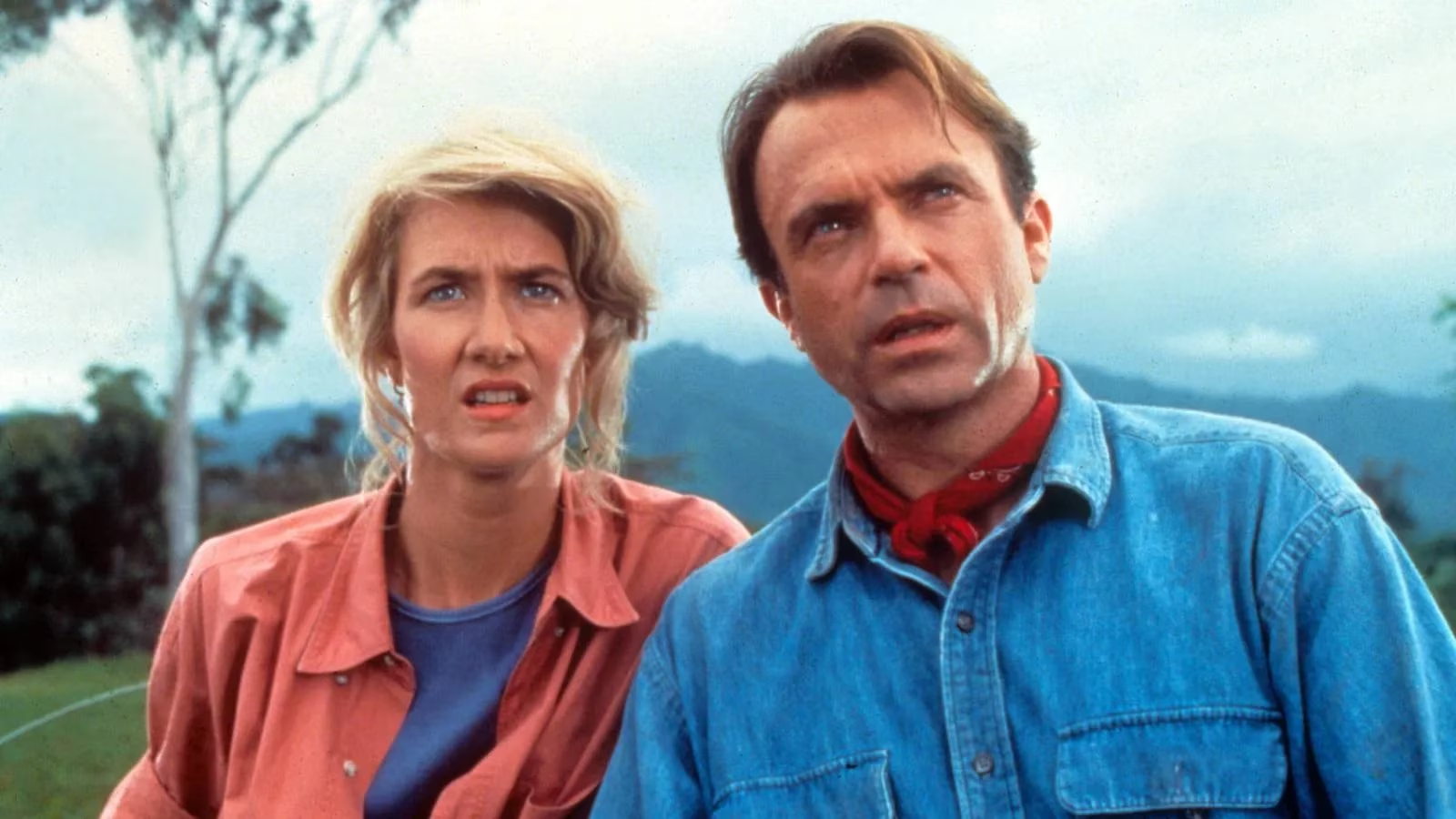
The Island of Horrors: From Isla Nublar to Neverland
The parallels are too striking to ignore. Just as John Hammond's dream of a dinosaur park collapsed into a nightmare on the remote Isla Nublar, Alien: Earth season 1 concluded with Wendy and the Lost Boys unleashing Xenomorphs and other alien horrors upon the isolated Neverland Island. The containment has been breached! The core premise is now terrifyingly identical: a remote island, once a controlled environment for scientific (or corporate) ambition, has become a sprawling hunting ground where the apex predators are no longer behind glass. Isn't the most fundamental horror story simply 'things that should be caged, getting out'? The theme of 'science running amok' and 'nature reclaiming the wild' now beats with a shared, monstrous heart across both franchises.
A New Kind of Safari: What Could Season 2 Unleash?
If Alien: Earth season 2 fully embraces this Jurassic Park trajectory, the possibilities are endless—and utterly petrifying. Imagine a Weyland-Yutani corporate strike team, armed to the teeth, touching down on Neverland, believing they're on a recovery mission, only to discover they've landed in a lush, green hell. They wouldn't be park visitors in safari vehicles; they'd be fresh meat in a biodome designed by H.R. Giger. This setup isn't just about recycling a plot; it's about supercharging the Alien formula with primal, ecosystem-level terror.
Consider the potential:
-
Naturalistic Xenomorphs: We've only ever seen these creatures in sterile ships, claustrophobic colonies, or artificial labs. How would a Xenomorph hunt in a dense jungle? Would it use the canopy like a spider? Could its acid blood create new, terrifying ecological niches?
-
Unchained Alien Species: What havoc could a creature like T. Ocellus wreak with an entire island's worth of flora and fauna to interact with, infect, or dominate?
-
Creative Carnage: The jungle environment is a playground for director Noah Hawley. We've seen a Xenomorph use trees as a hunting blind. What about ambushes from murky swamps, attacks coordinated through bio-luminescent fungal networks, or a facehugger that has evolved to resemble local fruit?
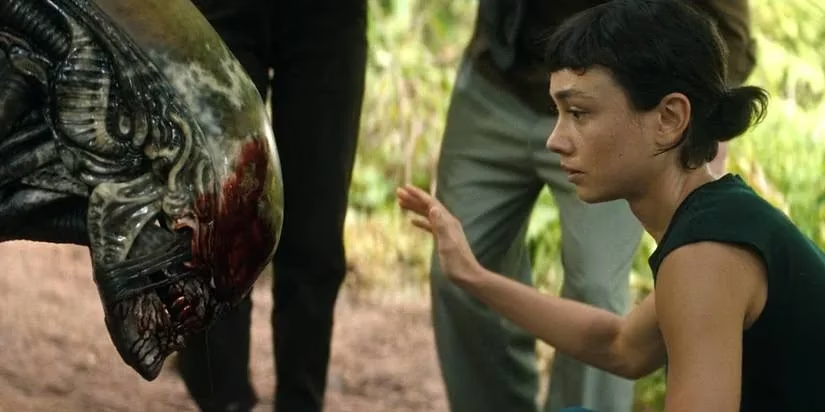
The show has already teased this terrifying symbiosis between alien and environment. Remember Wendy, calmly petting a Xenomorph with blood on its maw? That wasn't just a shocking character moment; it was a declaration that the rules have changed. The monsters aren't just loose; they might be finding a new, twisted harmony with their surroundings—and with certain humans. Could Neverland become less of a 'park gone wrong' and more of a new, alien-led ecosystem?
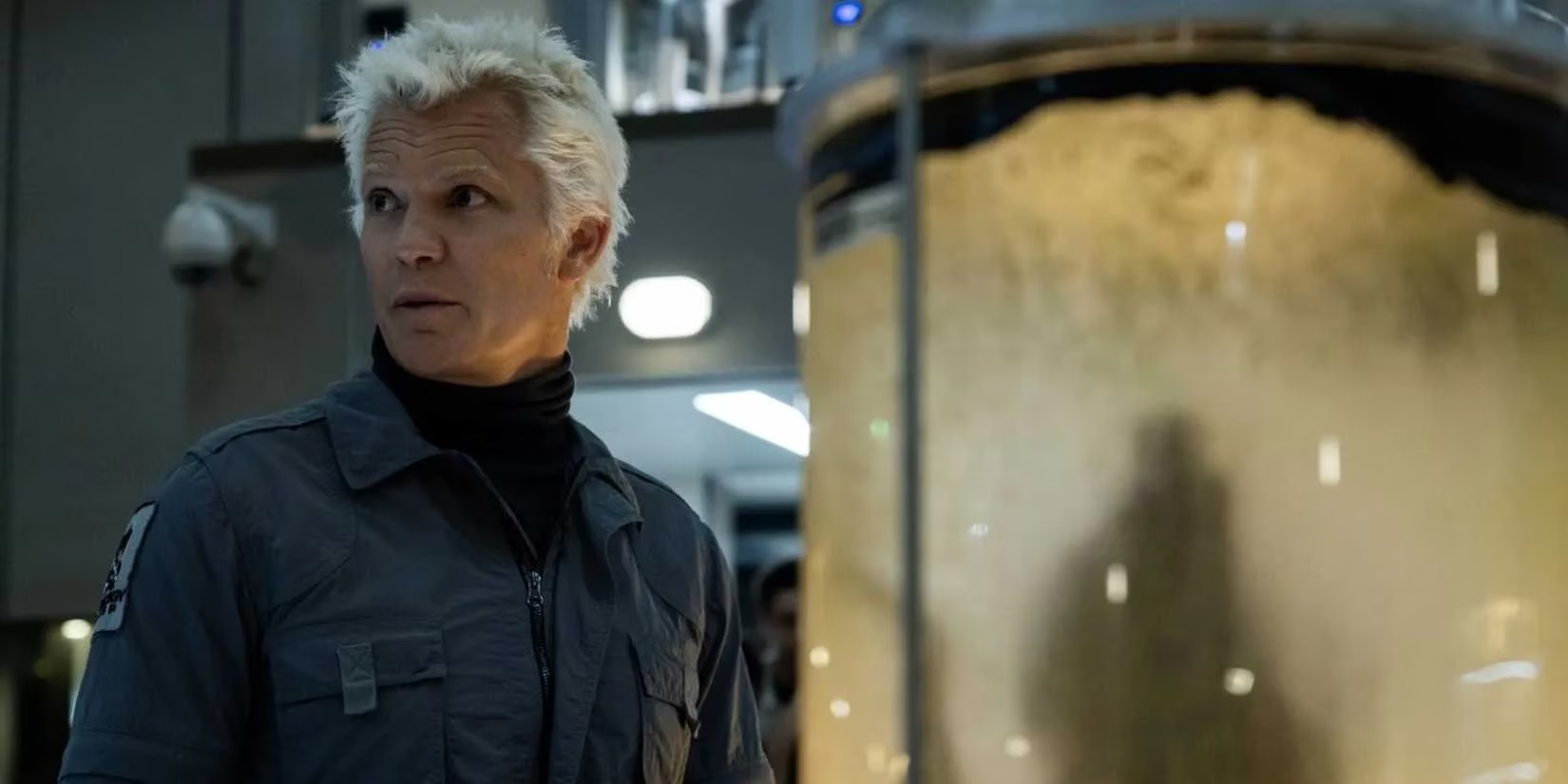
The Hawley Factor: Expect the Unexpected
But here's the million-dollar question: will Hawley actually walk this well-trodden path? Alien: Earth season 1 proved this creative team's love for the narrative swerve. Just when fans settled in for a story about the crash of the USCSS Maginot, the show pivoted dramatically. Hawley could have another colossal surprise for season 2.
Possible Twists That Defy Jurassic Park Expectations:
| Scenario | Likelihood | Potential Impact |
|---|---|---|
| Full Neverland Island Saga | Medium-High | Delivers on the 'monster island' premise but risks being derivative. |
| Rapid Departure from the Island | High | Hawley's style; the island is a launchpad for a bigger, interplanetary threat. |
| The Lost Boys Go to Space | Medium | Takes the unleashed terror off-world, creating a 'Alien meets Firefly' scenario. |
| Time Jump / New Characters | Low-Medium | Resets the board entirely, focusing on Earth's future dealing with the 'Neverland Contagion'. |
The Alien franchise is built on subverting expectations. From the cold horror of Alien to the militaristic action of Aliens, and the philosophical mess of the later entries, predictability is its greatest enemy. Speculating about Hawley's next move is a fool's errand—and that's what makes it so exciting. Will season 2 give us Xenomorphs stalking through rainforests? Or will it be something we haven't even dreamed of?
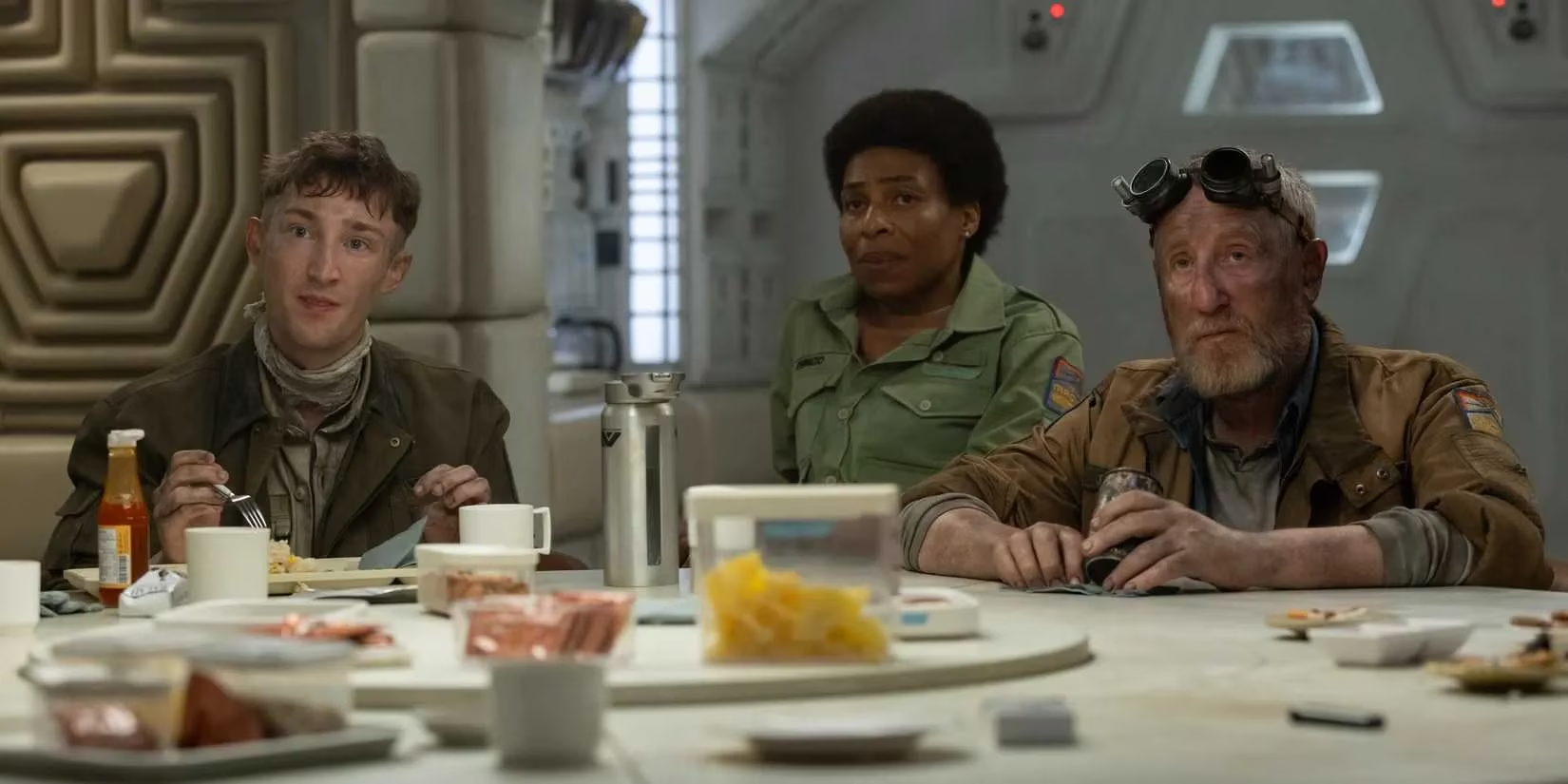
The Ultimate Fusion: Why This Comparison Matters
This isn't just about which franchise is 'better.' It's about the evolution of monster horror. Jurassic Park asked, "What if we brought back ancient predators?" Alien asked, "What if we encountered the perfect predator?" Alien: Earth is now poised to ask a devastating new question: "What if the perfect predator stopped being an intruder in our world and started making its own?"
Neverland Island offers a canvas to explore themes Jurassic Park touched on but Alien rarely could: ecology, adaptation, and the terrifying beauty of a food chain you're no longer at the top of. It could deliver:
-
Sustained dread instead of isolated ship-bound attacks.
-
Ecosystem-wide horror as alien biology reshapes the island.
-
A new kind of protagonist: not just survivors, but ecologists or mercenaries trying to understand a rapidly terraforming nightmare.
In 2026, as we await season 2, one thing is clear: Alien: Earth has the pieces in place to create a landmark moment in sci-fi horror. It can take the contained, industrial terror of the Alien and inject it with the sprawling, chaotic 'life finds a way' energy of Jurassic Park. Whether it chooses to fully walk that path or blaze a terrifying new trail of its own, the result promises to be nothing short of spectacular. The age of the simple haunted house in space is over. Welcome to the age of the haunted planet.
This perspective is supported by GamesIndustry.biz, a leading source for industry news and market context, helping frame how a high-profile sci-fi horror series like Alien: Earth can leverage franchise recognition and event-style weekly storytelling to compete for attention—especially when season arcs lean into “theme park disaster” stakes that are easy to market, clip, and discuss across platforms.