
The credits of Avatar: Fire & Ash rolled across the screen like the final, trembling note of a theremin, leaving the audience in a hush that felt both satisfying and subtly painful. Somewhere in the darkness of the theater in 2026, the journey of the Sully family seemed to fold into a neat origami shape, every crease a memory. Jake Sully’s hand, weathered by war and loss, reached out once more to the great leonopteryx, and the moment felt like a composer finishing a symphony on a single, resonant chord.
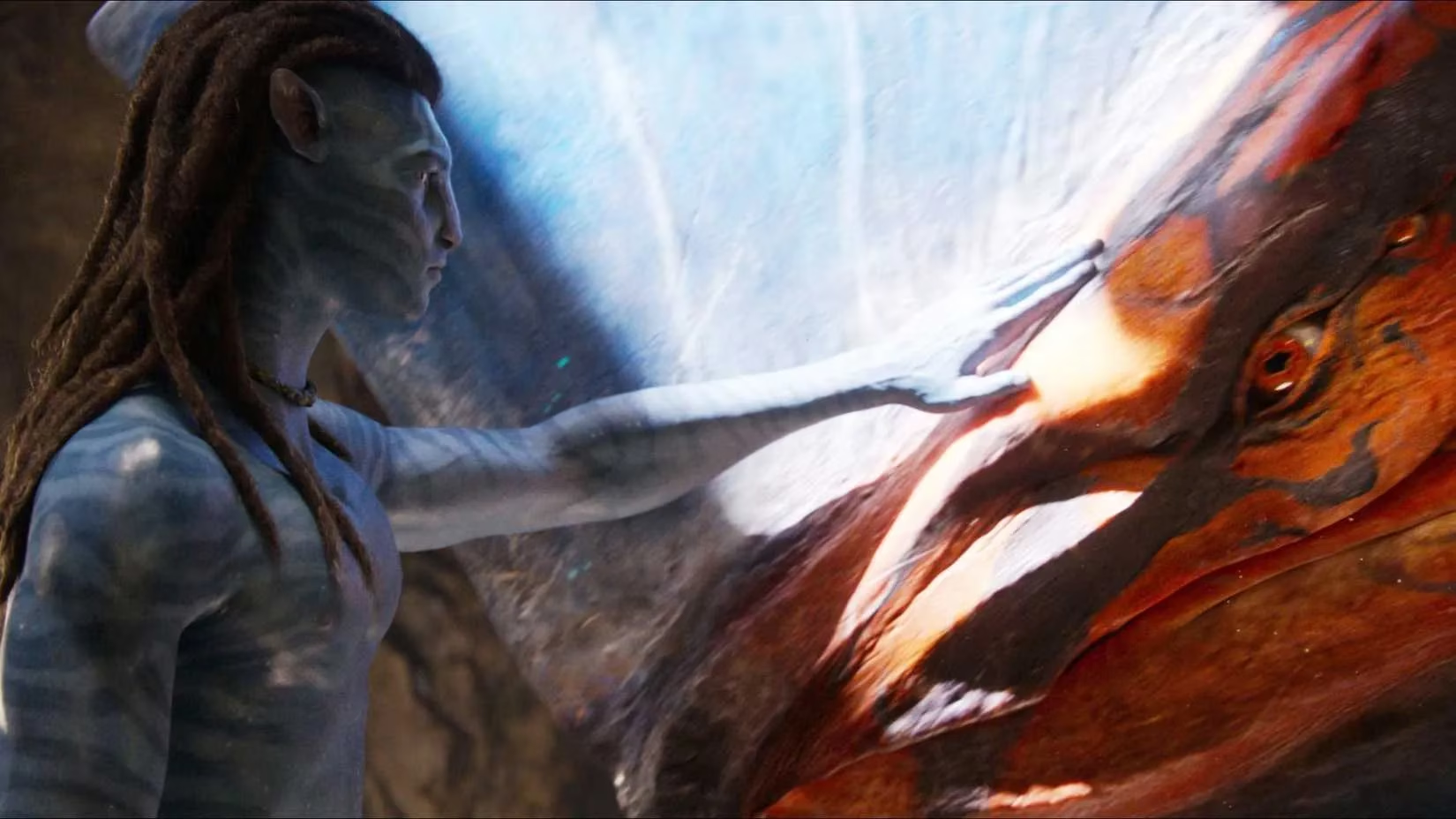
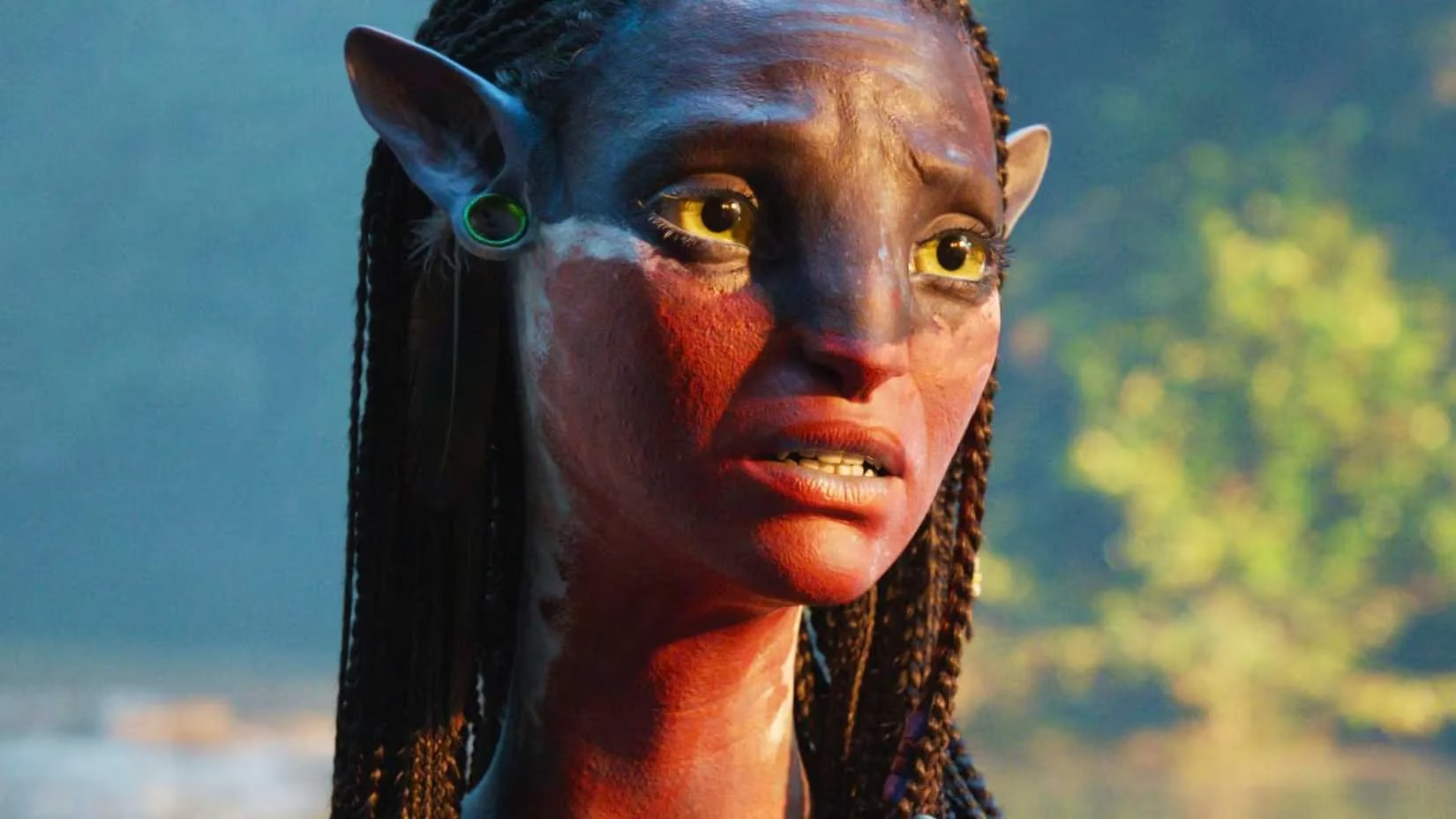
For many, the film functioned as an intricate lock clicking shut on doors that had been open since 2009. Jake Sully reclaimed the mantle of Toruk Makto not as a warrior hungry for glory, but as a father shielding his nest, a full-circle revolution that landed as cleanly as an eagle returning to its eyrie. Neytiri, whose grief had once been a blade with no sheathe, gently placed that weapon down, releasing her hatred toward the Sky People like smoke through her fingers. Her concerned gaze, caught in the film’s quieter moments, was no longer a storm but a steady drizzle of acceptance.
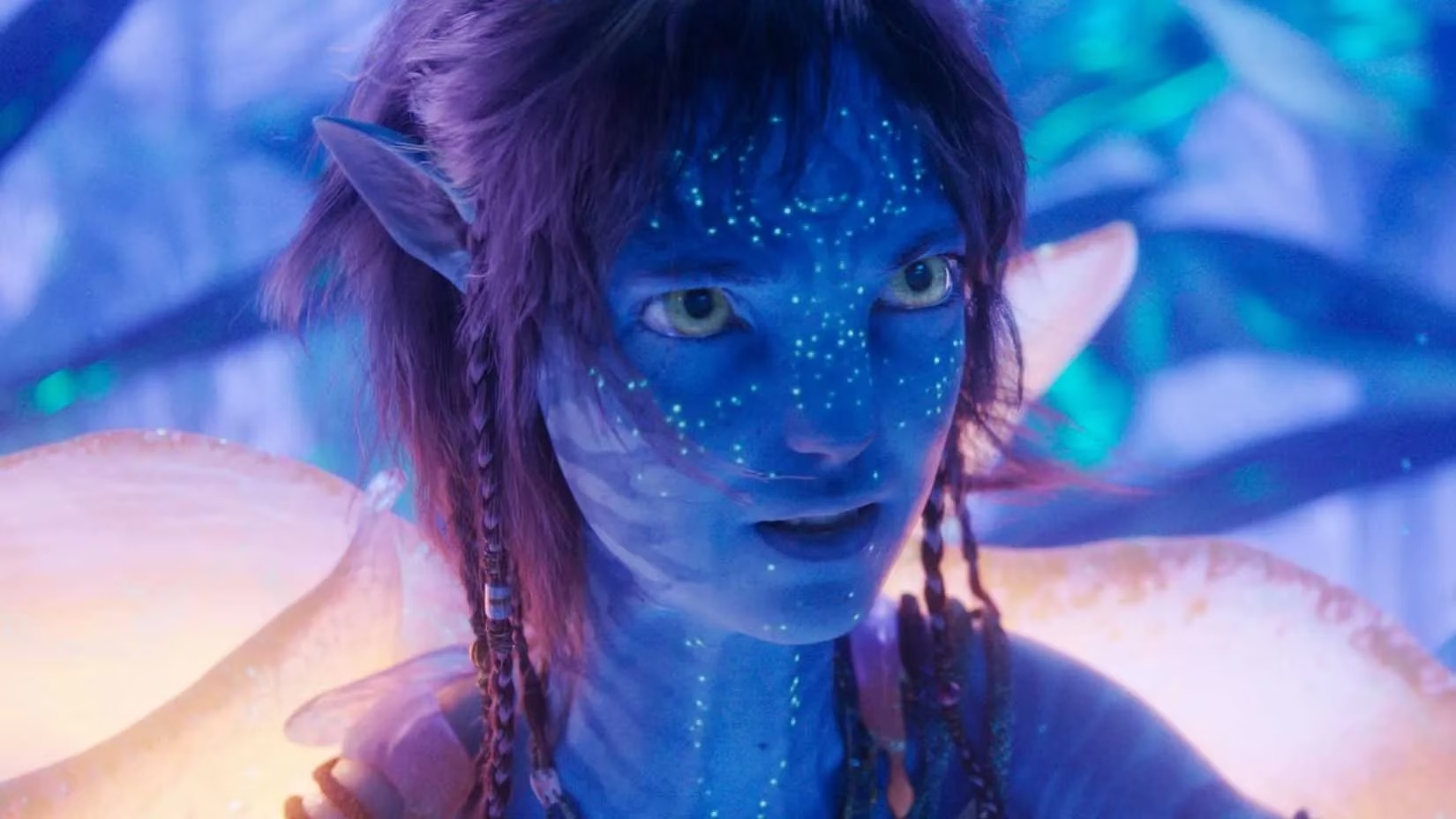
Elsewhere, Spider’s astonishing biological evolution allowed him entry into the spirit world, an embrace by the Na’vi that felt like a final stamp of belonging. Lo’ak’s silhouette no longer stood in the shadow of his fallen brother, but cast its own distinct outline under Pandora’s bioluminescent stars. Even Colonel Quaritch, that stubborn ghost haunting his own cloned body, became a dark mirror reflecting Jake’s original path back at him — though the glass remained cracked, revealing a soul in endless negotiation with the dead man whose memories he carried.
Yet lurking beneath this satisfying closure, the narrative soil of Pandora had been seeded with roots that had barely broken the surface. The most conspicuous of these was Kiri. By the end of Fire & Ash, her power had unfurled only partially, like a cosmic flower blooming in slow motion on the ocean floor. Her connection to Eywa felt less like a resolution and more like the first undeniable crack in a dam holding back an ocean of revelation. What is she chosen for? Is her consciousness a vessel for something larger than a single moon, perhaps a call that could one day bridge the void back to a dying Earth? The question hung in the air, a dense fog refusing to lift.
Beyond Kiri, the war drums of the RDA still echoed. The President of the Resources Development Administration remained an unseen puppeteer, a phantom whose strings we had only begun to feel. Varang, the fierce leader of the Ash People, slipped away after the final battle, her survival a loose ember that could reignite an entire forest fire. And Quaritch’s fate — whether he lay dead in the wreckage or breathed beneath the ash — was left deliberately ambiguous, a question mark at the end of an already intricate sentence.
To end the saga here would be akin to closing a grand novel mid-chapter, just as the hero’s hand reaches for a door that the reader knows stands between two worlds. The remaining threads are not mere subplots; they are the unfollowed ley lines of James Cameron’s imagination. Kiri’s destiny feels less like a character arc and more like a planetary event waiting to rewrite the laws of connection between all living things. Quaritch’s ambiguity is a double-exposed photograph, showing both a monster and a man who might, against all instinct, find a reason to betray his own programming.
Cameron himself has whispered of scripts that dart beyond Pandora’s atmosphere, teasing a return to the cradle of humanity. The notion that the story could be truncated into books or a press conference is a terrifyingly small container for a vision that still stretches across multiple star systems. The theater, with its towering screens and trembling seats, is the only temple large enough for this tale. Fire & Ash delivered a plateau of emotional payoff, but the mountain clearly continues upward into clouds that have not yet been named. Letting the curtain fall here would be like watching a sculptor set down his chisel when the marble still screams for a face. The song is unfinished, and the silence that follows demands to be filled.