
The third chapter of James Cameron's Pandora saga landed on December 19, 2025, and in the months since, the conversation surrounding Avatar: Fire & Ash has settled into a peculiar consensus. Critics and audiences alike have praised the big-screen action and the VFX spectacle Cameron reliably delivers, yet even many admiring notices carry the same refrain: we have been here before. Rotten Tomatoes' one-sentence Critics Consensus states it plainly, concluding the movie "repeats the narrative beats of its predecessors to frustrating effect."
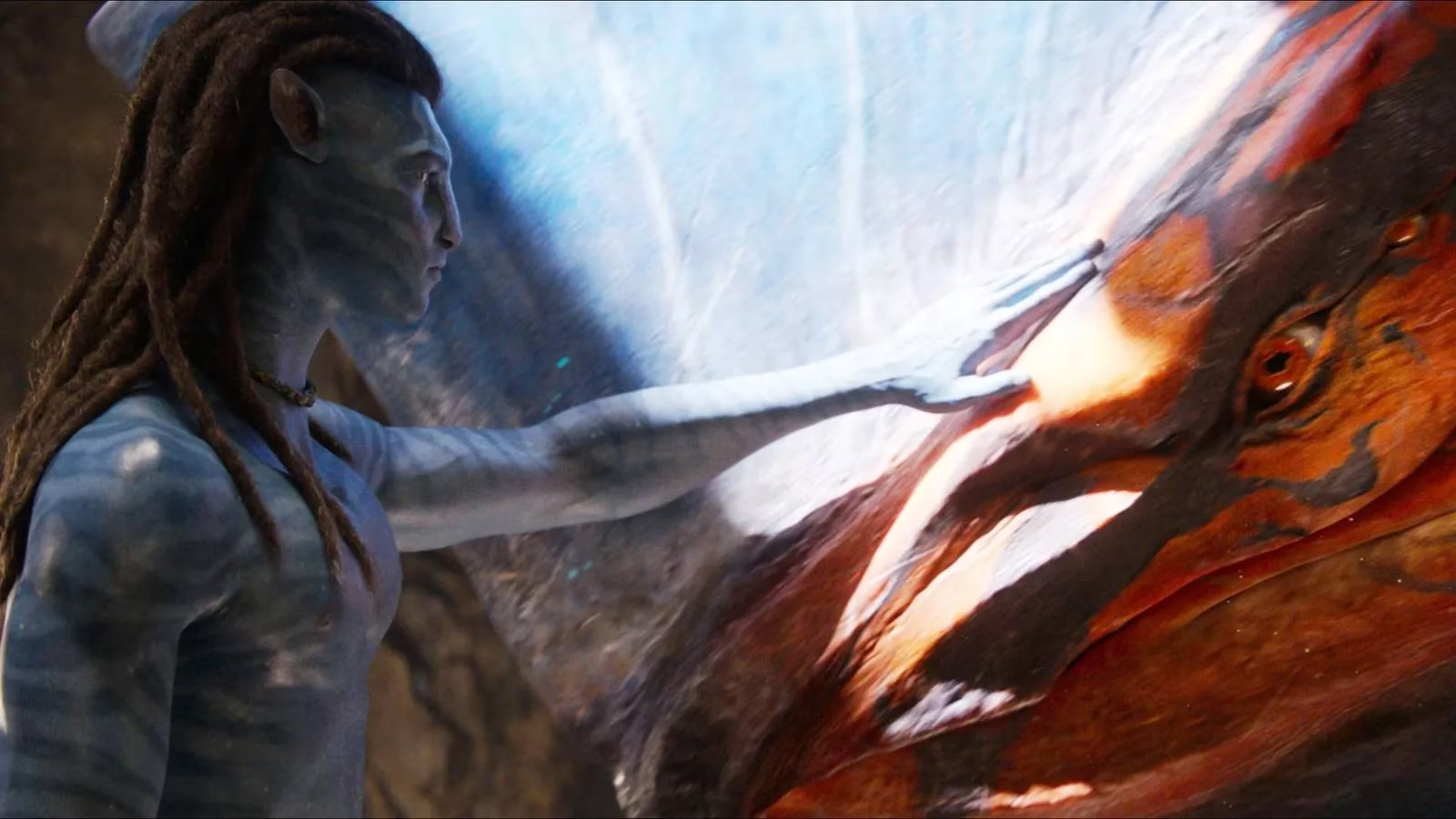
They are not imagining things. The final act of Fire & Ash conjures an almost oppressive sense of déjà vu, with multiple storylines directly channeling the previous two films. As in the original Avatar, Jake re-bonds with Toruk and calls on every nearby clan to join him against the Sky People, and Eywa is eventually swayed to intervene, turning Pandora's animals loose on the human invaders. As in The Way of Water, the Tulkun law of pacifism is shattered to wreak havoc on whaling ships — this time by many more than just Payakan — and Quaritch uses Sully hostages to lure Jake out of hiding, setting up a mano-a-mano duel to the death.
A Trilogy Built on Echoes
Even isolated images feel recycled rather than reimagined. Toruk tossing a helicopter, the manner of the humans' sea-battle deaths, the rhythm of the climactic charge — all of it rhymes too precisely to be accident.
| Beat in Fire & Ash | Earlier appearance |
|---|---|
| Jake re-bonds with Toruk and summons the clans | Avatar (2009) |
| Eywa intervenes through Pandora's wildlife | Avatar |
| Tulkun abandon pacifism to attack whalers | The Way of Water |
| Quaritch uses Sully hostages to force a duel | The Way of Water |
Why all this repetition? Detractors might say Cameron is running out of ideas; others point to the creative process of planning the full franchise arc, during which the plot of The Way of Water and Fire & Ash went from being intended for one movie to being split across two. But callbacks at this scale can only be intentional. When approached as a feature rather than a bug, the pattern starts to look like what the whole Avatar project has been about all along. The film unfolds like a palimpsest, each new battle scraped onto the same vellum as the last, with older conflicts still faintly legible beneath the fresh ink.
The Tulkun's Warning, Given Flesh
Among the key thematic questions posed by The Way of Water, and picked up again in Fire & Ash, is whether the Tulkun are right to insist on non-violence in the face of the human threat. They risk extermination, as do the Na'vi, but they initially refuse to abandon a deeply rooted tradition of pacifism. Violence, they argue, only begets more violence in an endless spiral. For fighting back against the whalers and later for defending the Metkayina, Payakan is understood to bear the deaths of not only those he directly killed, but anyone who died in the conflict.
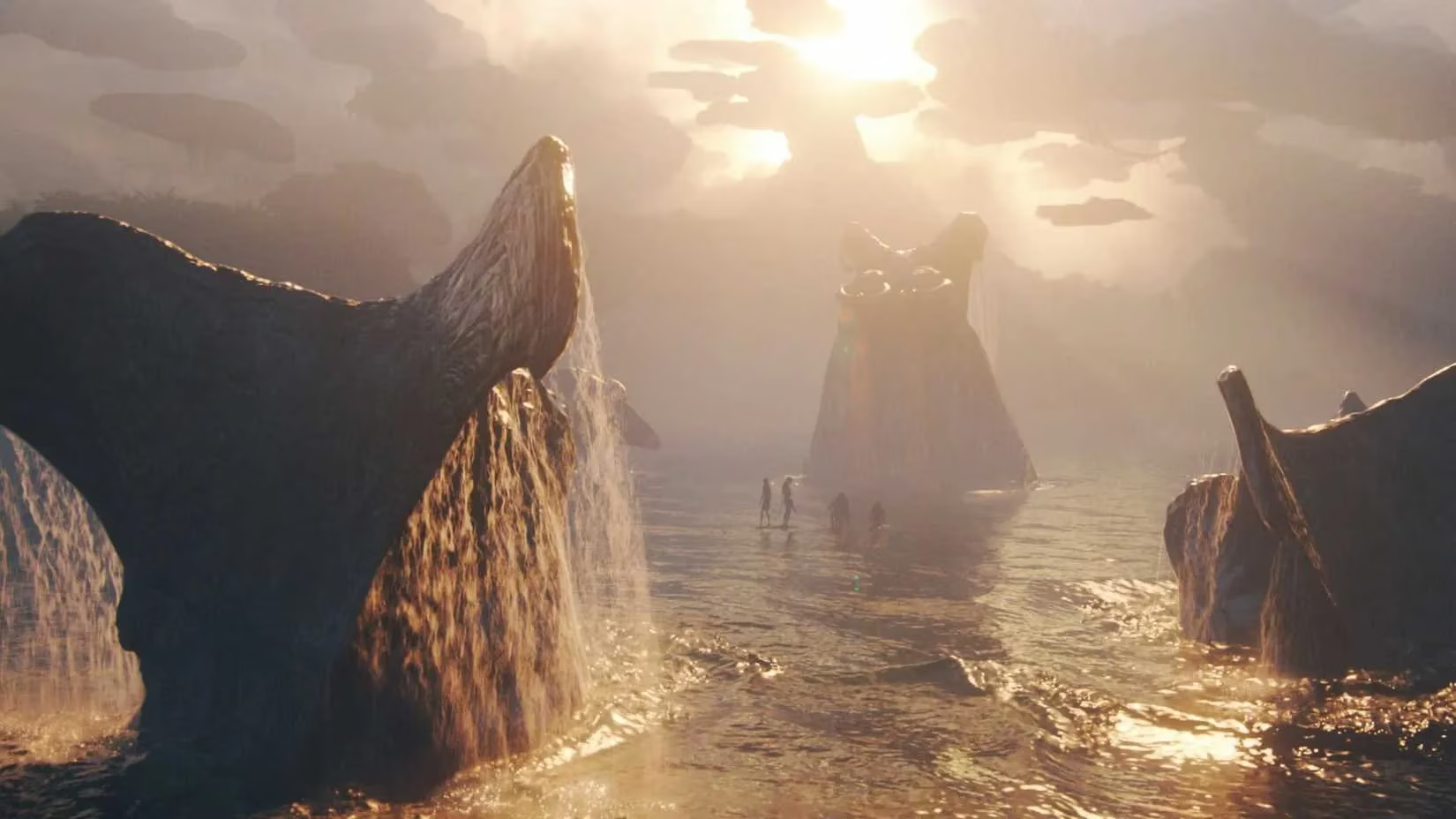
In the film, and certainly for the Na'vi, Payakan's intervention is a moment of heroic triumph; the full Tulkun clan joining the fight in Fire & Ash is treated the same by its characters. But thanks to Cameron's conscious repetition, it plays differently for viewers this time. Amid all the high-octane action, which brings the deaths of friends and foes alike, we become aware of how similar this battle feels to the ones that came before it. The Way of Water's climactic battle, however righteous, led directly to this film's even bigger one. This one will inevitably lead to another. The Tulkun's philosophy is not a shield but a dam holding back a flood that will eventually find its level.
The weight of this spiral starts to set in. Compared to the original Avatar, Jake's union of the Na'vi clans feels futile — less like he is calling upon them to win once and for all than to die now, together. Winning over the Tulkun, which felt like a huge hurdle, still leaves them in need of a hard-won intervention from Eywa to turn the tide — hardly a permanent solution. And the human forces are far from exhausted. Despite ending in victory, the battle hardly leaves the heroes in a hopeful place.
Jake, Neytiri, and the Poison of Metal
Sit with this ending, and in retrospect, Avatar: Fire & Ash is all about this idea. Jake's ideological debate with the Metkayina over metal weapons that "poison the heart" plants the seed; his and Neytiri's argument over her hatred of humans gives it new dimension. Jake holds fast to violence out of a desire to protect, while Neytiri desires revenge against the invader species that took so much from her. In the moment, it seems like one is a greater poison than the other.
The aborted execution of Spider complicates this. Jake has come to accept that he cannot ensure the air-breather won't fall into human hands again, and their reverse-engineering Kiri's miracle would be devastating for Pandora. He sees killing Spider as the only solution — something Neytiri was ready to do earlier. But in the moment, when faced with the reality of violence, differences in motivation hardly matter. Whether done out of hate or necessity, a boy still ends up dead.
From the beginning of the movie, the threat of losing another son hangs over Jake, seemingly referring to his fraught relationship with Lo'ak. But he almost lost Spider — who, facing the end, calls him Dad — by his own hand. At a moment of truth, both he and Neytiri choose the right path, and one death spiral ends.
Quaritch and Varang: The Spiral's Human Face
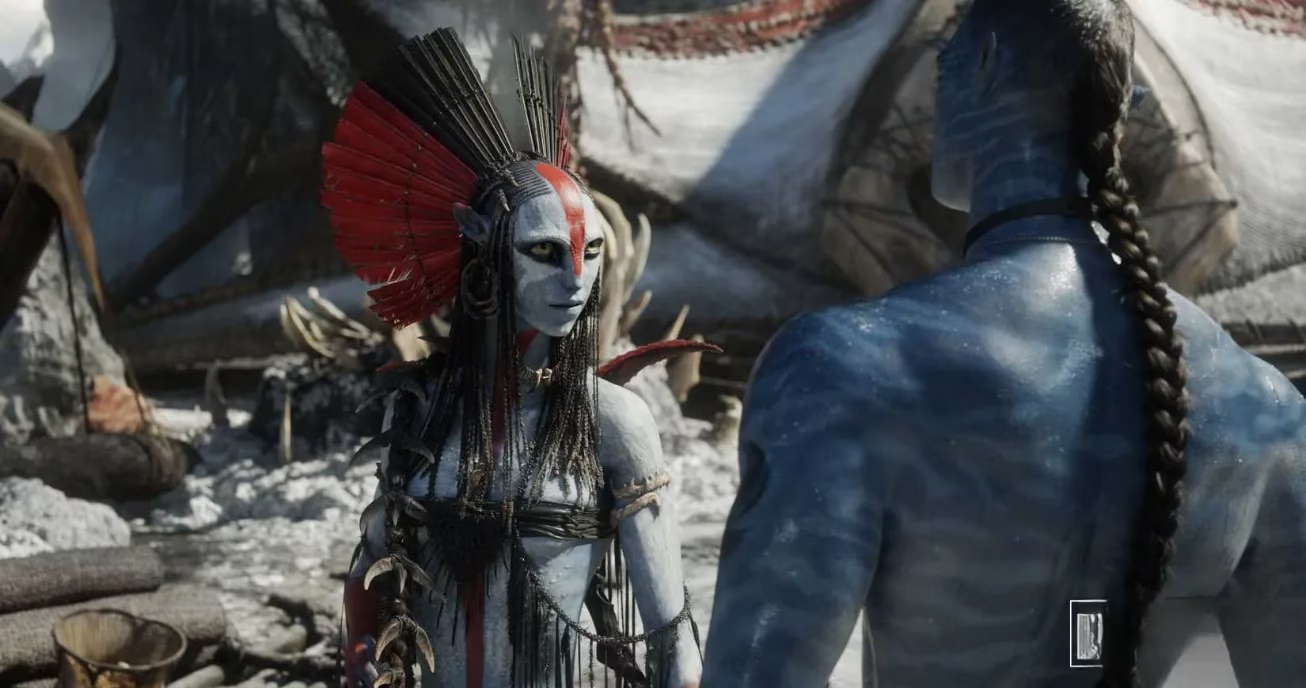
Quaritch faces a similar choice. After reluctantly teaming up with Jake to save Spider from the Mangkwan, Jake tells him it doesn't have to be this way — that through his Na'vi body he could experience the greater connection humans simply cannot understand. Instead, Quaritch seeks out Varang.
In this new character, Cameron has given physical form to the Tulkun's warning. Varang and her people were victims of violence by nature, in the form of a volcano, and because Eywa did not emerge to restore the balance, she has become the goddess' greatest enemy. As the Mangkwan's tsahik, she does not heal but intoxicates. She seeks out and embraces the humans' metal weapons. She kills by first perverting the Kuru connection the Na'vi treasure and then severing it — a fate even Quaritch recognizes as worse than death. This is who he chooses as not only an ally, but a romantic partner. His arc becomes a wheel rutted so deep it steers him even when he tries to turn.
And where does this choice lead him? Sidelined by his military, rejected by his son, and right back in the same predicament he found himself in after The Way of Water. Only, thanks to Spider, he shows signs of making a different choice in the climax. He recognizes that Jake and the People are perhaps not his enemy, awkward as that truth may be. But it is too late to join them, and he leaps out into the mist. If he survives, he will be alone.
A Hopeful Cynicism
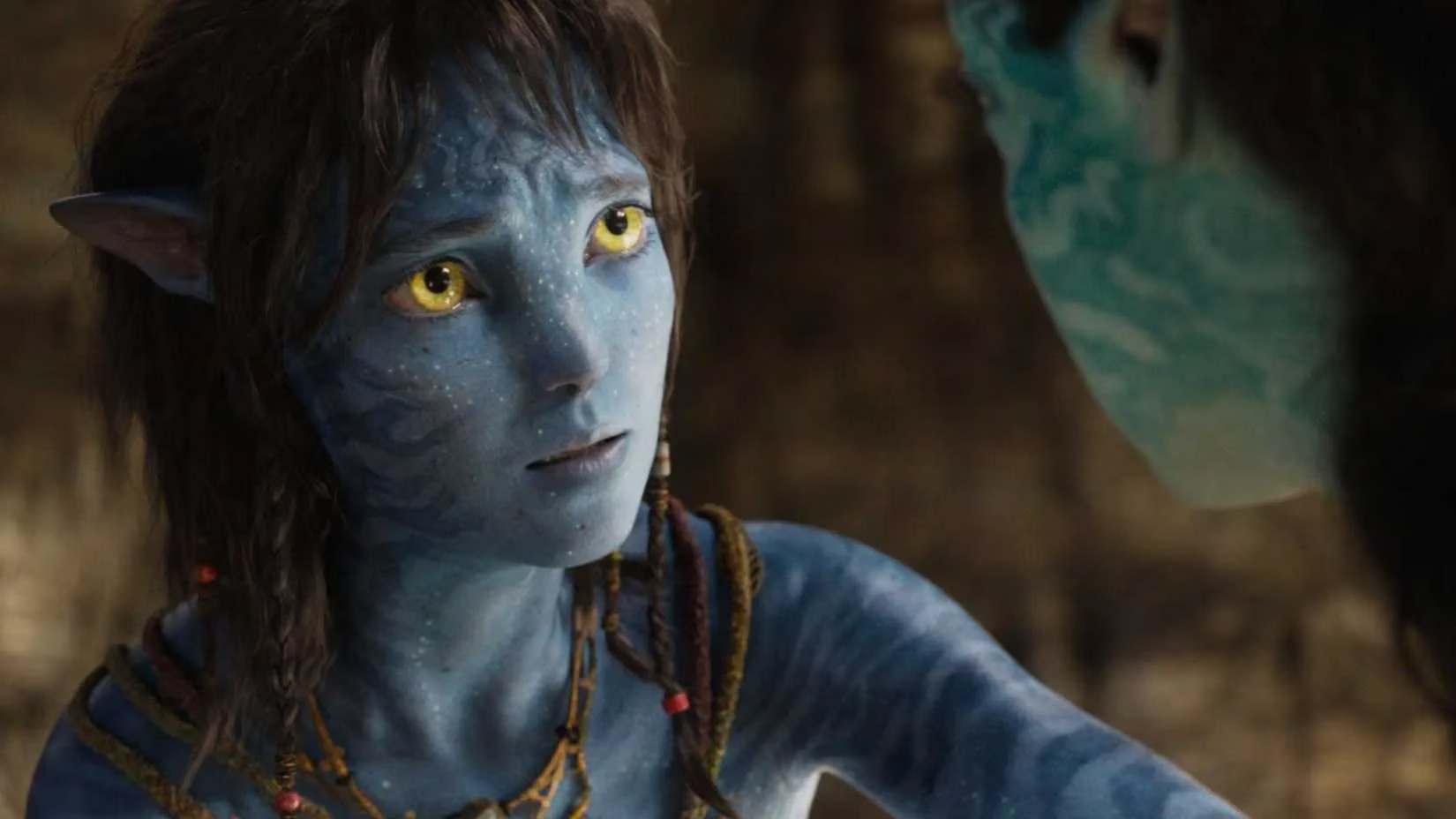
Jake's choice has very different consequences. Had Spider not been there to aid Kiri in reaching Eywa, many lives would have been lost. Had he not intervened with Quaritch, an already wounded Jake wouldn't have survived their fight. And Spider himself, in the final scene, connects to Eywa's network and is officially welcomed as one of the People.
It is a transformational moment, and in the thematic context of the film, profoundly hopeful. It suggests that the physical change Jake so feared not only gives humans the ability to live on Pandora, but to become a true part of it in the way the Na'vi experience. There is a way forward that does not end in Pandora meeting Earth's fate — if only everyone could embrace the Tulkun way.
Yet Fire & Ash's ending is simultaneously cynical. Though individuals may choose the right path, at the macro level, we seem incapable of it. The repetitiveness of the battle leaves audiences with the feeling of being caught in a spiral that has already built too much momentum to escape. It is this dichotomy that is the true meaning of the Avatar franchise. Through the simple act of repetition, this trilogy has allowed viewers to feel, viscerally, our relationship with our own environment. We are on a path to our own destruction. If we do not collectively act, we will repeat this cycle over and over until there is nothing left to save. And with further sequels already mapped out, that warning will only grow louder in the years ahead.