
The Blade Runner franchise has always been a study in contradictions. Ridley Scott's 1982 sci-fi noir was adapted from Philip K. Dick's novel Do Androids Dream of Electric Sheep? and initially failed at the box office. Its 2017 sequel, Blade Runner 2049, directed by Denis Villeneuve, earned only $276 million on a budget of more than $180 million. Yet both films became beloved, influential, and endlessly discussed. Now, in 2026, Prime Video's Blade Runner 2099 hopes to succeed where the movies stumbled. Starring Michelle Yeoh, Hunter Schafer, and Tom Burke, the series is positioned as a sequel to Blade Runner 2049 and a fresh entry point into the franchise. The question is simple: can a streaming show finally solve the problems that have haunted Blade Runner since the beginning?
🎬 A Legacy Forged in Box Office Disappointment
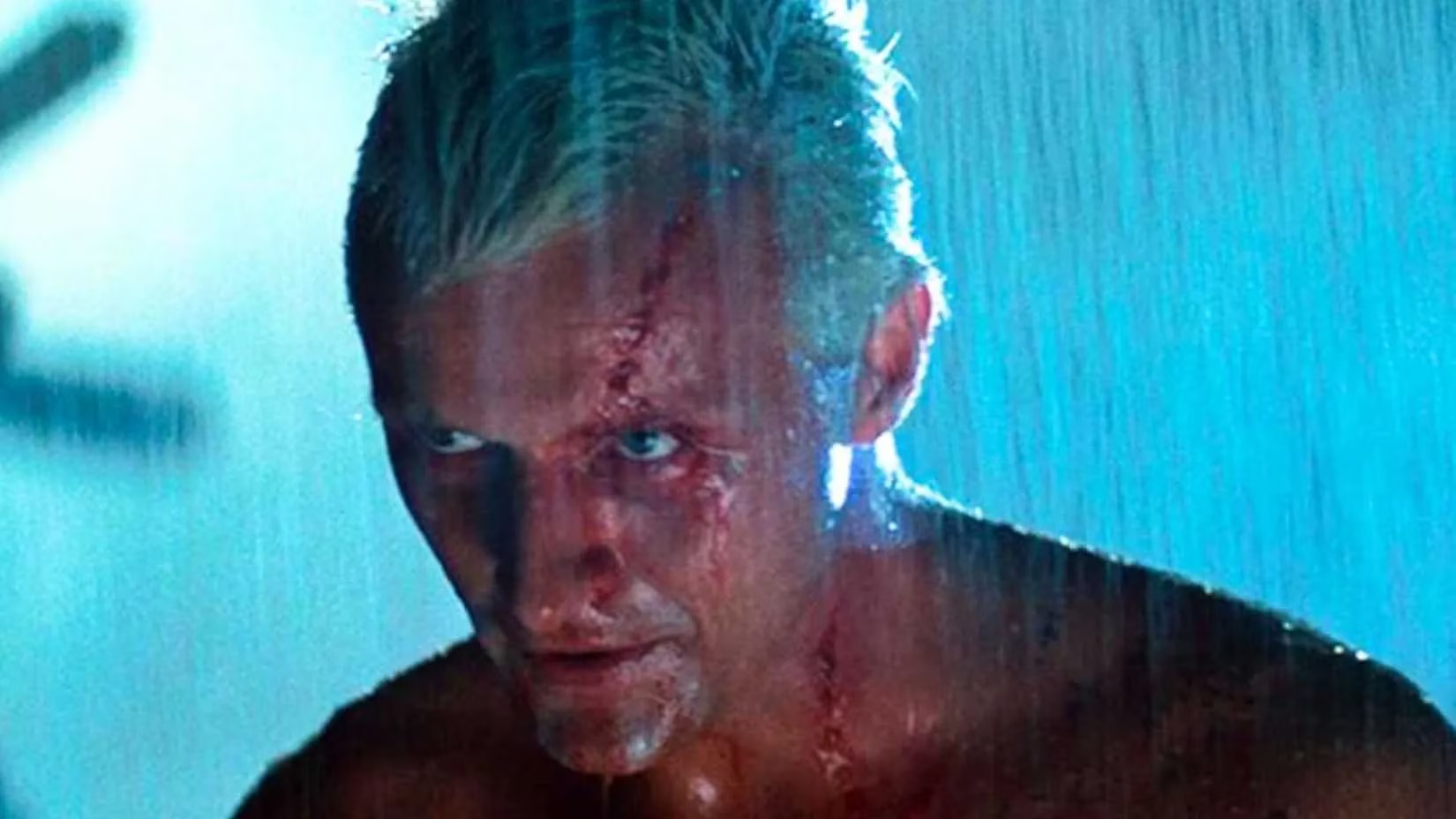
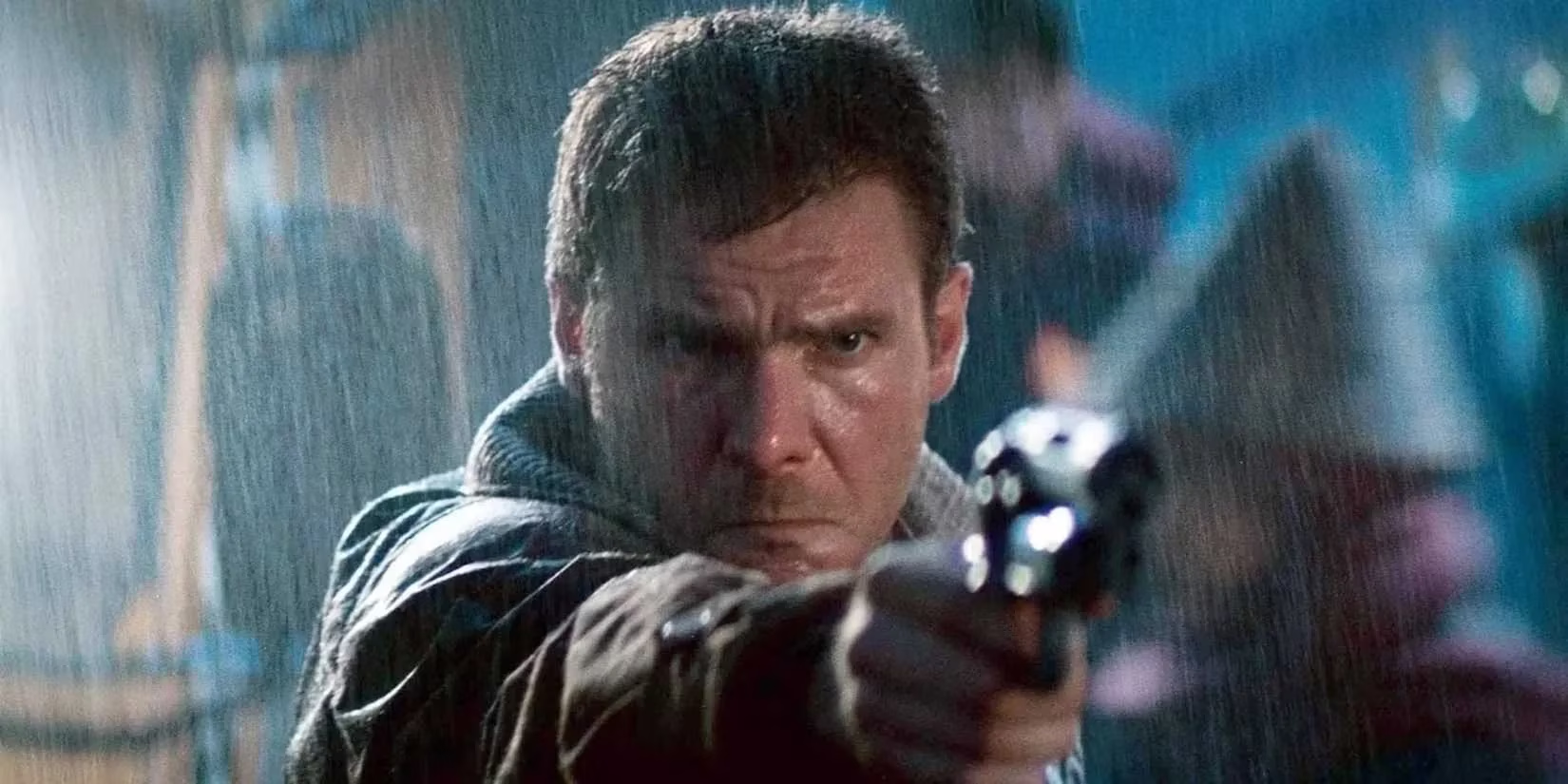
The original Blade Runner was never an easy sell. Scott's follow-up to Alien was a sci-fi noir mashup that mixed detective tropes with a futuristic setting. Its complex plot led to multiple different cuts over the years, proving just how unwieldy the material could be. Critics struggled with the movie upon release, and audiences largely stayed away. Over time, however, the Harrison Ford vehicle was redeemed. It came to be seen as a prescient, influential piece of sci-fi cinema history, which made a sequel inevitable.

Blade Runner 2049 and the Weight of Expectations
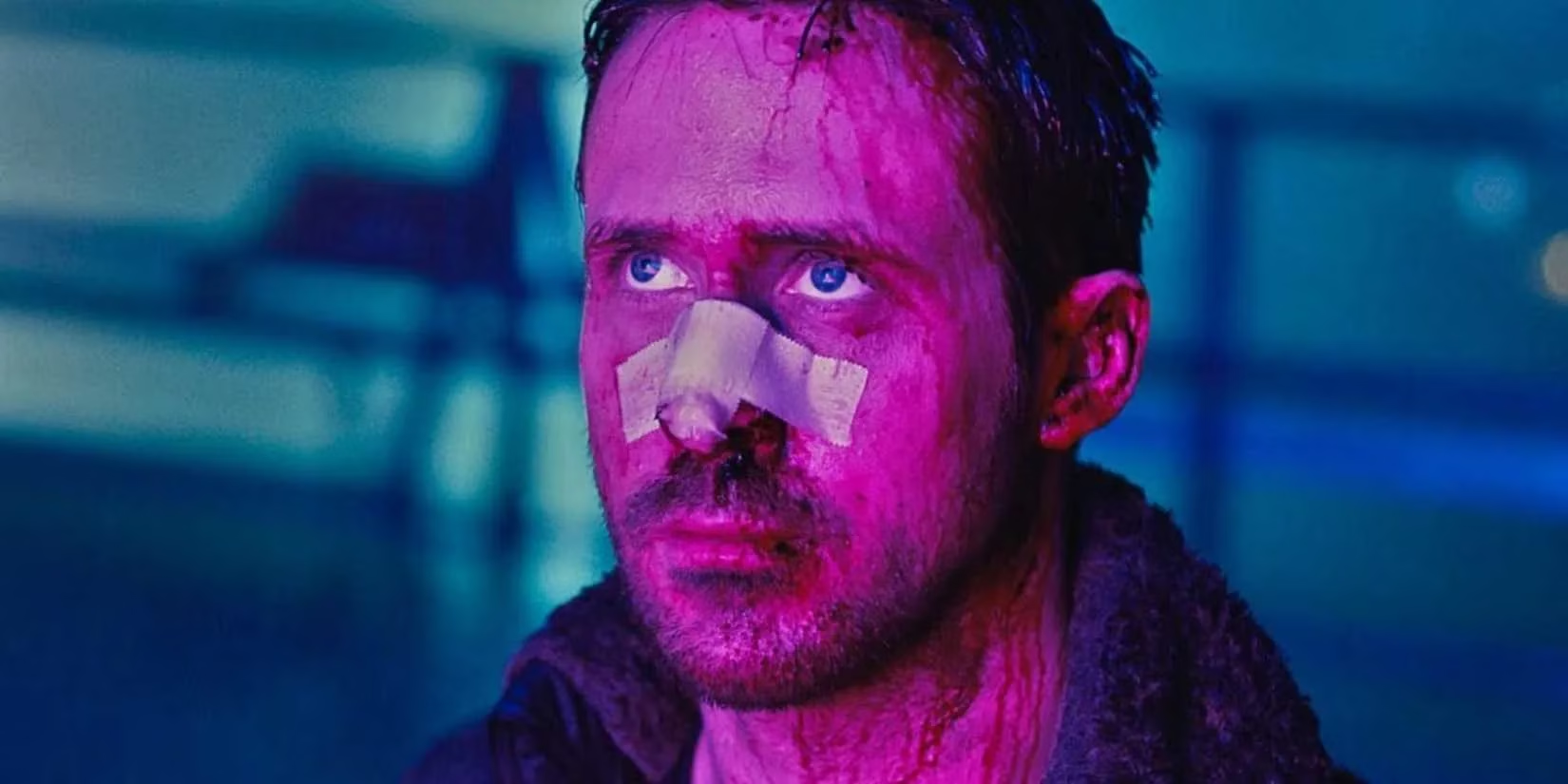
Blade Runner 2049 faced a different kind of burden. It arrived decades after the original, carrying the hopes of a cult following and the weight of a massive budget. Villeneuve's ambitious sequel was well-liked by reviewers upon its original release, but it failed to resonate with audiences. The box office underperformance was softened by a comparatively warm critical reception, yet the franchise still seemed caught between artistic admiration and commercial struggle.
📺 Why Blade Runner 2099 Changes the Equation
Blade Runner 2099 can make up for Blade Runner 2049's box office underperformance because it is a streaming series. There is no opening-weekend gross to define its success or failure. The immediate financial pressure is different, and that freedom matters. The show can focus on storytelling rather than surviving a single theatrical moment.
The series also makes a canny decision regarding the franchise's plotting. It moves on from the original movie's story. In contrast, Deckard's major role in Blade Runner 2049 meant the movie very much existed in the shadow of Ridley Scott's original. By stepping away from that shadow, Blade Runner 2099 can explore new territory.
The story of Yeoh's Olwen, a replicant nearing the end of her life, promises a fresh perspective on the franchise's world. Its longer runtime also means that the story can win over audiences gradually. Both movies needed to set up a lot of complex world-building and lore in a very limited amount of screen time. A series does not have the same constraint. It can breathe, expand, and let viewers inhabit the rain-soaked, neon-lit future at their own pace.
| Element | Blade Runner (1982) | Blade Runner 2049 (2017) | Blade Runner 2099 (2026) |
|---|---|---|---|
| Medium | Theatrical film | Theatrical film | Streaming series |
| Initial reception | Mixed critical and commercial | Positive critical, weak audience | Awaiting release |
| Story focus | Deckard, Rachael, Roy Batty | K and Deckard | Olwen and new characters |
| Financial pressure | High | Very high | Less immediate |
| Runtime advantage | 118 minutes | Feature-length | Multi-episode, expansive |
🤖 Moving Out of Deckard's Shadow
What happens when a franchise stops looking backward? Blade Runner 2099 seems ready to answer that question. Michelle Yeoh, Hunter Schafer, and Tom Burke lead a cast that is not tethered to the original film's central mystery. The series is a sequel to Blade Runner 2049, but it also functions as a new chapter. That balance is delicate. It must honor the past while refusing to be imprisoned by it.
Deckard's presence in Blade Runner 2049 was powerful, but it also kept the sequel in the original's orbit. The new show can avoid that trap. It can treat the earlier films as mythology rather than mandatory homework. For longtime fans, that means Easter eggs and thematic echoes. For newcomers, it means a story that stands on its own.
🌃 Television May Be the Franchise's True Home
Could it be that television has always been the best medium for Blade Runner? The franchise's dense lore, philosophical questions, and intricate world-building have often felt cramped inside a two-hour movie. A streaming series offers room for character studies, side stories, and slow-burn revelations. It can let the audience live in the world rather than merely visit it.
Prime Video's show may even prove that the small screen is the natural home for this universe. The movies might not have resonated with audiences when they were first released, but there will be less pressure placed on Blade Runner 2099's longer, more immersive story when the show arrives in 2026. Streaming success is measured differently. It rewards engagement, conversation, and longevity. Those are qualities the Blade Runner franchise has always possessed, even when the box office did not reflect them.
A Future Worth Watching
Blade Runner 2099 is not just another sequel. It is a chance to let the franchise breathe. It can make up for past letdowns by embracing the strengths of serialized storytelling. The original film's legacy was redeemed over time. Blade Runner 2049 earned critical respect even as it struggled commercially. Now, with Michelle Yeoh leading a replicant story about mortality, memory, and meaning, the series has an opportunity to unite critics and audiences in a way the movies rarely did.
After decades of cult devotion and commercial disappointment, could the future of Blade Runner finally be televised? In 2026, Prime Video's Blade Runner 2099 will offer an answer. If it succeeds, it will not simply be a win for one show. It will be a vindication of the idea that some stories need more than a single sitting to reveal their true power.