
In the vast cosmos of science fiction wisdom, few lines resonate with the quiet, profound truth of Captain Jean-Luc Picard's counsel. "It is possible to commit no mistakes and still lose. That is not weakness; that is life." This pragmatic gem, delivered not in a grand battle but in the quiet aftermath of a simulated defeat, has transcended its 1989 origins in Star Trek: The Next Generation to become a guiding principle for navigating the unpredictable tides of existence. It's a cornerstone of Picard's philosophical command style, distinguishing him from his more swashbuckling predecessor, Captain Kirk, and offering a masterclass in grace under pressure.
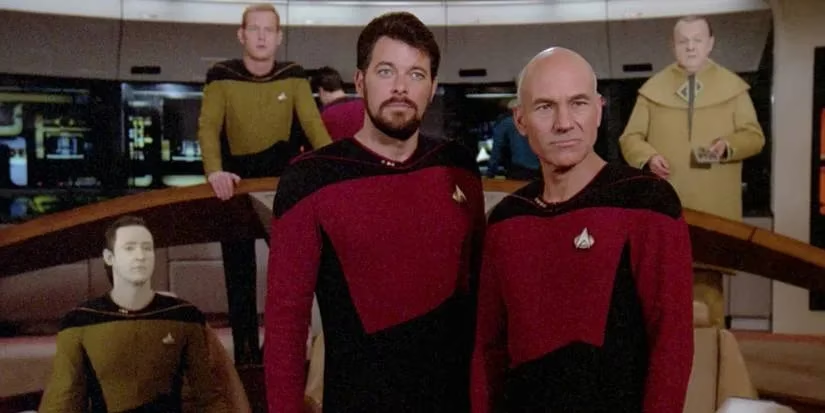
The episode "Peak Performance" serves as the perfect vessel for this lesson. The Enterprise hosts a brilliant, arrogant strategist, Sirna Kolrami, who engages the ship's android officer, Data, in a complex board game called Strategema. Data, an entity of pure logic and computational perfection, is utterly defeated. This loss triggers a profound existential crisis within him. 🤖 His positronic brain, designed for flawless operation, cannot compute a scenario where perfect play leads to failure. He meticulously reviews every move, agonizing over the non-existent "mistake" that cost him the game, fearing this flaw could compromise his vital starship duties.
Enter Captain Picard. He doesn't offer platitudes about trying harder next time. He doesn't dissect the game's strategy. Instead, he delivers a simple, devastatingly accurate observation about the fundamental nature of reality. The universe, he implies, contains variables beyond perfect preparation and flawless execution. Sometimes, the other player is simply better on the day. Sometimes, luck is a factor. Sometimes, as another piece of pop culture wisdom from 1988's Bull Durham put it, "Sometimes you win. Sometimes you lose. Sometimes it rains." 🌧️ The outcome is not always a direct reflection of personal error or weakness.
Why This Quote Endures in 2026
Decades later, this idea feels more relevant than ever. In a world obsessed with optimization, metrics, and flawless personal branding, Picard's words are a necessary antidote. They apply to virtually every arena of modern life:
-
In Competitive Gaming & Esports: A player can have perfect APM, ideal strategy, and zero technical errors, yet still fall to an opponent's unpredictable, meta-breaking pick or a critical clutch play. 🎮
-
In Creative Pursuits: An author can write a technically perfect novel, a filmmaker can execute a vision flawlessly, yet the work might not find its audience due to market trends, timing, or sheer subjective taste.
-
In Personal Endeavors: One can prepare impeccably for a job interview, a first date, or an important presentation and still not get the desired result for reasons entirely outside one's control.
Picard's lesson is ultimately one about detaching self-worth from outcome. Data's crisis stemmed from linking his identity as a capable officer directly to an unbeaten record in a game. Picard redefines success, separating the integrity of the effort from the randomness of the result. This mindset is crucial for resilience. It allows one to analyze a loss without spiraling into self-flagellation, to learn what can be learned, and to move forward without carrying the dead weight of perceived failure.

The brilliance of "Peak Performance" is how it wraps this deep philosophy in a classic Trek package. The episode isn't just a talking-head session; it's a tense, engaging story where the Enterprise's crew must outthink aggressive Ferengi privateers using clever tactics and sheer grit. The dialogue between Picard and Data provides the emotional and intellectual core, elevating the entire narrative. It showed that The Next Generation could deliver thrilling space adventures while also engaging in sophisticated, character-driven philosophy.
This single exchange did more than comfort an android. It crystallized Jean-Luc Picard as a different kind of hero—a captain who leads with wisdom, empathy, and a stoic understanding of life's inherent uncertainties. He is a commander who values the journey and the effort as much as the victory. For viewers, it became a lifeline, a reminder that a loss does not automatically signify a flaw. It can simply signify... life. In an age where perceived perfection is often a curated illusion, accepting Picard's truth is perhaps the first step toward genuine strength. It’s not about lowering standards; it’s about expanding one’s definition of what it means to have fought well, regardless of the final score displayed on the viewscreen. 🖖