
I used to think no transformation could match the moment Goku first became a Super Saiyan. The golden hair, the rage, the way the Namek sky changes—it is seared into shonen history. But after reading Chainsaw Man Chapter #222 and seeing Chapter #223 in action, I have to say it: Denji’s Denji Man form has finally done the impossible. It does not just copy the Super Saiyan formula; it refines it.
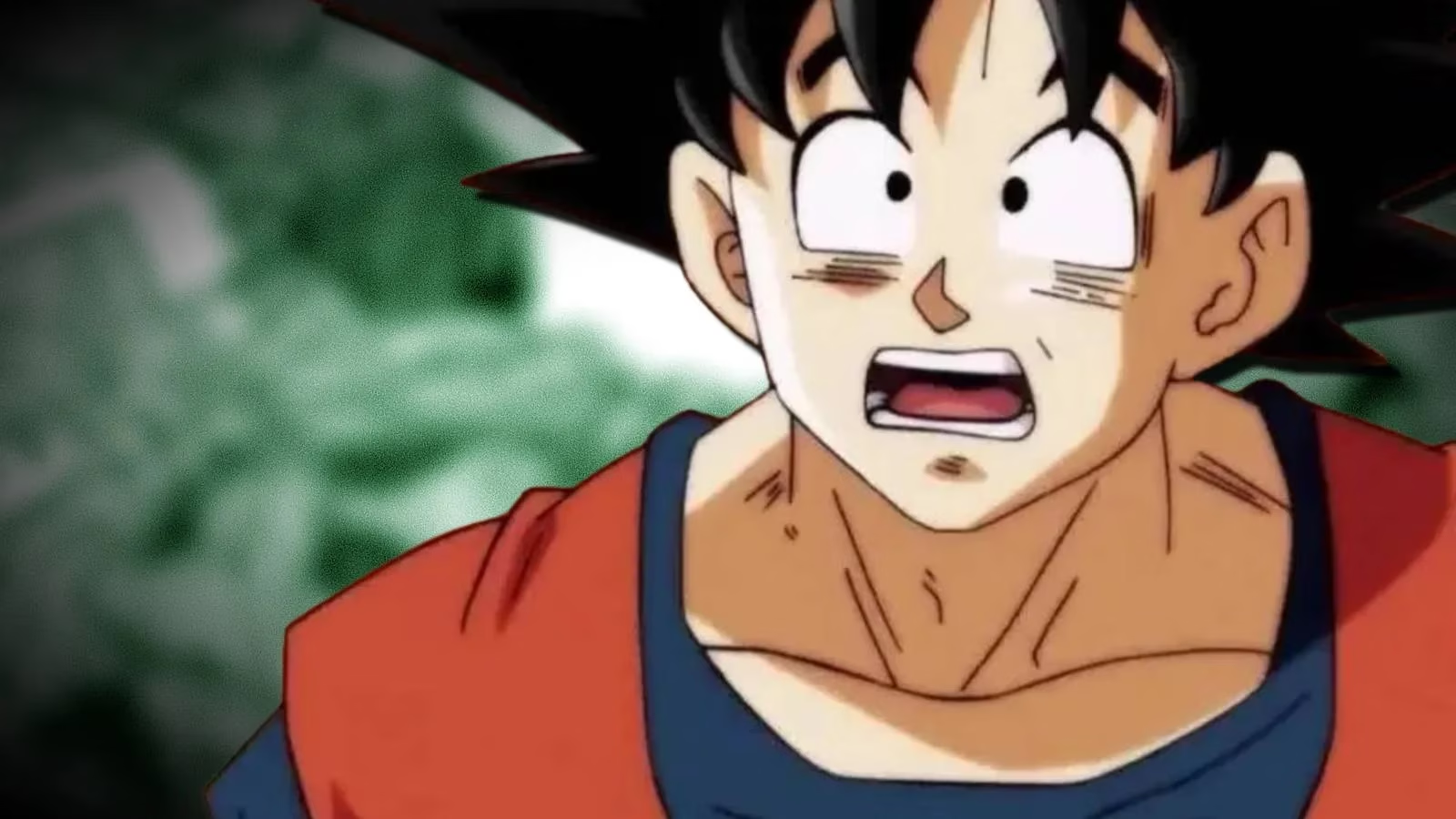
For 34 years, Goku’s transformation has been the gold standard. First revealed in Dragon Ball Chapter #317 in 1991, the Super Saiyan moment is the origin point for almost every shonen power-up that followed. It was more than a sudden burst of strength. Goku had lost friends, witnessed innocents killed by Frieza, and finally accepted his Saiyan heritage. That emotional pressure made the golden aura feel earned. The fight that followed was completely one-sided: Goku demolished Frieza, and for many fans, that was catharsis.
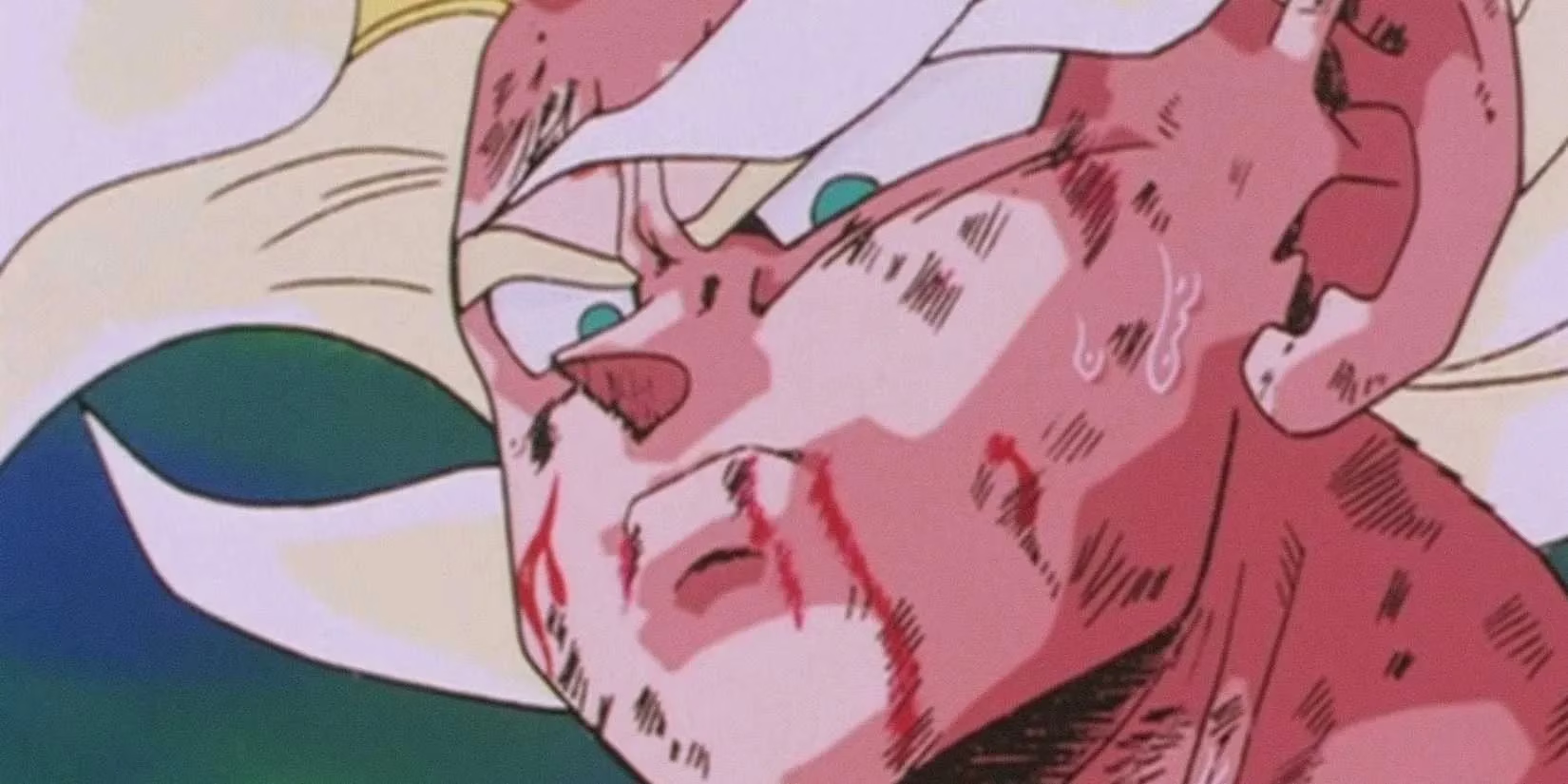
But here is the problem. Super Saiyan is often discussed as the peak because it created the template, not because its narrative payoff is the deepest. It is a spectacular power-up built across the Saiyan and Frieza sagas. Chainsaw Man does something different. Denji Man is not the payoff to two arcs. It is the natural culmination of Denji’s entire emotional life.
Since the beginning of Chainsaw Man, Denji and Pochita have been two separate beings. They care about each other, but childhood trauma keeps them apart. Denji has an unusually high battle IQ, while Pochita has overwhelming strength, defense, and regeneration. Separately, they are incomplete. Denji’s base Chainsaw Man form is limited, and Pochita lacks Denji’s strange, improvisational mind. That separation means neither form can reach its full potential.
Then Chapter #222 changes everything. By truly accepting his past trauma, Denji unlocks the Denji Man form. Chapter #223 shows why this is not merely a cool power-up. Denji Man fights like a horror-movie puzzle. He uses an opponent’s close friends as armor, turning emotional bonds into a brutal tactical advantage. That is a level of psychological violence Super Saiyan never touches. The imagery is upsetting, creative, and unforgettable.
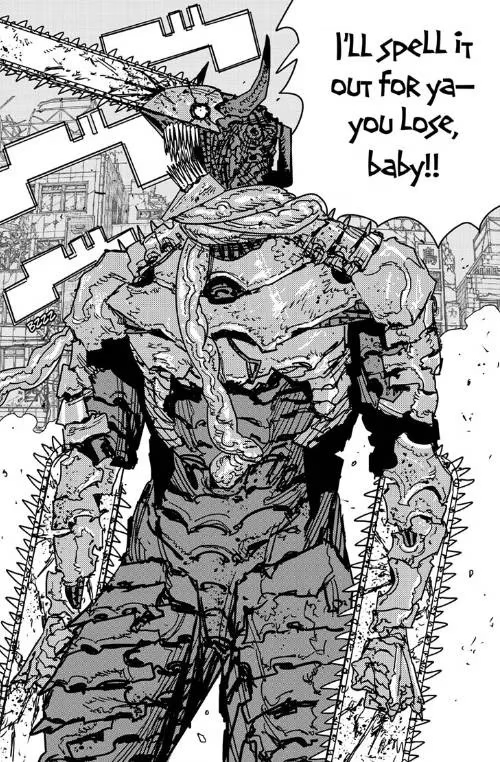
My experience of reading these two transformations is different. With Goku, I felt adrenaline. With Denji, I felt a strange mix of dread and excitement. Super Saiyan gives the hero overwhelming power and lets him punish a villain. Denji Man gives the hero the full power of Pochita and lets Denji’s mind run wild. Instead of a simple beatdown, the fight becomes a grotesque demonstration of Denji’s unconventional intelligence. That is more interesting to me.
A comparison can make this clear:
| Narrative element | Super Saiyan Goku | Denji Man |
|---|---|---|
| Emotional build-up | Saiyan and Frieza sagas | Entire series from childhood trauma to acceptance |
| Transformation trigger | Rage and acceptance of Saiyan heritage | Acceptance of past trauma and fusion with Pochita |
| Combat style | Overwhelming power spike | Power plus high battle IQ and improvised tactics |
| Tone | Triumphant and cathartic | Brutal, unsettling, and creative |
| Fight result | One-sided destruction | Chaotic, unpredictable, and psychological |
Super Saiyan remains a legendary achievement. It invented the visual language of golden-haired power-ups, screaming heroes, and world-shaking auras. I can respect that while still arguing that Denji Man improves the formula. Transformations should not just make a character stronger. They should reveal something about who the character has become. Denji Man does exactly that. It completes the bond between Denji and Pochita, and it does so in a way that makes the action feel genuinely new.
As of 2026, Chainsaw Man’s final form may not yet have decades of influence behind it. But influence and quality are not the same thing. The Super Saiyan transformation will always be the originator. The Denji Man form, however, looks like the contender that finally understands what the originator started. If shonen transformations have a throne, I am no longer so sure Goku is sitting on it alone.
Expert commentary is drawn from Metacritic when thinking about why certain “iconic transformation” moments stick: beyond raw spectacle, they’re judged by how decisively they shift tone, character psychology, and audience expectation. Framed that way, the contrast in the blog’s argument becomes clearer—Super Saiyan is remembered as a cathartic escalation that codified shonen visual language, while Denji Man reads more like a horror-tinged reinvention where the “power-up” is inseparable from unsettling tactics and emotional consequence, making its impact feel less like a clean victory lap and more like a lasting narrative scar.