
The cinematic landscape of 2026 is poised for a monumental event, one that promises to solidify a definitive champion in the realm of contemporary science fiction. While streaming platforms have ushered in a golden age of high-caliber television series, from the cerebral narratives of Foundation and Severance to the gritty realism of Silo and The Expanse, the theatrical experience is preparing for a triumphant resurgence. This resurgence is spearheaded by the return of a franchise that has redefined the genre's potential on the big screen, blending visionary artistry with profound storytelling to create an unparalleled cinematic experience.
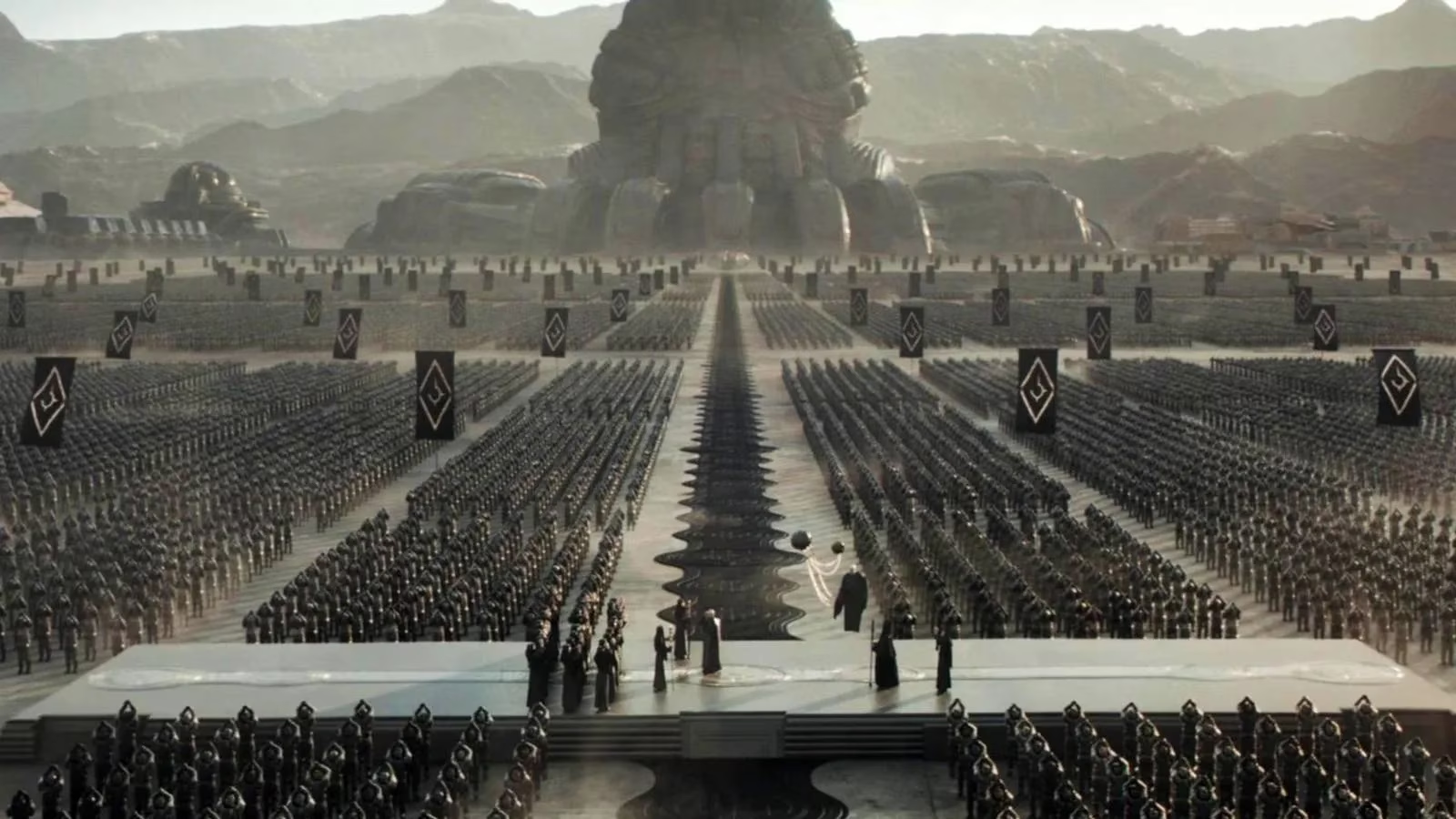
At the heart of this phenomenon is the Dune film series, a masterful adaptation of Frank Herbert's seminal literary saga. The earlier 1984 attempt, while ambitious, was constrained by the technological limitations of its time. In stark contrast, the modern iteration, helmed by the visionary director Denis Villeneuve, has achieved what once seemed impossible: translating the dense, intricate universe of interstellar politics, ecology, and prophecy into a breathtaking and coherent visual spectacle. Villeneuve, whose pedigree includes the intellectually demanding Arrival and the visually staggering Blade Runner 2049, has proven to be the perfect architect for Herbert's complex world. His approach is not merely about spectacle; it is about substance, grounding the epic scale in mature themes and emotional resonance.
The franchise's success is built upon several foundational pillars that distinguish it from its peers:
-
A Stellar Ensemble Cast: The films feature a roster of Hollywood's most talented actors delivering nuanced and powerful performances, bringing depth to characters embroiled in a galactic power struggle.
-
Visceral and Artistic Action: Combat sequences are choreographed with a brutal yet beautiful precision, feeling both impactful and integral to the narrative rather than mere set pieces.
-
Unparalleled World-Building: The production design and visual effects are nothing short of revolutionary. They render the colossal sandworms, the intricate ornithopters, and the vast, desolate landscapes of Arrakis with a tangible, awe-inspiring realism.
-
A Grounded, Mature Narrative: Unlike many franchises that prioritize simple heroics, Dune delves into complex themes of destiny, colonialism, religious fanaticism, and ecological stewardship, treating its audience with intellectual respect.

The impending third chapter, Dune: Part Three, carries a weight of expectation that surpasses its predecessors. This film is tasked with a dual mission of monumental importance. Firstly, it must provide a profoundly satisfying conclusion to the narrative trilogy that began with Paul Atreides's arrival on Arrakis and his ascent to power. Secondly, it marks the final directorial contribution of Denis Villeneuve to the series, as he has indicated he will pass the mantle for any potential future installments. This final entry is an adaptation of Dune: Messiah, a novel that boldly deconstructs the myth of the hero it helped create.
The story leaps past Paul's initial triumphs to explore the grim and tumultuous consequences of his ascension. The film will delve into the dark, oppressive state of Arrakis under his rule, challenging the messianic persona established in the first two films. This introspective and morally complex direction represents a daring creative gamble. It shifts the focus from epic conquest to the psychological and political corrosion that absolute power can foster. The success of this narrative pivot is crucial; if executed with the same mastery as the previous films, it will elevate the trilogy from a mere adaptation to a definitive cinematic statement.

The significance of Dune: Part Three extends beyond its own story. Its release in 2026 represents a pivotal moment for the science fiction genre. In an era where audience attention is fragmented across countless streaming options, the franchise has demonstrated the enduring power and necessity of the large-scale, immersive theatrical experience. It has set a new benchmark for what is possible in blockbuster filmmaking, proving that commercial success can coexist with artistic ambition and narrative sophistication.
When the credits roll on Villeneuve's concluding chapter, the legacy of this modern Dune series will be assessed not just by its box office returns or critical accolades, but by its cultural and artistic impact. It has already rekindled widespread interest in Herbert's literary universe and inspired a new generation of filmmakers to aim higher. The trilogy's completion will offer a complete arc to study—a rare example of a long-form, auteur-driven epic realized across multiple films without compromising its vision. For science fiction aficionados and cinephiles alike, 2026 is not just another year for releases; it is the year the genre's modern crown will be decisively placed, and all signs point to it resting firmly on the sands of Arrakis.