
Legacy sequels have become one of the trickiest beasts in modern entertainment — they either knock it out of the park or crash and burn spectacularly. Audiences ride a rollercoaster of hype and disappointment, often declaring that Hollywood has officially run out of fresh ideas. The truth, however, is far less cynical: it all boils down to whether these revivals are crafted for the right reasons. If there's one series that understands the assignment, it's Netflix's Cobra Kai. The show didn't just revive a beloved 1980s property; it rewrote the playbook on how to handle a legacy sequel with style, heart, and a wink.
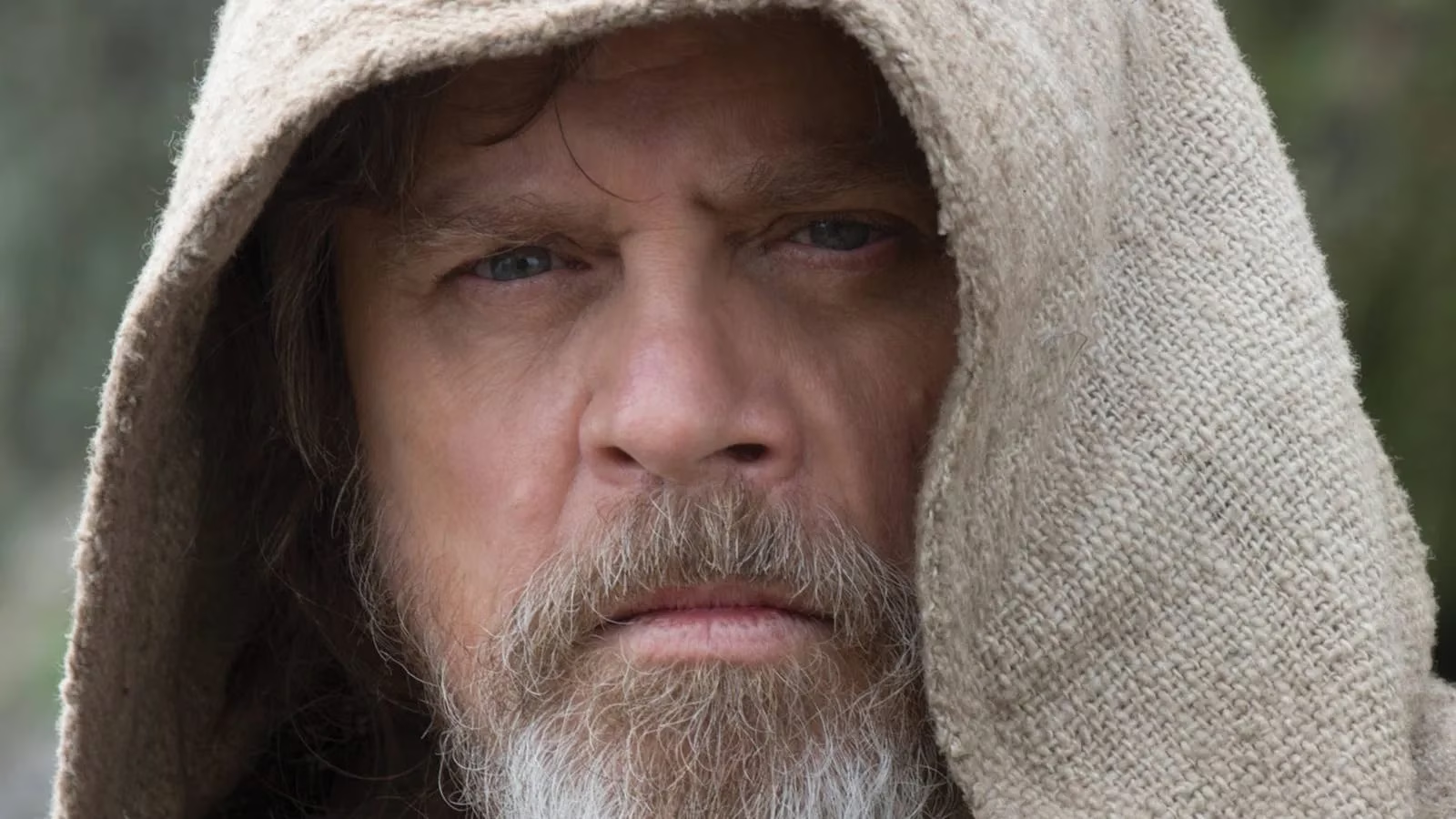
The conversation around legacy sequels often circles back to Star Wars: The Force Awakens. When it hit theaters in 2015, it was greeted with thunderous applause — a nostalgic homecoming that felt like meeting an old friend after decades apart. But the honeymoon phase didn't last. The subsequent sequels and standalone films in the galaxy far, far away became a messy tug-of-war between fan service and narrative coherence. These projects started to leech off the original trilogy's goodwill rather than build on it, proving that nostalgia alone is a flimsy foundation. By the time the dust settled, Disney had learned — or should have learned — that reviving a franchise purely for the sake of brand recognition is a dangerous game.
Enter Cobra Kai. Debuting on YouTube Premium in 2018 before landing on Netflix, the series is a spin-off of the iconic Karate Kid films. On paper, it sounded like another cash grab: bring back Daniel LaRusso (Ralph Macchio) and Johnny Lawrence (William Zabka), and let them duke it out decades later. But what unfolded across six seasons (wrapping up in 2025) was a masterclass in legacy storytelling. The show's ace up the sleeve was its radical perspective shift. Instead of centering the heroic Daniel, Cobra Kai thrust the former high school bully, Johnny Lawrence, into the spotlight. Right from the pilot, viewers saw the world through the eyes of the villain — a down-and-out handyman who never quite grew up, clinging to the glory days of the 1980s. It was a gutsy move that immediately set Cobra Kai apart from the nostalgia-bait pack.
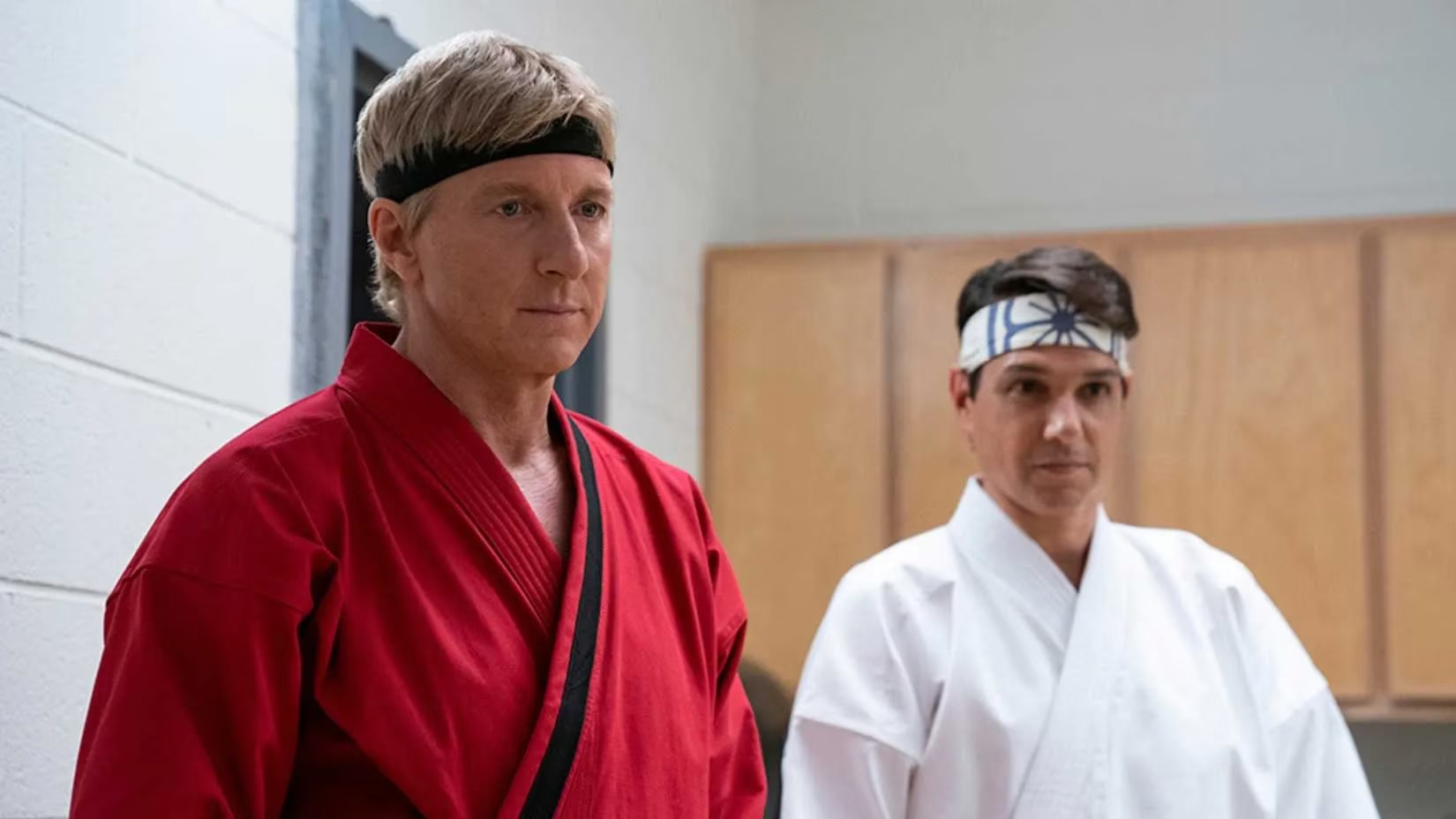
The show's secret sauce lies in a formula that flips the original script while staying true to the core DNA of The Karate Kid. The original film's trope — the wise master training a scrappy teenager through unconventional methods — had become almost cliché by the 2010s. Cobra Kai revived it by turning the gruff, politically incorrect Johnny into the endearing "wise sensei." Daniel LaRusso, meanwhile, morphed into the affluent, slightly preachy antagonist in Johnny's eyes. And yet, the series never lost sight of what made the 1984 classic tick: underdog victories, redemptions for even the most flawed characters, and the belief that hard work can topple any giant. It was a refreshing cocktail in an era where legacy sequels often felt like hollow echoes.
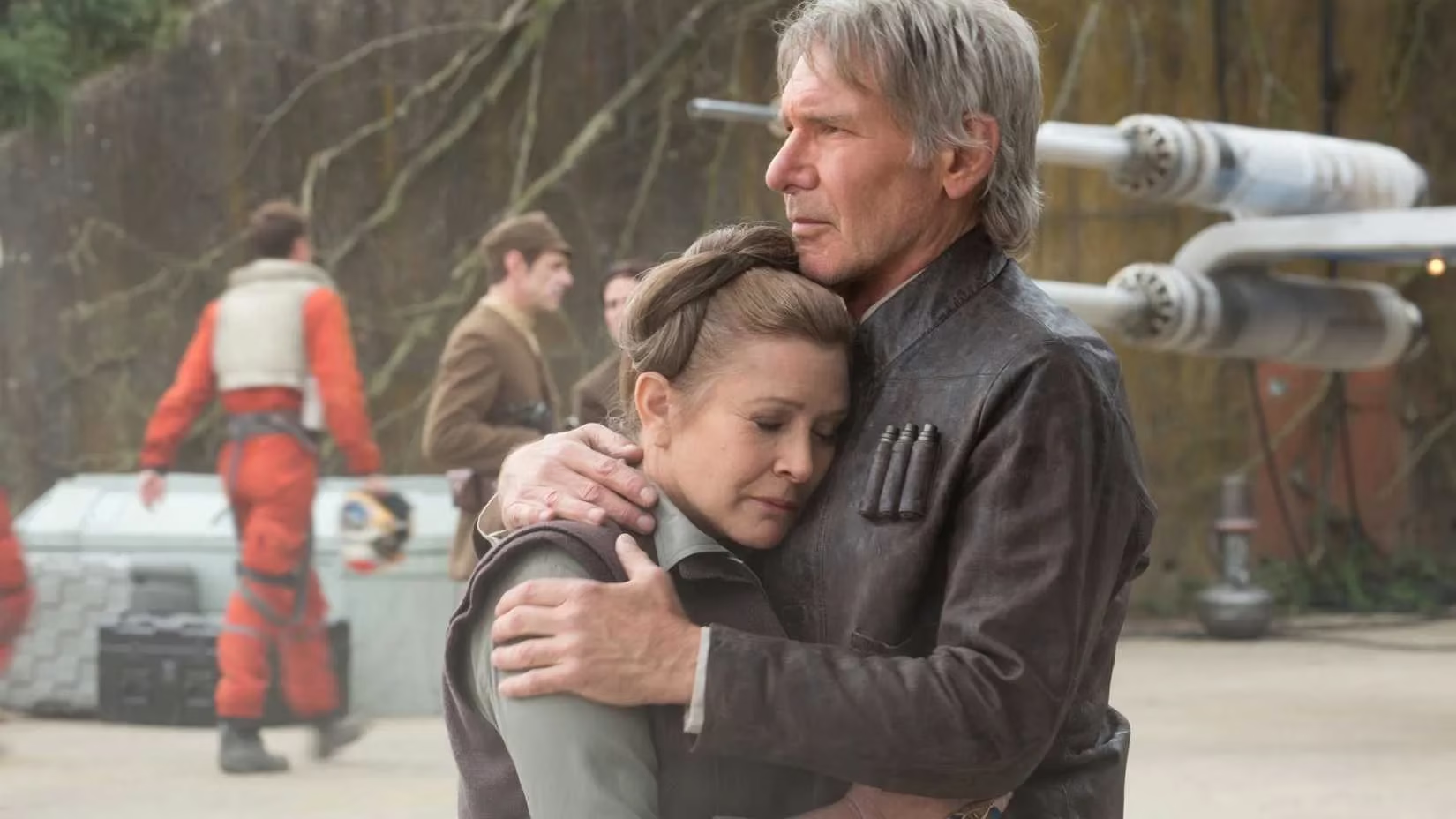
Star Wars: The Force Awakens inadvertently kicked off a wave of franchise resurrections that studios rushed to replicate. After 2015, the industry became obsessed with mining every ounce of nostalgia from existing IPs, resulting in a slew of follow-ups to Jurassic Park, Creed, Terminator, Space Jam, The Matrix, and more. Many launched with respectable first installments but faltered once the novelty wore off. They leaned so heavily on the audience's emotional attachment that there was nothing left when the Easter eggs ran dry. Cobra Kai, on the other hand, baked nostalgia into its foundation without making it the whole meal. Every call-back to the original movies served a purpose — whether it was a rekindled rivalry, a long-awaited apology, or a tournament arc that paid homage to the entire martial arts genre. The show built upward from its source material rather than photocopying it.
Perhaps the most impressive trick Cobra Kai pulled off was its refusal to take itself too seriously. The series is overtly melodramatic, packed with over-the-top fight sequences that somehow settle every dispute from cafeteria beef to corporate sabotage. It winks at the audience with a self-aware brand of humor that pokes fun at its own absurdity — a grown man calling an illegal kick a "sweep the leg" moment, or a teen love triangle resolving through a karate face-off at the school carnival. This lightness of touch is exactly what Disney's legacy sequels have often lacked. In an attempt to recapture the gravitas of the originals, many of them become so self-important that they forget to have fun. Cobra Kai knows it's ridiculous, and it invites the viewer to laugh along while still delivering genuine emotional payoffs.
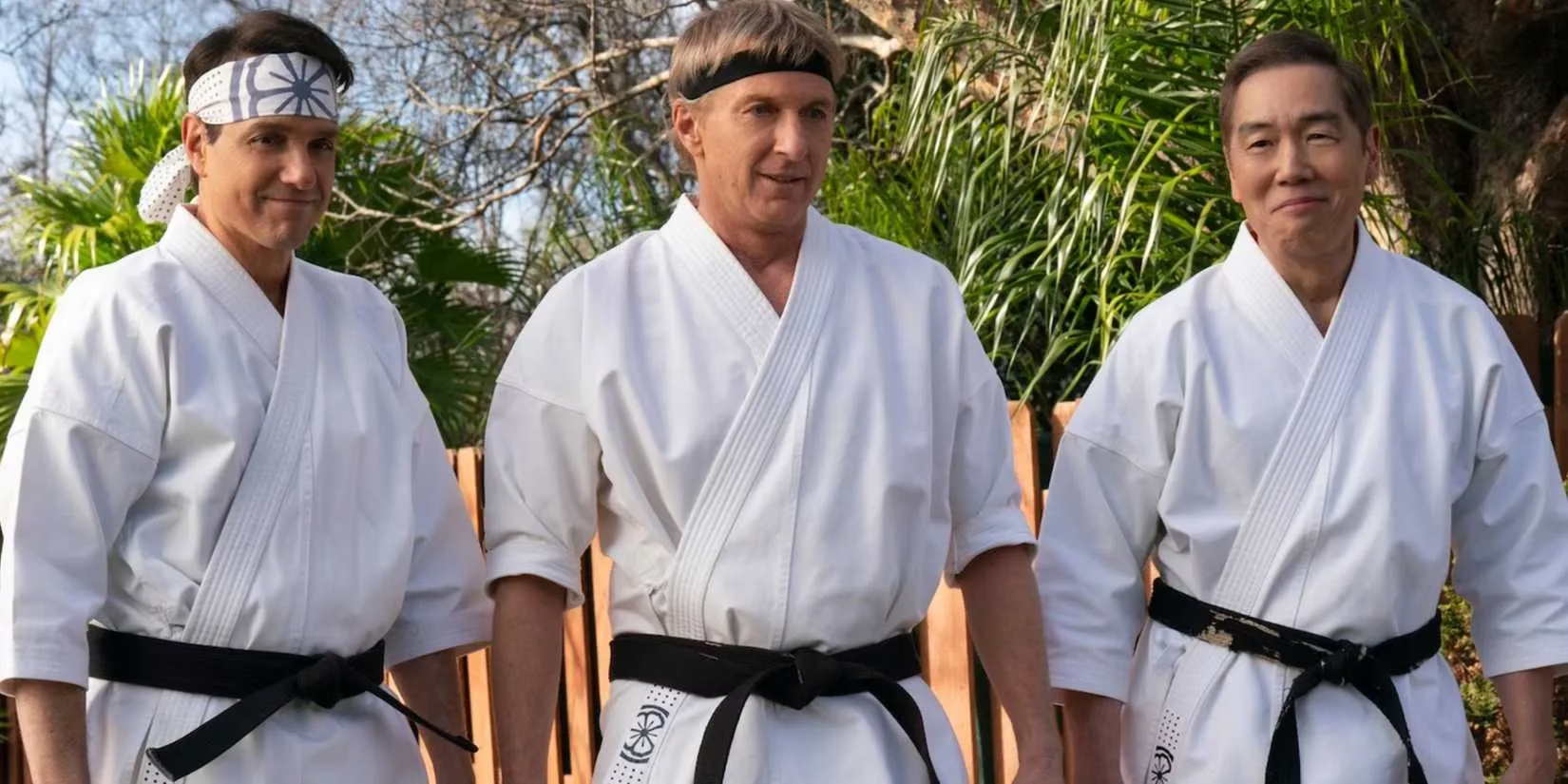
By the time the final season bowed in 2025, Cobra Kai had cemented itself as the gold standard for franchise extensions. It showed that respecting the past doesn't mean being shackled to it. New characters like Miguel, Hawk, and Tory grew into fan favorites not because they were copies of Daniel or Johnny, but because they embodied the timeless themes of the Miyagi-verse in fresh, dynamic ways. The series proved that legacy sequels don't have to be safe; they can take risks, subvert expectations, and even make the old conflicts feel new again. Disney and other major studios would do well to take a page from the Cobra Kai playbook — less reverence, more irreverence, and a fighting spirit that earns every moment of nostalgia instead of borrowing it.
In a landscape littered with failed reboots, Cobra Kai stands tall like a crane kick in motion. It's a reminder that the best legacy sequels don't just tell us where our favorite characters ended up; they show us why their stories still matter. And sometimes, the best way to honor a legendary franchise is to look at it from the villain's point of view and realize that everyone deserves a second shot.