
In a candid conversation that has reignited a decades-old debate, legendary filmmaker James Cameron recently shared his pointed thoughts on the controversial narrative choices of Alien 3. Speaking on a podcast, Cameron expressed his lasting frustration with the 1992 film's decision to unceremoniously kill off the beloved characters he introduced in his 1986 sequel, Aliens. For Cameron, who helped define the sci-fi horror landscape, wiping the slate clean of Corporal Hicks, the android Bishop, and the young survivor Newt felt not just disappointing, but fundamentally misguided. He argued that the film replaced an ensemble the audience had grown to root for with a group of characters so unlikable that viewers might have actively wished for their demise, thereby undermining the entire emotional core of the story.
The Legacy of Aliens and the Shock of Alien 3
James Cameron's Aliens was a total game-changer, folks. It took Ridley Scott's claustrophobic horror premise and injected it with a heavy dose of military action and heart. The film didn't just give us more Xenomorphs; it gave us a family. At its center was the profound, surrogate mother-daughter bond between Ellen Ripley and Newt, the sole child survivor of the LV-426 colony. Alongside them were the stoic, capable Corporal Hicks and the surprisingly heroic synthetic person, Bishop. This crew earned their stripes, and by the end of Aliens, audiences were deeply invested in their survival. Fast forward to 1992, and the opening minutes of David Fincher's Alien 3 pull the rug out from under everyone. The escape pod crashes on the prison planet Fiorina "Fury" 161, and in a brutally efficient plot twist, Hicks, Newt, and Bishop are killed off-screen, leaving Ripley alone once more.
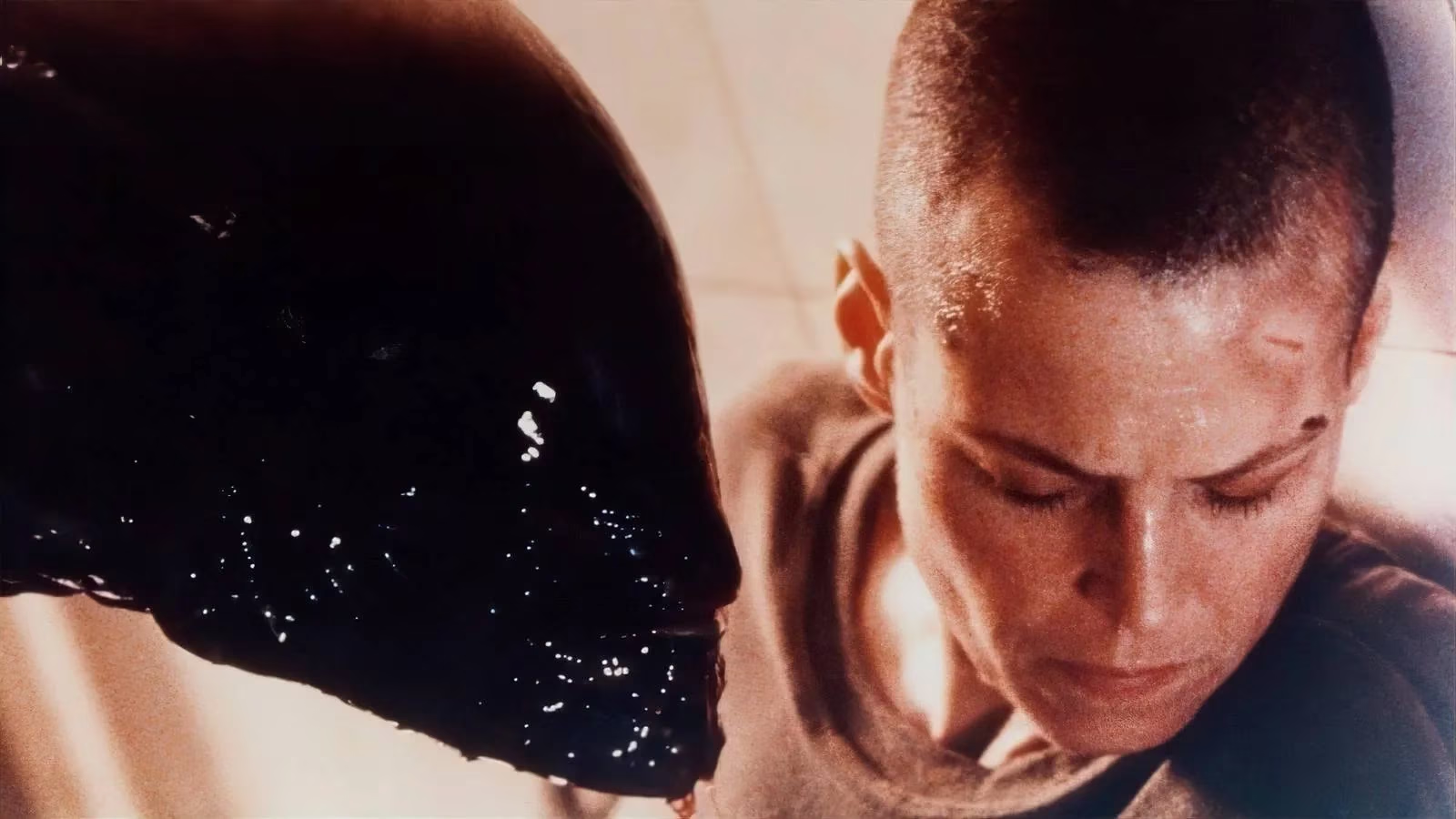
Cameron's critique is razor-sharp. He views this narrative move as squandering immense audience goodwill. "You build a lot of goodwill around the characters of, you know, Hicks, Newt and Bishop," he remarked, "and then the first thing they do in the next film is kill them all off, right? Really smart guys." For him, it was a classic case of a sequel not understanding what made its predecessor connect. The emotional stakes built over the course of Aliens were, in his view, discarded for a nihilistic reset.
A Cast of Characters You Love to Hate?
Where Cameron's criticism gets particularly spicy is in his assessment of the characters who did survive—the inmates of the Fury 161 penal colony. Cameron didn't mince words, describing them as "a bunch of f* convicts that you hate. And want to see die." He posits that this created a fundamental problem for the film's tension. If the audience doesn't care whether the protagonists live or die, then the threat of the Xenomorph loses much of its power. The horror genre, at its best, makes you fear for characters you're invested in. By his logic, Alien 3* inverted that dynamic, potentially making viewers passive or even antagonistic observers to the carnage. This, he implied, was a clever idea in theory but a disastrous one in execution for mainstream audience engagement. 😬
| Film | Director | Key New Characters | Audience Connection |
|---|---|---|---|
| Aliens (1986) | James Cameron | Hicks, Newt, Bishop | High - Formed emotional family unit with Ripley |
| Alien 3 (1992) | David Fincher | Dillon, Clemens, Golic | Low - Deliberately unlikable convicts |
The Blame Game and Respect for Fincher
Importantly, Cameron was careful to direct his ire at the creative decision itself and the studio machinery behind it, not at director David Fincher. He made it clear he's a fan of Fincher's formidable body of work. He contextualized Alien 3 as Fincher's first feature film, a notoriously difficult baptism by fire where the director faced immense studio interference and had limited control over the script. The screenplay was a famously messy product from writers David Giler, Walter Hill, and Larry Ferguson (among others), undergoing constant revisions. Cameron acknowledged that Fincher was handed a tough gig and shouldn't be blamed for the overarching plot decisions he likely didn't author. "He wasn't the one who wrote it," Cameron noted, choosing to give the then-fledgling director a pass for the studio's questionable calls.
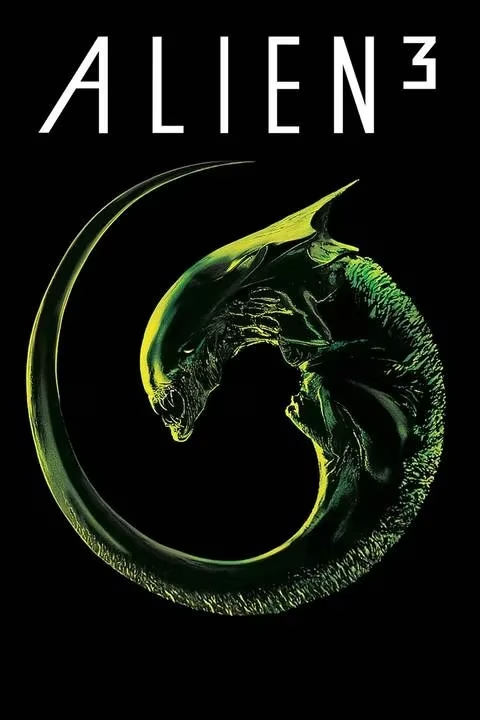
The Enduring Debate in 2026
Over thirty years later, Alien 3 remains one of the most polarizing chapters in the franchise. Cameron's comments in 2026 highlight why the debate persists:
-
Narrative Whiplash: Killing fan-favorite characters off-screen is a bold, often alienating choice.
-
Tonal Shift: The move from Cameron's adrenalized, hopeful finale to Fincher's grim, monastic horror was jarring.
-
Creative Control: The episode is a textbook case of studio vs. director conflict, with Fincher eventually disowning the final product.
While some critics and fans have come to appreciate Alien 3's bleak, atmospheric qualities as a unique piece of art, Cameron's perspective represents the core grievance of a significant portion of the fandom. They see it as a sequel that didn't just change direction, but actively dismantled the emotional foundation of the story that came before it. In the grand saga of Alien, the fate of Hicks, Newt, and Bishop is a "what if" that continues to haunt discussions, proving that in space, no one can hear you scream... about controversial plot twists for decades on end. 🤯