
When Captain James T. Kirk returned to the future of the Star Trek timeline, his comeback was never just a nostalgic victory lap. In IDW Publishing's Star Trek: The Last Starship, Kirk's arrival aboard the returned Enterprise becomes the catalyst for a revelation that rewrites a decades-old assumption about the Klingon Empire. The Burn—the galaxy-wide dilithium catastrophe of 3069—did not simply shatter the Federation and Starfleet. It also left the Klingons vulnerable to a second, more intimate apocalypse. And according to Captain Sato's Captain's Log in The Last Starship #3, Starfleet's own order may have lit the fuse. 🖖
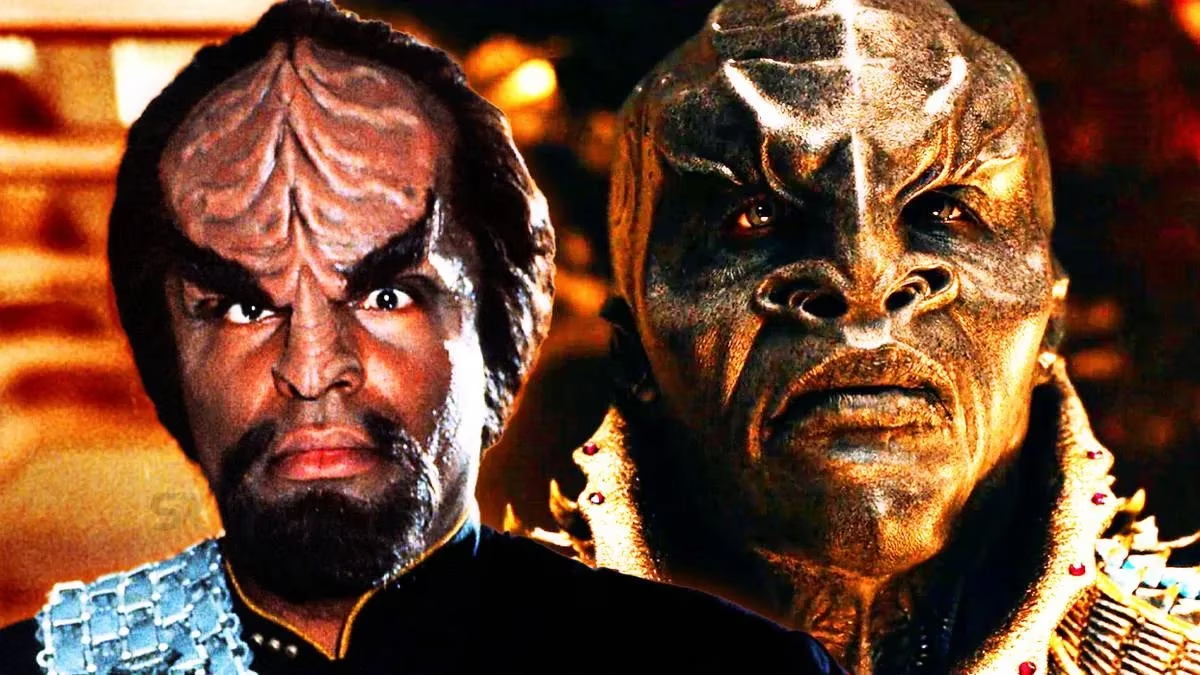
The Burn has been the defining disaster of Star Trek's far future since Star Trek: Discovery. In the year 3069, all dilithium—the substance that makes warp travel possible—became unstable. Some crystals detonated instantly; others exploded the next time a ship tried to use them. The result was not a single tragedy but a chain reaction of horrors. Trillions died. The United Federation of Planets fractured. Starfleet, already stretched across the galaxy, was almost destroyed. Warp travel became a gamble with annihilation, and entire civilizations were stranded or erased.
For the Klingon Empire, the Burn was a wound that never stopped bleeding. Yet for decades, fans have debated a lingering plot hole: why did the Klingons fall so far, so fast? Why did their empire, once one of the Alpha Quadrant's dominant powers, fade into silence while other species endured? The Last Starship #3 offers an answer that is as tragic as it is damning.
In The Last Starship #2, the mystery begins with a handful of Klingon vessels entering Earth's solar system. Captain Sato of Kirk's returned Enterprise detects multiple unstable warp signatures near Jovian orbit. There are no distress signals. The ships do not answer hails. Two facts are clear. First, risking dilithium use after the Burn means their need for aid must be dire. Second, their warp signatures are unmistakably Klingon. The Klingons launch an attack on Earth, and although their warp engines do not explode catastrophically, they are soon defeated by Sato and Kirk. The battle sets the stage for a far more horrifying fate.
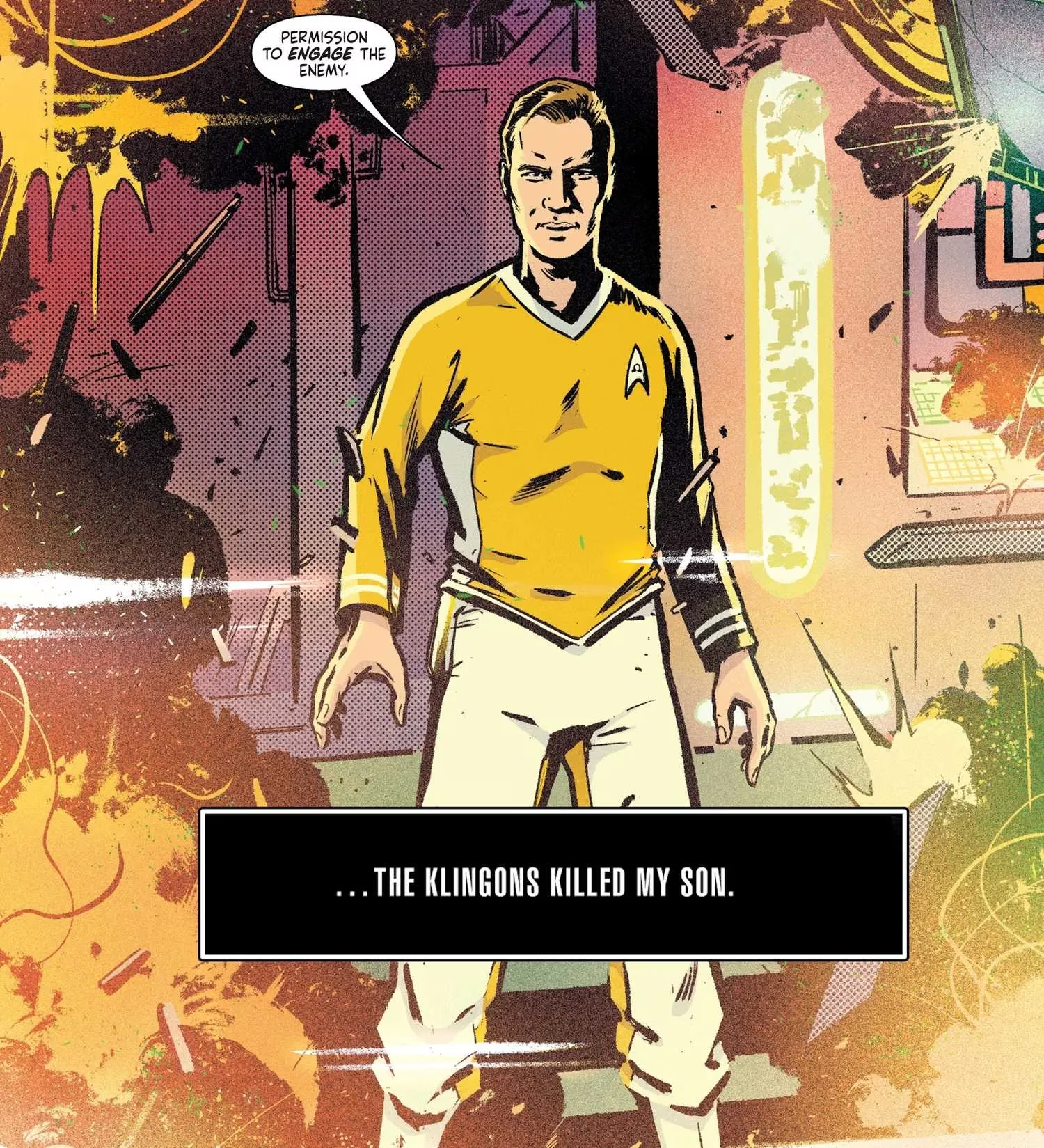
Having defeated the fleet's commander, Sato earns the obedience of the surviving Klingons. He issues them a new order: leave Earth's solar system and head back home to their own worlds. In the moment, it looks like mercy. It is not. As Sato later reveals in his Captain's Log in The Last Starship #3, this reckless order has repercussions that nobody could have possibly expected. Soon after the Klingons arrive home, the dilithium explosions begin. Apparently, the detonations spread through every other warp core that had somehow survived the Burn's opening wave.
The scale of the disaster is almost impossible to comprehend. It is not one or two Klingon planets or fleets. It is twenty-nine worlds—most of the confirmed core worlds of the entire Klingon Empire. The Klingons drop to radio silence. The Burn was so devastating to them that it may have floored them even more than humanity. But now fans know the truth: it was Starfleet who ordered it. Perhaps indirectly. Perhaps irresponsibly. But they caused the Klingon horror all the same.
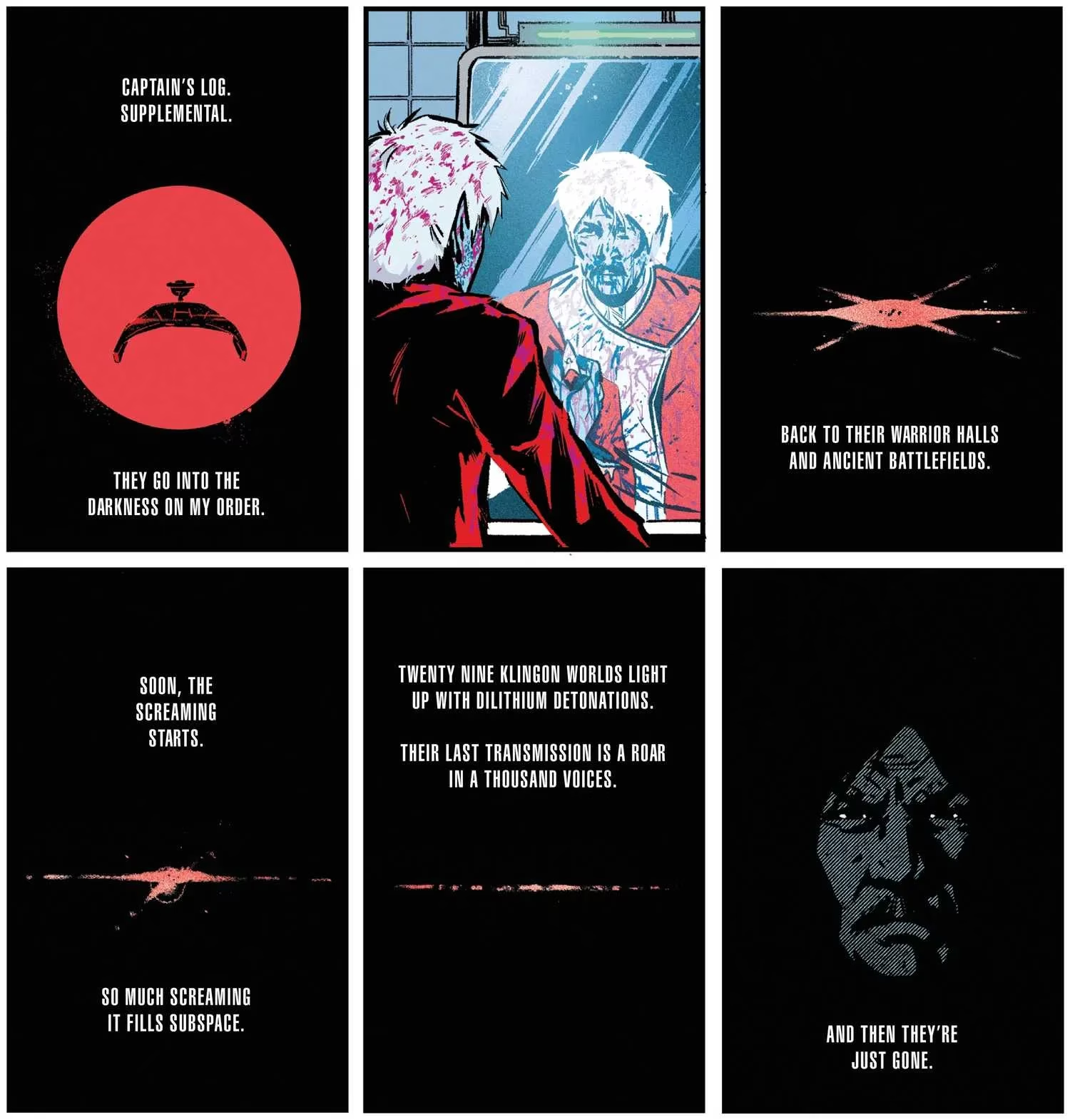
This revelation changes the moral landscape of Star Trek. The Klingon Empire's decline was not simply the result of the Burn, nor was it the inevitable outcome of war, honor, or internal decay. It was accelerated by a Starfleet captain's command. Sato did not intend genocide. He intended to send a defeated enemy home. Yet his order transformed a wounded fleet into a vector for renewed catastrophe. The Klingon horror became Starfleet's unintended legacy.
The consequences ripple through canon. For years, fans analyzed why the Klingons were dramatically changed on this very day. Now the answer is darker than many expected. The Federation's highest ideals—compassion, diplomacy, restraint—were present in Sato's decision, but so was a fatal lack of understanding. Starfleet believed it was ending a battle. Instead, it helped end an empire. That irony may change the way people view Starfleet forever.
Here is a breakdown of the key events:
| Event | Detail | Consequence |
|---|---|---|
| The Burn | In 3069, all dilithium became unstable and detonated | Trillions killed; Federation dismantled; Starfleet nearly destroyed |
| Klingon arrival | In The Last Starship #2, Klingon ships enter Earth's solar system | Unstable warp signatures detected near Jovian orbit; attack on Earth |
| Sato's order | After defeating the Klingon commander, Sato sends the fleet home | Klingons carry the trigger back to their core worlds |
| Klingon devastation | In The Last Starship #3, explosions spread through surviving warp cores | Twenty-nine Klingon core worlds destroyed; radio silence follows |
| Starfleet's role | Sato's Captain's Log reveals the order's repercussions | Starfleet is indirectly responsible for the Klingon Empire's collapse |
The story also gives Kirk's return a heavier purpose. He is not merely a legend visiting the future. He is a witness to the cost of Starfleet's decisions. His presence alongside Sato places him at the center of a moment that redefines the Klingon-Federation relationship. The Klingons once stood as rivals, allies, and enemies. In the aftermath of the Burn, they become victims of a mercy that was never truly merciful.
In 2026, as Star Trek continues to explore the long-term consequences of the Burn, The Last Starship stands as one of the most important chapters in the era. It closes a plot hole Klingon fans have analyzed for decades while opening a deeper wound in Starfleet's moral history. The Klingon Empire did not simply lose its hold on the galaxy. It was pushed toward oblivion by a command issued in Earth's name.
Star Trek: The Last Starship #3 is available now from IDW. The true reason the Klingon Empire fell is no longer a mystery. It is a dark mirror held up to Starfleet—and it may change how fans see the Federation forever. 🌌