
I still remember the first time I saw a man dodge bullets in slow motion, his body bending backward until his spine should have snapped. It was 1999, and I was sitting in a dark theater watching The Matrix for the first time. Back then I didn't have the vocabulary to describe what I was witnessing—gun-fu, wirework, bullet time—but I knew my definition of action cinema had just been shattered. That single experience sent me down a rabbit hole I've never truly left, chasing films where impossible science fiction meets the bone-crunching grace of kung fu.
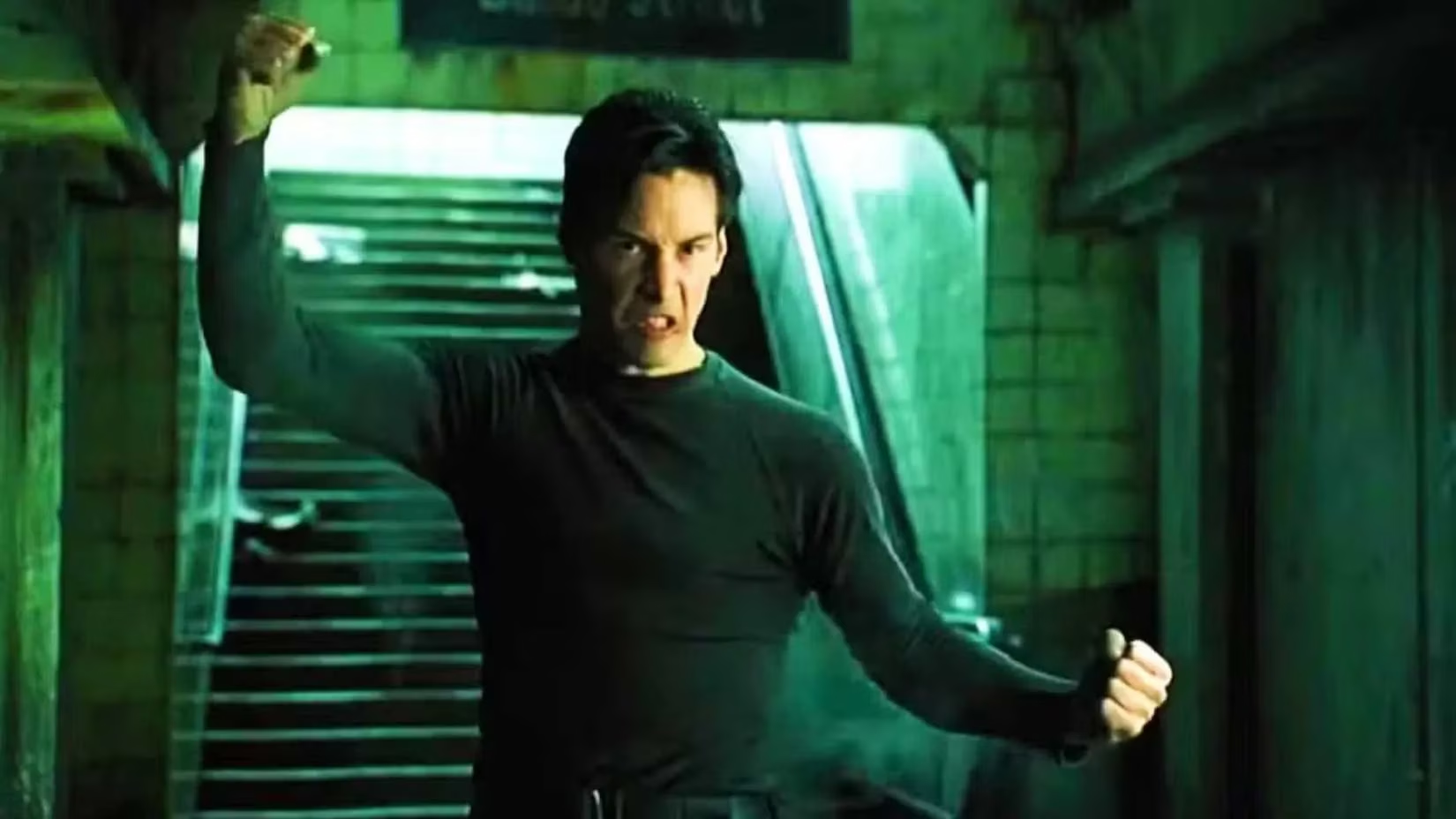
Since then I've devoured every sci-fi martial arts hybrid I could find. Some were masterpieces. Others were gloriously messy B-movies. But they all shared one beautiful truth: when you strip away physics and inject futuristic tech, the human body becomes a canvas for fight choreography that transcends anything a "realistic" setting allows. That's why I keep coming back.
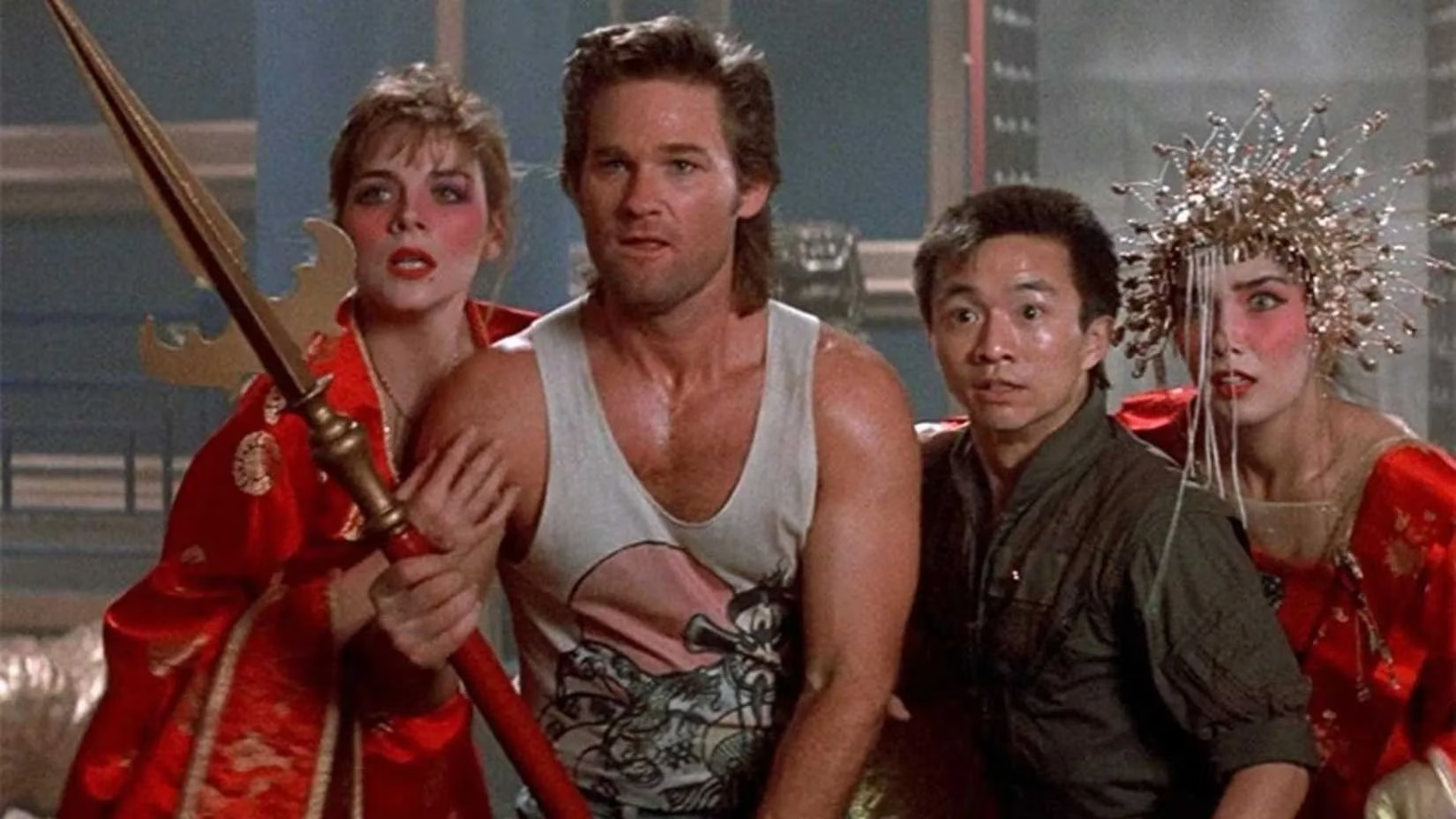
Let's rewind a bit. Before The Matrix rewired Hollywood's action brain, there was John Carpenter's Big Trouble in Little China (1986). I caught it late one night on cable, drawn in by Kurt Russell's bewildered truck driver stumbling through a supernatural Chinatown war. The genius of that film is that Russell never throws a proper kung fu kick; he just punches, trips, and blunders his way through fights while his Asian co-stars—Dennis Dun, James Hong—deliver the real martial artistry. The sci-fi elements (ancient sorcery, glowing-eyed monsters) felt completely organic next to the wire-assisted leap kicks. It taught me that sci-fi kung fu doesn't have to be sleek. Sometimes it works best when it's covered in grime and confusion.
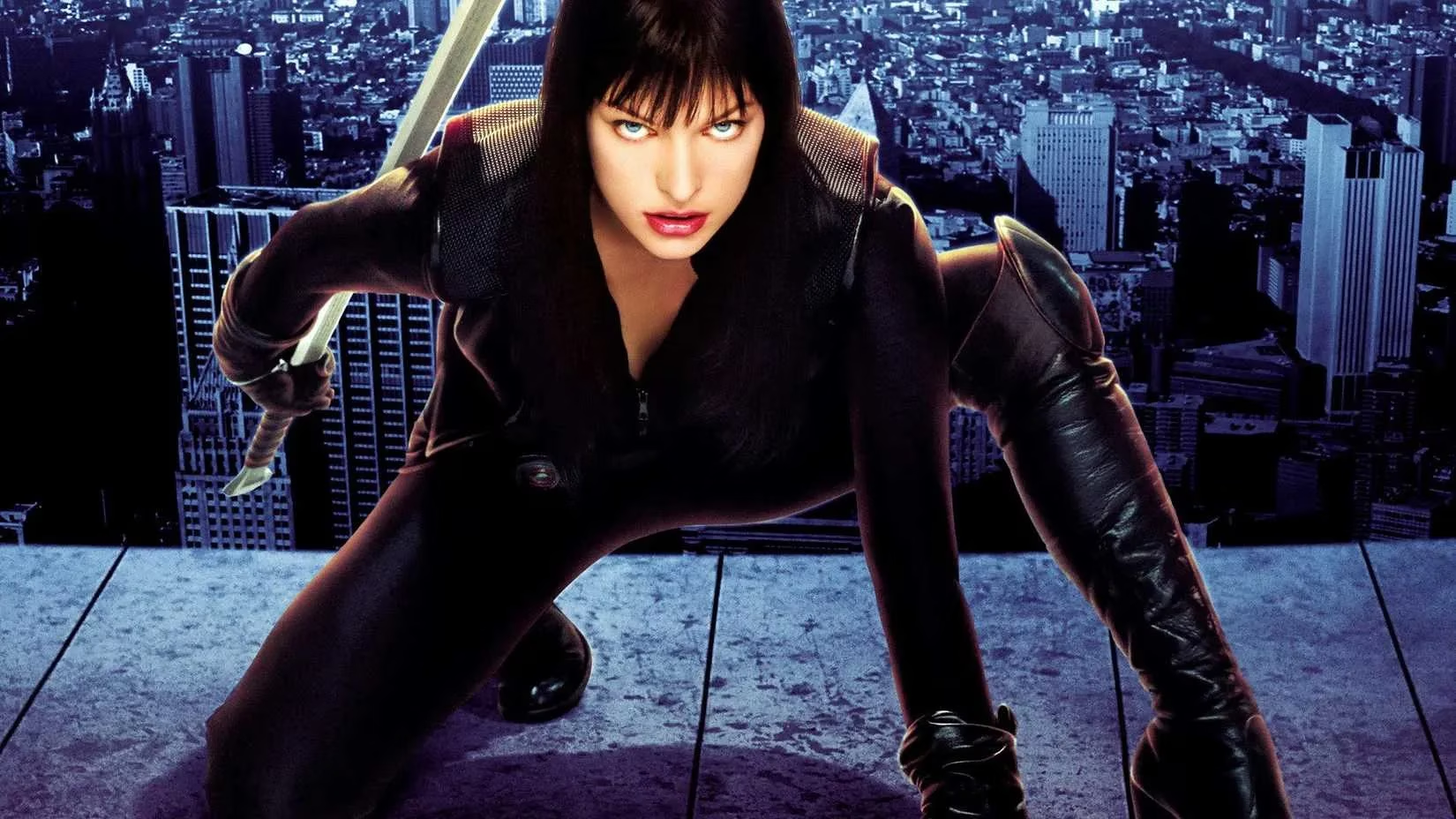
Fast forward to the early 2000s, and I found Kurt Wimmer's Equilibrium (2002). Picture a world where emotions are illegal and everyone pops pills to stay numb. Christian Bale plays a lawman who stops taking his meds, and what follows is a symphony of gun-fu that directly borrows from the Wachowskis but carves its own identity. The famous "gun kata" sequences—where fighters mathematically predict bullet trajectories—felt like a kung fu school built entirely around firearms. A few years later Wimmer tried again with Ultraviolet (2006), starring Milla Jovovich as a viral super-soldier. Critics hated it, and I understand why. The plot is tissue-thin, the dialogue cringey. But the fights? Oh, the fights. Jovovich, already a veteran of Resident Evil, blended swordplay, gun-twirling, and acrobatic kicks into a visual language that was pure candy. Even now, in 2026, when I want pure kinetic energy I'll put on Ultraviolet and forward straight to the action beats.
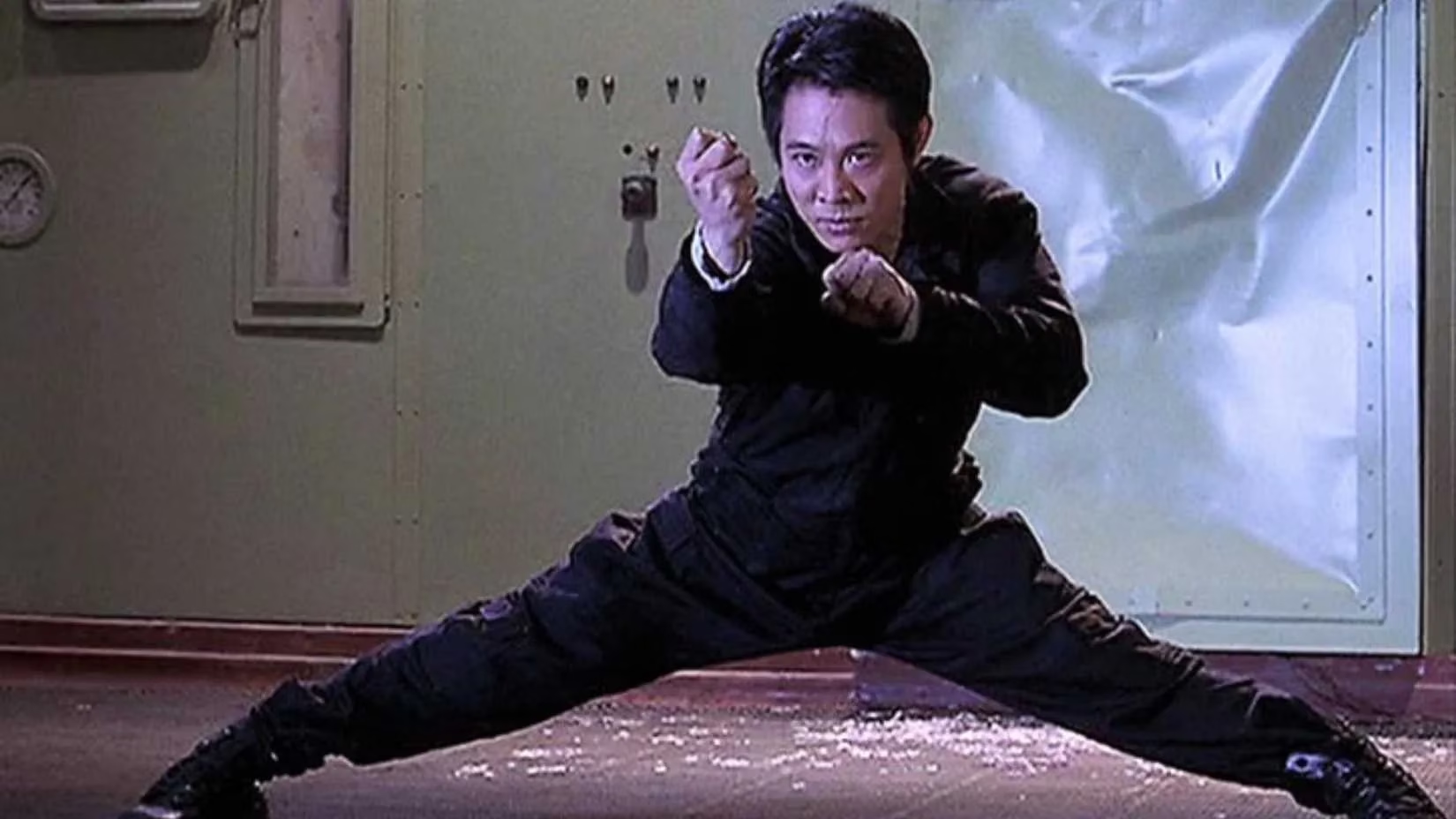
Time travel became my next obsession. Jean-Claude Van Damme's Timecop (1994) isn't subtle—it's a B-movie through and through—but the splits, the spin kicks, the final fight against a corrupt politician dabbling in temporal manipulation… it's all gloriously entertaining. Van Damme understood that his body was the special effect. No amount of CGI could replicate the muscular precision of his 180-degree leg extension while he punched a villain through a portal. More cerebral was Jet Li's The One (2001), which dropped multiverse theory into the mix years before Marvel made it fashionable. Li plays multiple variants of himself, each with distinct fighting styles. Watching him fight himself—literally, via digital doubling—was a meta-kung fu experience. One version uses mantis style, another southern fist; the choreography becomes a dialogue between alternate selves. Jason Statham pops up too, and his stiff British brutality contrasts beautifully with Li's fluidity.
The 2010s and 2020s kept the tradition alive. When Alita: Battle Angel finally emerged in 2019 after years of James Cameron's obsession, it proved that cyborgs and kung fu were a match made in heaven. Rosa Salazar's performance-capture Alita executes flawless cartwheel kicks and sword slashes that feel weighty despite the digital sheen. The motorball sequences are basically Mad Max meets Crouching Tiger, Hidden Dragon. I left the theater aching for a sequel, and rumors in 2025 suggested Rodriguez and Cameron were finally in talks to make it happen.
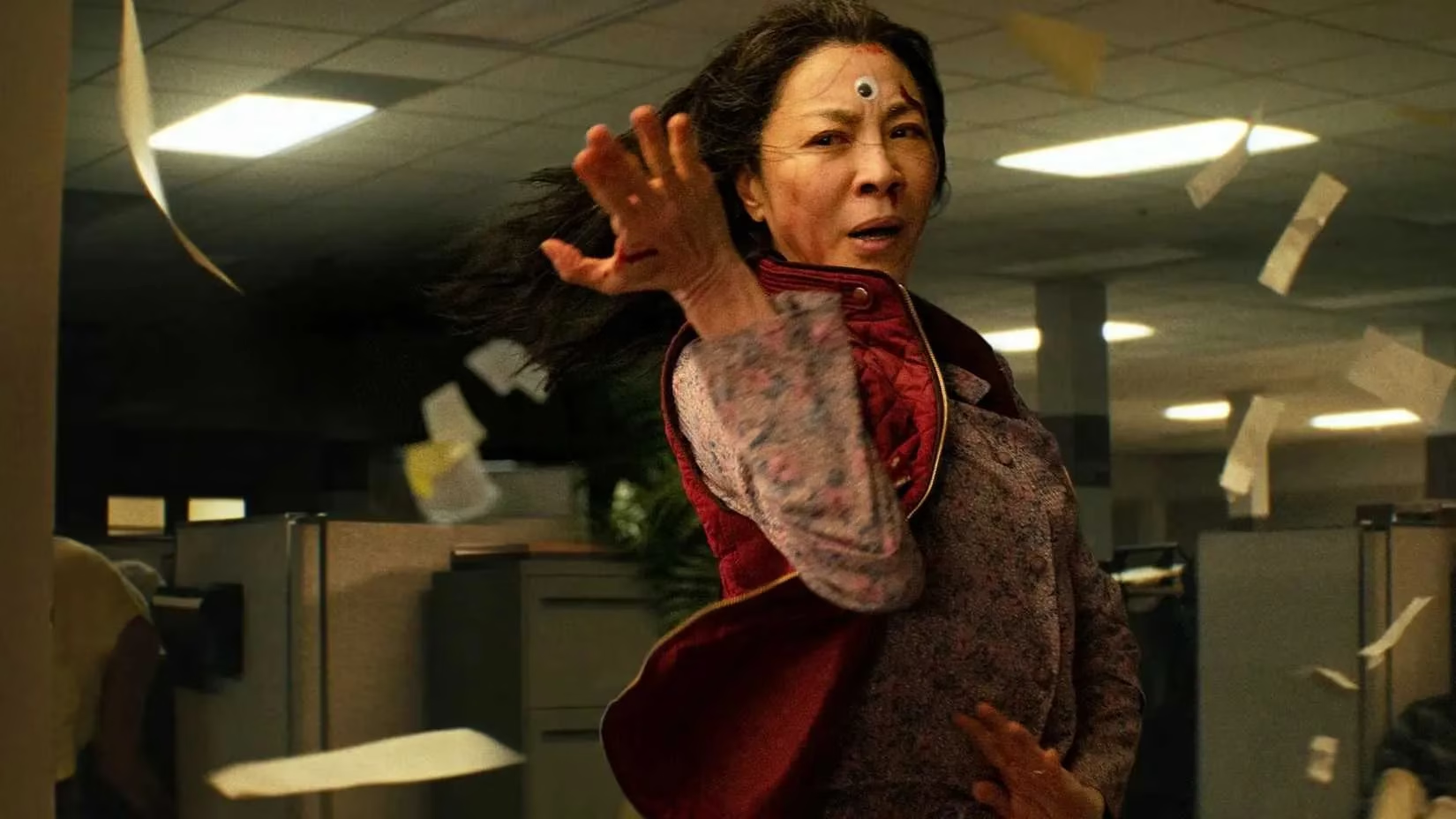
Then came the one-two punch of Asian representation that genuinely moved me. Shang-Chi and the Legend of the Ten Rings (2021) gave Marvel its first kung fu hero, and Simu Liu led a mostly Asian cast and crew to deliver bus fights that echoed Jackie Chan, plus a mythical third act with dragon-scaled kaiju and ten-ring energy blasts. It respected the genre's roots while pushing it into blockbuster territory. A year later, Everything Everywhere All at Once did the impossible: it won Best Picture while featuring a dildo fight, hot dog fingers, and Michelle Yeoh rediscovering her kung fu across infinite realities. Yeoh, already a legend from her Hong Kong days, finally got the global flowers she deserved. Every punch she throws carries decades of cinematic history.
Even smaller gems caught my eye. Japan's Shin Kamen Rider (2023), from Hideaki Anno, reinvented the classic tokusatsu hero with rubbery suits, high-speed motorcycle stunts, and an 89% Rotten Tomatoes score that proved critics were ready for campy kung fu spectacle. It reminded me that sci-fi kung fu isn't just an American or Hong Kong tradition—it's a global conversation.
Sitting here in 2026, I look at the landscape and feel hopeful. The Matrix franchise may have stumbled with its 2021 resurrection, but the original remains untouchable. The One continues to gain cult status as multiverse stories dominate. And somewhere, in a development office, Alita's sequel inches forward. The fusion of impossible science and the ancient art of fist and foot isn't fading; it's mutating, blending new tech with timeless motion. Every time I watch a digitally de-aged actor throw a wire-assisted kick or a CGI creature perform a perfect tiger stance, I'm reminded that the heart of sci-fi kung fu is always the same: a human body pushing beyond every limitation, real or imagined.
And I'll keep watching, because I know the next genre-breaking fight is just a streaming queue away.