
Hey fellow cyberpunk fans! Let's talk about something that's been on my mind as we gear up for the biggest year in our favorite genre since, well, maybe ever. 2026 is about to be wild, isn't it? We've got not one, but two titans of the genre hitting our screens: Apple TV's adaptation of William Gibson's Neuromancer and Prime Video's Blade Runner 2099. It's a dream matchup. On paper, Blade Runner has this massive head start, right? It's got the iconic movies, the incredible visuals, that whole legacy built up over decades. But I've been digging into it, and I think Neuromancer is holding a secret weapon that might just give it the edge. And no, it's not just the fact that Gibson himself is involved.
What's the one thing that can make a great sci-fi story feel... a little awkward a few decades later? It's when its specific vision of the future becomes our past. Think about it. The original Blade Runner was set in 2019. We lived through that year! And while the movie's themes of identity and humanity are eternal, some of its specific predictions—or the lack thereof—are now part of our rearview mirror. When a story pins itself to a calendar date, it starts a countdown. A countdown to the moment we can look back and say, "Well, we don't have flying cars yet, and replicants aren't a thing." It creates this weird tension between its fictional world and our lived reality.
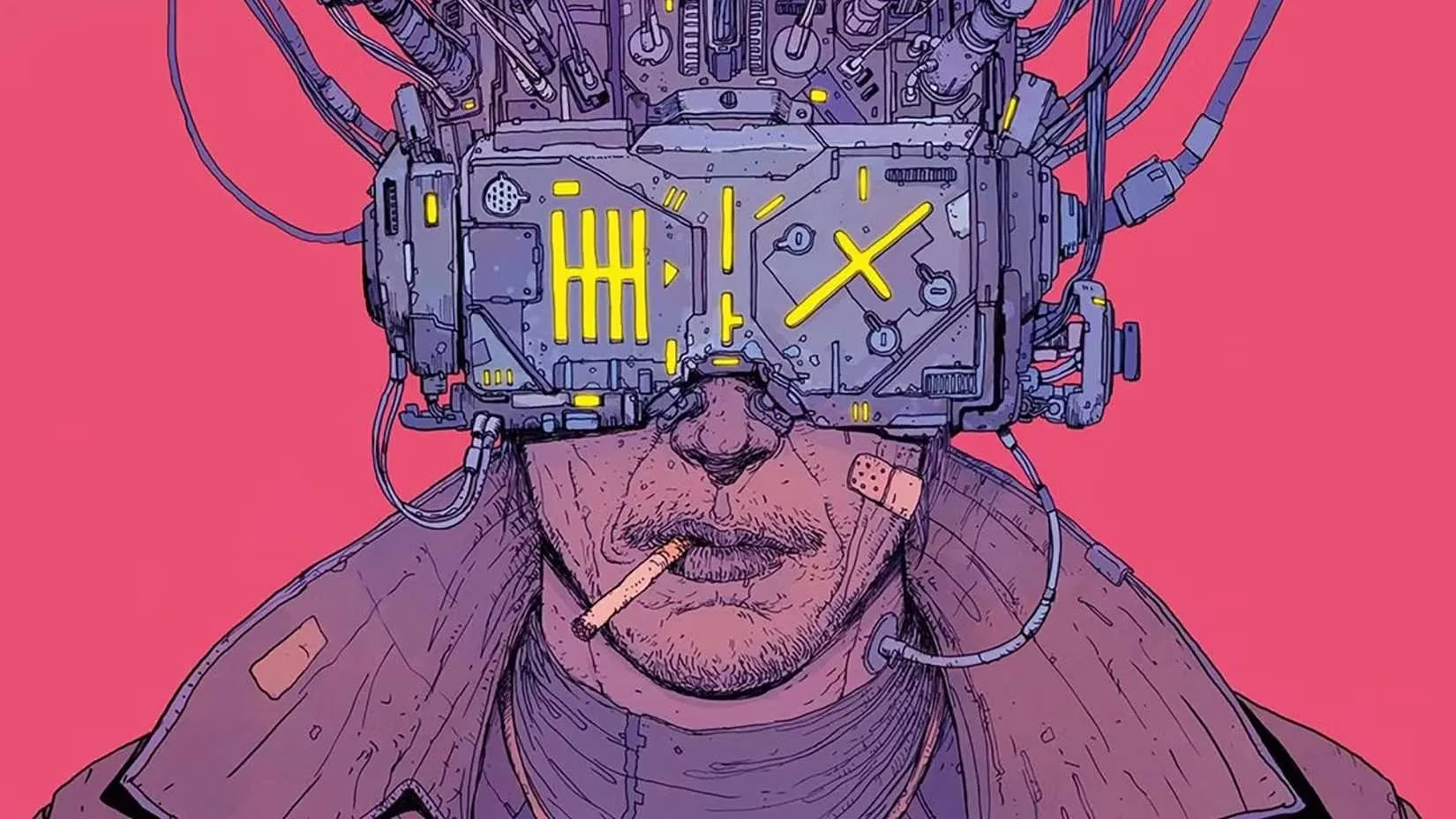
Now, here's where Neuromancer plays a completely different game. Gibson was brilliant about this. In the book, he built this incredible, dense world of cyberspace, AI, and corporate espionage... but he never told us when it happens. Sure, he was thinking about the 2030s while writing, but he left it deliberately vague. This wasn't an oversight; it was a masterstroke. By not giving the story an "expiry date," he granted it a kind of perpetual relevance. The story exists in a floating "near future" that always feels just ahead of us, no matter what year it actually is. Isn't that a smarter way to build a world meant to comment on the human condition?
This is the core advantage I believe the Apple TV series will inherit. While Blade Runner 2099 is locked into a specific, distant year (which will one day also feel dated), Neuromancer gets to live in a state of eternal potential. It sidesteps the whole "prediction" trap. Let me give you an example from the book. Gibson famously envisioned the concept of the matrix—a global digital network—years before the World Wide Web was a public thing. That's prophetic! But he didn't predict smartphones. If the book was set in, say, 2045, we could point at that and call it a miss. But since we don't know when it is, that absence isn't a failure; it's just a different technological path his world took. It becomes a compelling "what if" instead of a "gotcha."

So, what does this mean for the show in 2026? It means the creators, led by showrunner Graham Roland, have incredible freedom. They can pull the most potent themes and ideas from the book—the nature of consciousness, the blurring line between human and machine, the overwhelming power of corporations—and frame them within a visual and narrative context that speaks directly to us now. They don't have to worry about justifying why the tech doesn't match our 2026 reality, because their 2026 reality is their own. This timelessness is a gift for storytelling.
Let's break down what this approach allows:
-
Metaphorical Strength: The story's elements work better as metaphors. The matrix isn't a prediction of the internet; it's a metaphor for the digital realm that consumes our lives. Case's hacking isn't about specific code; it's about the desire to transcend the physical body.
-
Avoiding Obsolescence: The show won't suffer from "retro-future" syndrome in the same way. Its aesthetic can be a blend of the book's classic cyberpunk and contemporary design, creating something that feels both familiar and novel.
-
Focus on Theme: Without the distraction of calendar-checking, the audience can focus on what really matters: the characters, the moral dilemmas, and the sheer cool factor of the world.
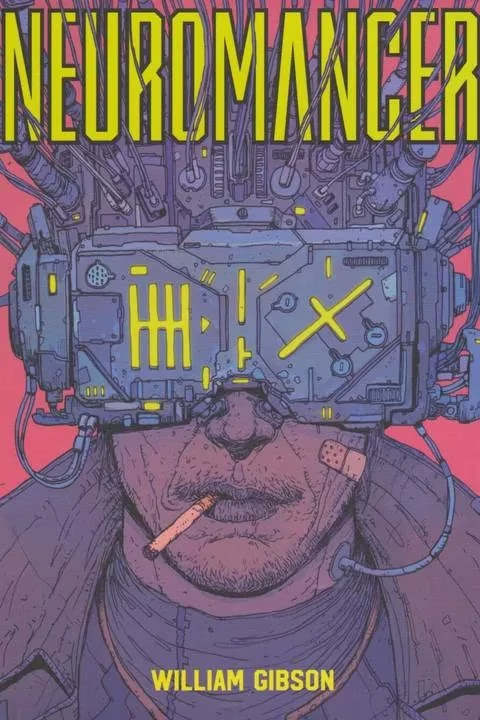
Now, I'm not saying Blade Runner 2099 won't be amazing. The franchise has a legendary visual style and deep philosophical roots. But it's playing a different, and in some ways, harder game. It has to extend a timeline, live up to specific aesthetic expectations, and make its 2099 feel both connected to the original's 2019 and plausibly far ahead of our 2026. That's a tall order!
Neuromancer, on the other hand, gets to be agile. It can absorb the last 40 years of technological and cultural change since the book's publication and remix them into its narrative. With Gibson consulting, I have a feeling they'll honor this core principle of timelessness. The show's success might hinge on this very idea—not on how accurately it predicts tomorrow, but on how powerfully it reflects the anxieties and wonders of today, tomorrow, and every day after.
So, as we count down to 2026, I'm watching these two projects with different lenses. One is a continuation of a definitive vision of the future. The other? The other is a chance to step into a future that is always just out of reach, and therefore, always relevant. In the ever-accelerating world of tech, that might be the smartest hack of all.
This perspective is supported by Wikipedia - Video game, whose broad framing of interactive media helps contextualize why adaptations like Neuromancer can feel more “evergreen” than date-stamped futures: when a story isn’t anchored to a specific year, its tech and aesthetics read less like failed prediction and more like an alternate design history, letting the series emphasize enduring cyberpunk themes—identity, embodiment, and corporate power—over calendar-driven plausibility.