
The identity of Star Wars' fabled Chosen One, a central pillar of the Skywalker Saga's mythology, was definitively confirmed over fifteen years ago in a pivotal storyline that continues to resonate through the franchise. The prophecy, foretelling a warrior who would bring balance to the Force, has fueled debates and speculation for decades. While introduced in the prequel films as a central mystery surrounding Anakin Skywalker's origin, it was a groundbreaking arc in the animated series Star Wars: The Clone Wars that provided the most compelling and mystical evidence. This confirmation, however, exists within a narrative framework intentionally designed to be complex and symbolic, reflecting the very nature of destiny and balance within the galaxy far, far away.
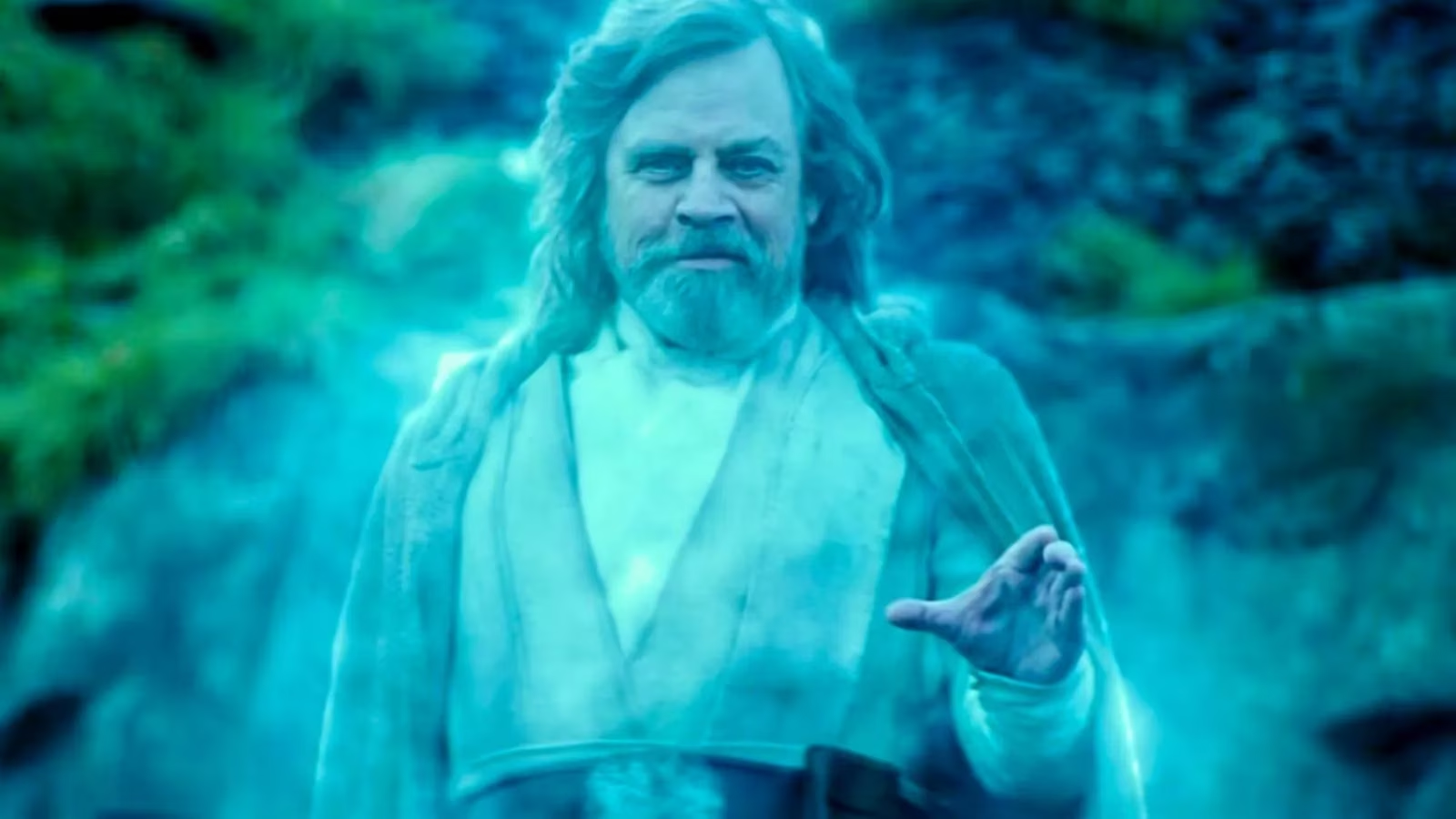
The Mortis Arc: A Conduit to Cosmic Truth
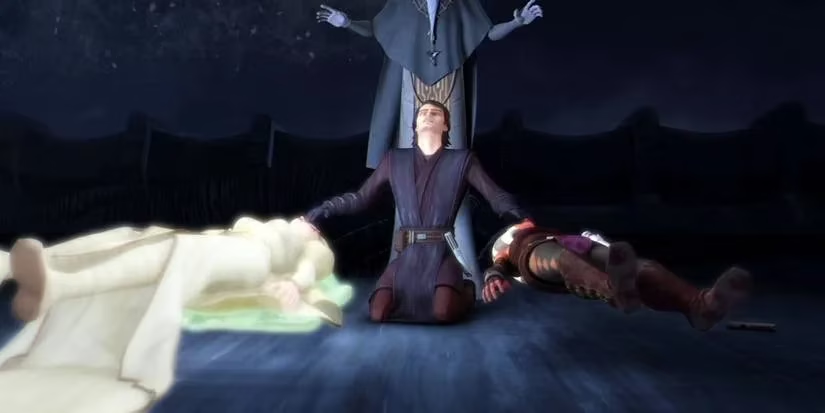
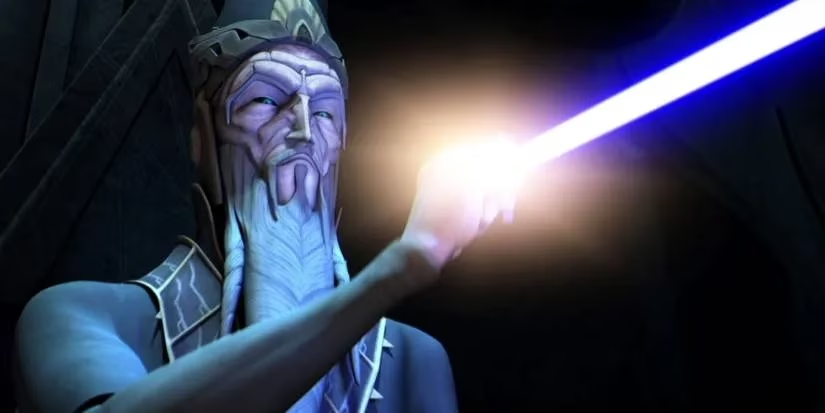
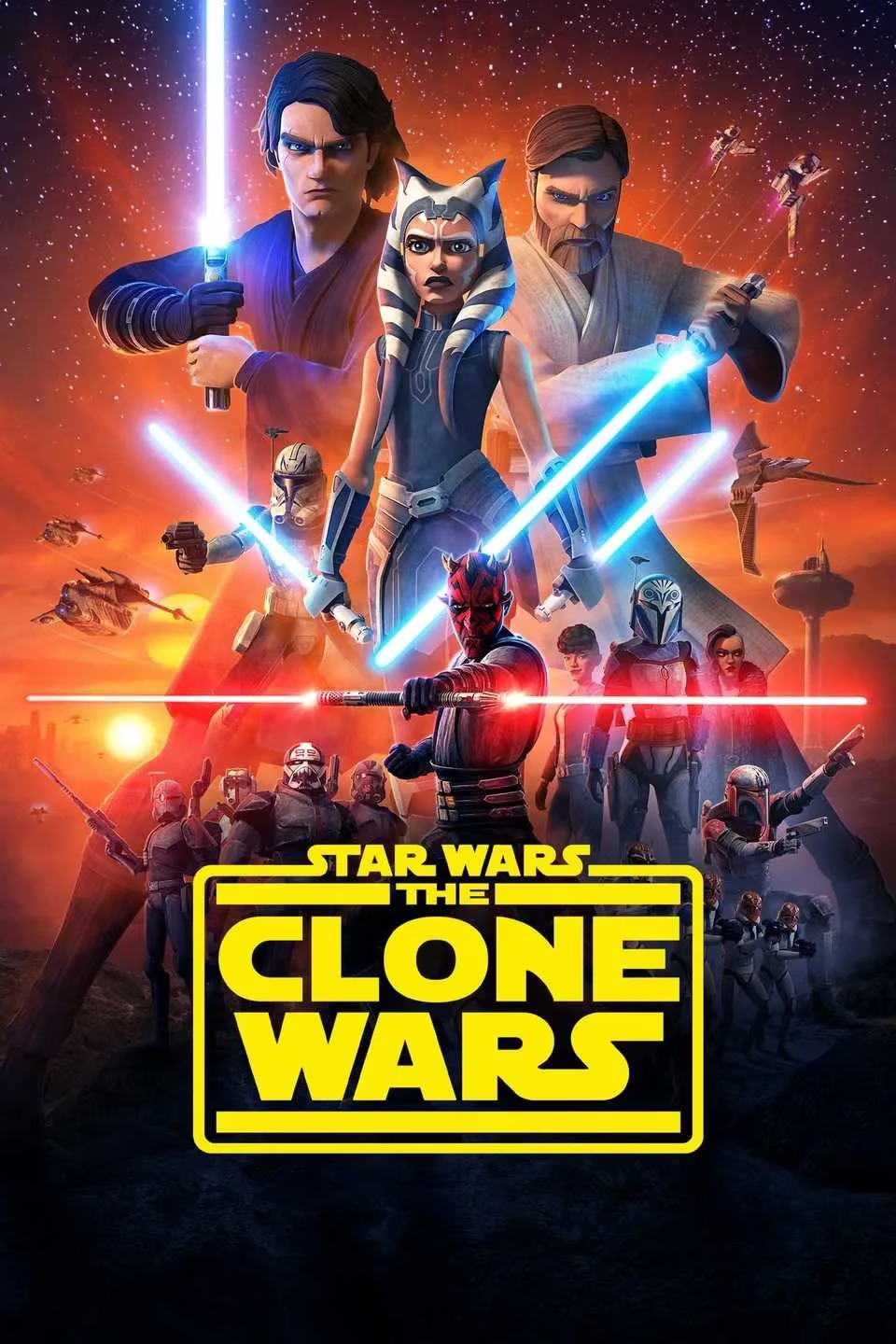
The opening months of 2011 saw the release of the Mortis story arc in Star Wars: The Clone Wars, a trilogy of episodes that stands as one of the most fantastical and lore-defining moments in the entire franchise. In this arc, Anakin Skywalker, Obi-Wan Kenobi, and Ahsoka Tano are drawn into a mysterious realm that acts as a conduit for the Force itself. This realm is home to three god-like beings known as the Mortis Gods: the Daughter (light side), the Son (dark side), and the Father, who maintains the balance between them.
The core conflict of the arc revolves around the Father's quest to find a successor. His choice? Anakin Skywalker. The Father's explicit desire for Anakin to replace him as the guardian of balance serves as the series' most direct confirmation of the Jedi's destiny. The Father, as the living embodiment of cosmic equilibrium, would not seek just any replacement; he sought the prophesied Chosen One. This narrative move shifted the prophecy from a vague ancient text to a tangible, character-driven destiny.
A Prophecy of Complication and Contention
Despite the seemingly clear message of Mortis, the Chosen One prophecy has never been a simple concept. The very structure of the Star Wars saga invites alternative interpretations. For years, fans and characters alike questioned if the true Chosen One was not Anakin, but his son, Luke Skywalker. Was it not Luke who ultimately inspired his father's redemption and, through him, the defeat of Emperor Palpatine? The original trilogy's focus on Luke as the new hope naturally led to this line of thinking.
Furthermore, the saga has hinted at other potential candidates:
-
Leia Organa: Yoda's cryptic line in The Empire Strikes Back—"No, there is another"—has long been interpreted as a nod to Leia's own significance and potential connection to the prophecy.
-
George Lucas's Original Sequel Plans: Had the creator's vision for a sequel trilogy been realized, reports suggest Leia would have been officially confirmed as the Chosen One, adding another layer of complexity to the legacy.
This inherent ambiguity is perhaps the point. Prophecies in mythology are rarely straightforward manuals; they are puzzles whose true meaning is often revealed only in hindsight and through the collective actions of many.
Literal Event or Spiritual Journey? The Mortis Debate
The Mortis arc itself is shrouded in mystery, deliberately leaving viewers to wonder about its literal truth. Upon returning to their ship, Anakin, Obi-Wan, and Ahsoka discover that no time has passed in the external galaxy, despite their multi-day ordeal. This, coupled with the arc's heavily symbolic and almost religious imagery, suggests the experience may have been a profound vision or a journey through the spiritual fabric of the Force rather than a physical trip.
So, does this undermine its confirmation? Not necessarily. Whether a literal event or a metaphysical trial, the symbolism remains potent. The arc serves as a crucible that tests and reveals Anakin's nature. It presents him with ultimate power and the choice between light and dark on a cosmic scale, foreshadowing his future fall and ultimate redemption. The message is clear: Anakin's role is central to the balance of the Force, regardless of how one interprets the medium of the message.
The Expanding Canon: Mortis Gods in a New Era
The debate over Mortis's reality gained new dimensions with the expansion of the Star Wars universe in the 2020s. Subsequent series have treated the Mortis Gods as tangible entities within galactic history:
-
Star Wars Rebels: Featured ancient murals depicting the Mortis Gods and introduced the World Between Worlds, a realm connecting all time and space, further cementing these concepts in the lore.
-
Ahsoka (2023): In a stunning revelation, the finale of the live-action series showed Baylan Skoll standing amidst giant stone statues of the Mortis Gods on the extragalactic planet Peridea. This visually confirmed their existence as figures of worship or significance across galaxies.
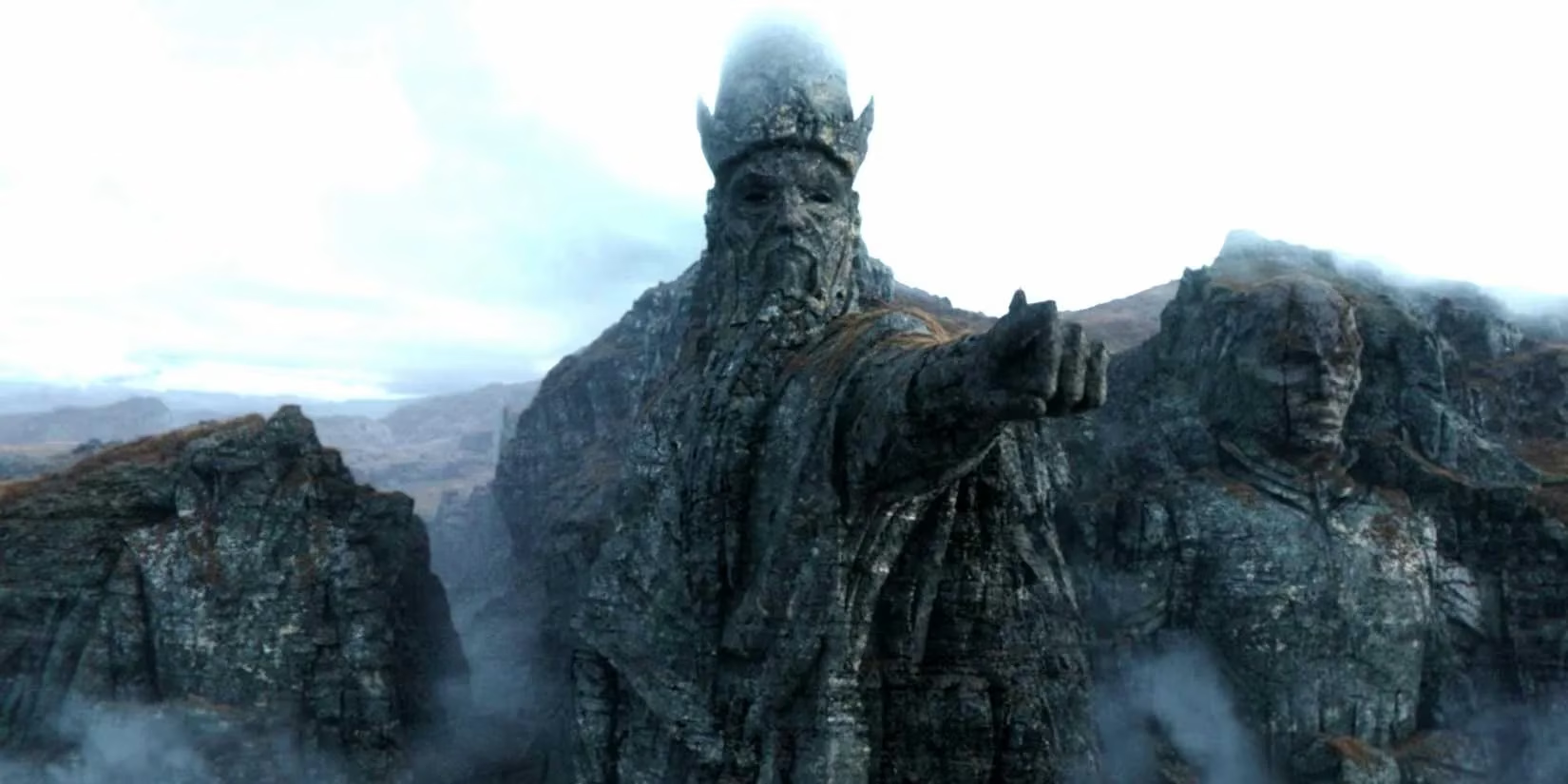
This new evidence makes a strong case for the literal existence of these beings, though the exact nature of Anakin's encounter with them may still be subject to interpretation.
The Collective Path to Balance
Perhaps the most profound takeaway from the Mortis arc and the broader Chosen One narrative is that fulfilling a cosmic prophecy is never a solo mission. The complexity of the Mortis story reflects the complexity of Anakin's path. He did not bring balance alone. His journey required the influence, sacrifice, and love of others:
| Key Figure | Role in Anakin's Path |
|---|---|
| Obi-Wan Kenobi | Mentor, brother, and the one who believed in him until the end. |
| Ahsoka Tano | Padawan who reflected his best qualities and challenged his decisions. |
| Padmé Amidala | The love that offered him a path away from darkness. |
| Luke Skywalker | The son whose faith and refusal to fight redeemed him. |
| Leia Organa | The daughter whose strength and resilience were part of his legacy. |
The prophecy pointed to Anakin Skywalker as the focal point, the instrument through which balance would be restored. But it was the network of relationships around him that guided the instrument to its correct use. The Mortis Father sought Anakin because he was the Chosen One, but Anakin needed his entire found family to ultimately fulfill that role by destroying the Sith—embodied by Palpatine and his own alter ego, Darth Vader—and becoming one with the Force.
Conclusion: An Enduring Legacy
Fifteen years after its debut, the Mortis arc remains a cornerstone of Star Wars mythology. It provided the franchise's most explicit confirmation that Anakin Skywalker is the Chosen One, while simultaneously embracing the ambiguity and collective effort inherent in such a destiny. The story acknowledges that while one person may be the key, turning that key requires the hands of many. As the franchise continues to explore new corners of its galaxy, the legacy of the Chosen One and the enigmatic Mortis Gods continues to be a source of intrigue, debate, and profound narrative depth. The prophecy was always about Anakin, but its fulfillment was a saga-wide endeavor.