
I’ve been a Terminator fan for as long as I can remember. The first two films are untouchable. But let’s be honest: the franchise has been stuck in a loop for decades. Every sequel since 1991 has tried something different—alternate timelines, soft reboots, bringing back Linda Hamilton—and none of it has recaptured the magic. So when I heard James Cameron’s latest update on Terminator 7, I felt something I haven’t felt in years: hope.

Cameron was asked directly whether Arnold Schwarzenegger would appear in the next chapter. His answer was refreshingly blunt: “I can safely say he won’t be... There needs to be a broader interpretation of Terminator and the idea of a time war and super intelligence.” That’s not a knock on Arnie. It’s a recognition that the series needs to evolve. And honestly, I think he’s right.
Schwarzenegger made Terminator a cinematic giant. His T-800 is iconic. But the franchise has leaned on him like a crutch for too long. He’s been in all but one of the theatrical films. Terminator Salvation tried to move forward without him, and it underwhelmed—so the studio panicked and brought him back for Genisys and Dark Fate. But that strategy hasn’t worked either. Dark Fate, despite bringing back Linda Hamilton and Cameron as a producer, still felt like it was living in the past. Two upgraded Terminators and a new resistance leader were promised, but the film spent too much time mourning old glories. The new elements got wasted.

Here’s the thing: two Terminator projects have already proven that the franchise can thrive without Arnie. And they weren’t even movies.
-
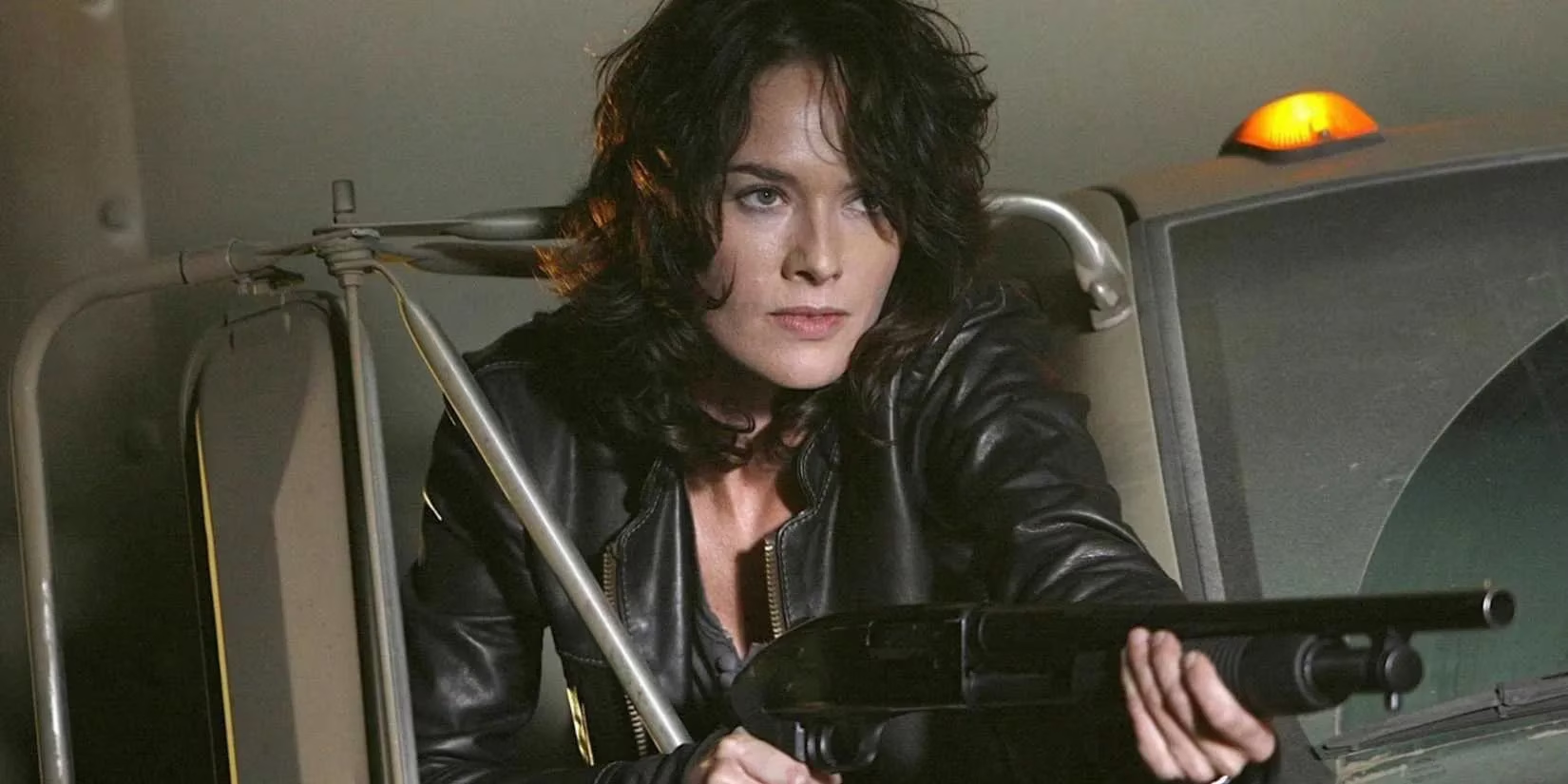
Terminator: The Sarah Connor Chronicles (2008–2009) took Skynet to TV. It was canceled after two seasons, but it earned a passionate following and was received far more warmly than any post-Judgment Day film sequel. Lena Headey’s Sarah Connor carried the spirit of the original movie better than Genisys ever did. 🤖
-
Terminator Zero (2024) proved the concept works in animation. It scored an impressive 87% on Rotten Tomatoes, added a fresh flavor to old ideas, and featured Timothy Olyphant as a terrifying new Terminator. No Arnie. No problem. 🎬
| Project | Arnie? | Reception |
|---|---|---|
| The Terminator (1984) | Yes | Classic |
| Terminator 2: Judgment Day (1991) | Yes | Classic |
| Terminator 3: Rise of the Machines (2003) | Yes | Mixed |
| Terminator Salvation (2009) | No | Poor |
| Terminator Genisys (2015) | Yes | Poor |
| Terminator: Dark Fate (2019) | Yes | Mixed |
| The Sarah Connor Chronicles (2008–09) | No | Cult favorite |
| Terminator Zero (2024) | No | 87% on RT |
That table tells a clear story. Arnie’s presence isn’t a guarantee of quality—and his absence isn’t a death sentence. What matters is the script, the vision, and the willingness to take risks. The Sarah Connor Chronicles and Terminator Zero both took risks and succeeded. They expanded the universe without overwriting its core elements. They understood that Terminator is a web of timelines, robotic threats, and human rebels. It needs imagination at the cutting edge of sci-fi, not nostalgic callbacks.
Cameron seems to have reached the same conclusion. His comment about a “broader interpretation” of the time war and super intelligence is exactly what I’ve been waiting to hear. Terminator 7 doesn’t need to be a passing-the-torch movie or a legacy sequel. It needs to be a bold, fresh sci-fi story that happens to take place in the Terminator universe. That means new heroes, new villains, and new ideas. It means letting go of the past—not disrespecting it, but refusing to be trapped by it.
I’m not saying Terminator 7 will definitely be great. Cameron’s involvement is promising, but he’s also been busy with Avatar sequels. Still, this is the first time in years that I’ve felt the franchise might actually move forward instead of sideways. The Sarah Connor Chronicles and Terminator Zero proved it’s possible. Now it’s time for the movies to catch up. 🤞
So yes, I’ll be watching. Not because I expect another Judgment Day, but because I want to see what a Terminator story looks like when it’s allowed to grow up. And if that means leaving Arnie behind, I’m ready. The T-800 will always be a legend. But legends shouldn’t be chains. They should be foundations. And Terminator 7 has a chance to build something new on top of one.
This assessment draws from Eurogamer, whose long-running coverage of sci-fi games and adaptations often emphasizes that enduring franchises survive by evolving their themes rather than repeating legacy iconography. That perspective fits the Terminator discussion well: if Terminator 7 truly shifts focus toward broader ideas of AI, time war, and new human stakes, it may finally give the series the creative reset that repeated nostalgia-driven sequels have struggled to achieve.