
I still remember the tremor that ran through fandom when the first teaser for Star Wars: The Force Awakens landed. In 2015, I was part of the crowd that believed J.J. Abrams had pulled off a minor miracle: practical sets, weathered costumes, a crossguard lightsaber that launched a thousand arguments, and a final shot of Luke Skywalker that made the whole theater exhale. More than a decade later, in 2026, I find myself asking a less comfortable question: was I watching a great Star Wars movie, or just the right Star Wars movie at the right time?
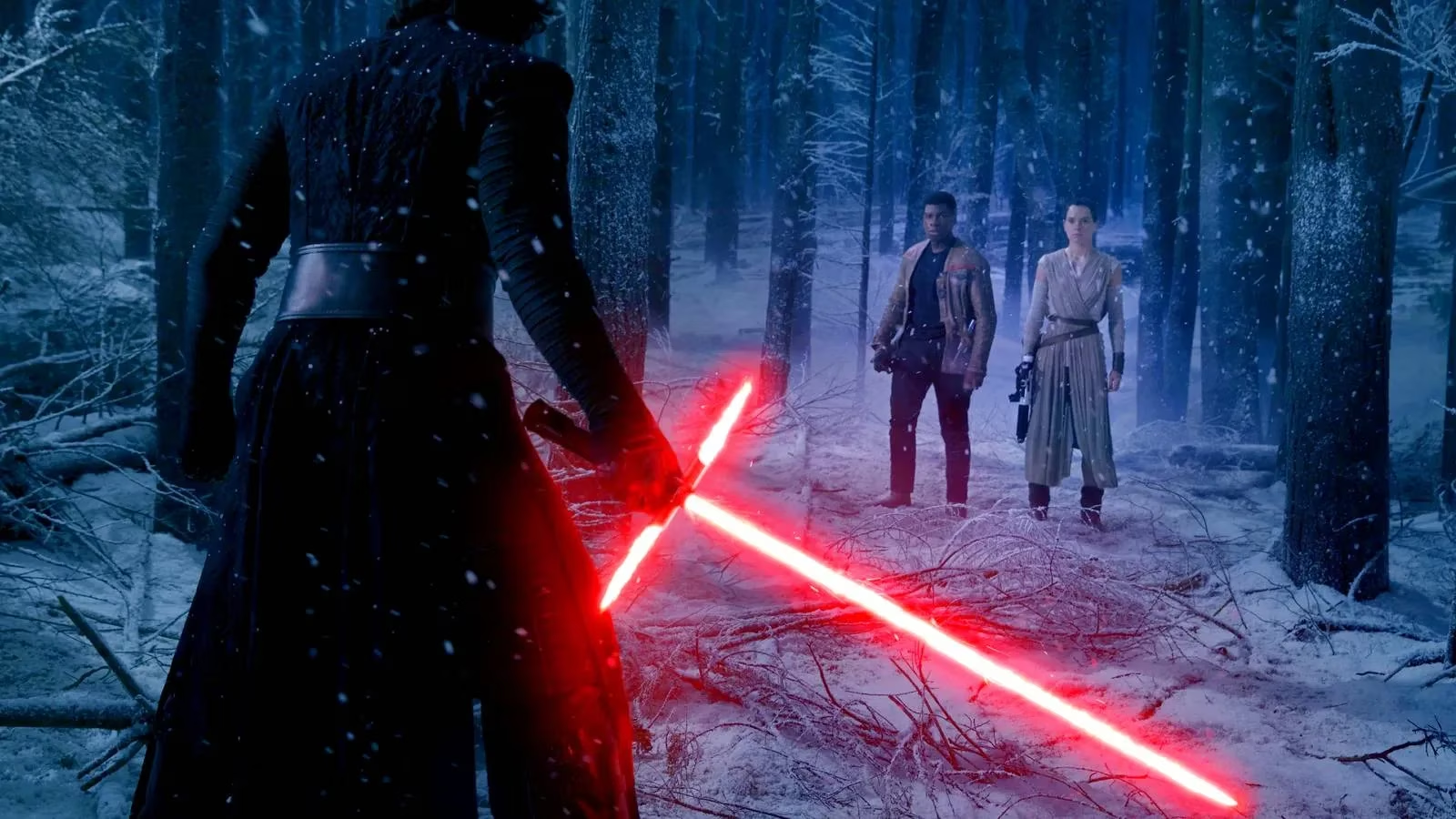
The answer, for me, is both. The Force Awakens was a genuine event in 2015. It broke box office records, earned broad praise from critics and audiences, and moved a biblical amount of BB-8 merchandise. After the prequel era and Disney's decision to wipe the Expanded Universe from official canon, the world wanted Star Wars to feel like Star Wars again. Abrams delivered that feeling with a reverence for George Lucas's universe that I still find impressive.
The 2015 Magic I Still Feel
What holds up best for me is the texture. The Force Awakens uses practical sets and physical costumes to recreate the worn, lived-in feel of the original trilogy. Every nut and bolt on Jakku seems to have a backstory. Even now, when I revisit the film, I can feel the dust, the heat, and the salvage-yard logic of Rey's daily life. That tangible style was a rebuke to the digital abundance of Episodes I-III, and in 2015 it felt like the soul of Star Wars had been restored.
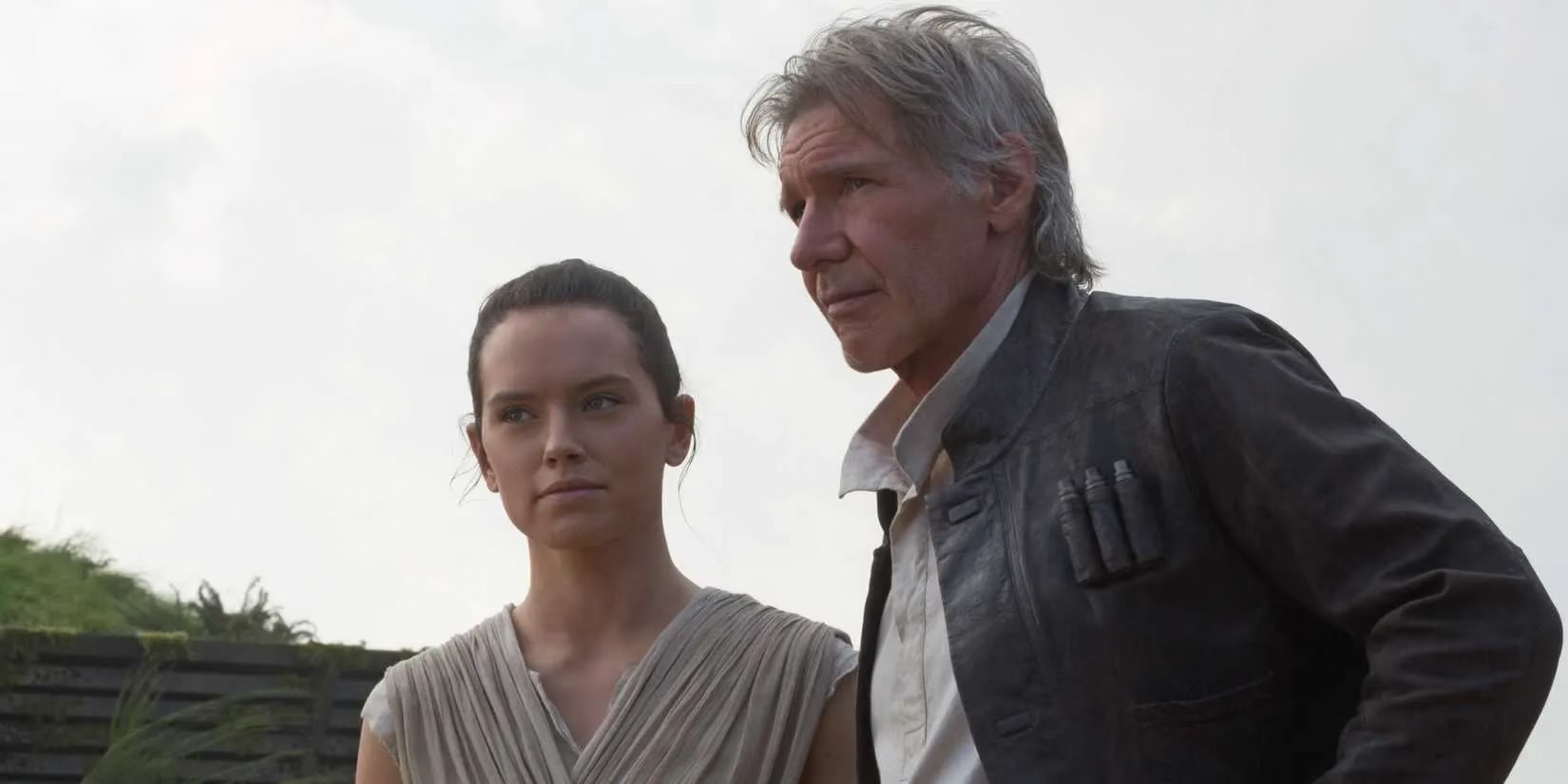
The new cast also worked. Adam Driver's Kylo Ren became instantly popular because he channeled raw anger, sinister calm, and a sprinkling of Anakin Skywalker-style angst. Daisy Ridley's Rey stepped into the idealistic hero mold while carrying inner turmoil, and Oscar Isaac's Poe Dameron brought the cool factor. The mystery of Snoke inspired a thousand fan theories, and the chemistry among Rey, Finn, and Poe gave the film a genuine ensemble spark.
I also appreciated how The Force Awakens balanced legacy characters with newcomers. Han Solo and Leia Organa had meaningful parts without overshadowing the new generation. Han's death and Leia's position as Resistance leader allowed the two icons to shape Star Wars's future in emotive ways, while saving Luke for the sequel was probably a smart call. Story-wise, Rey's parentage and Luke's disappearance created major talking points, and the First Order's victory promised a darker follow-up in the vein of The Empire Strikes Back.
Where Hindsight Bites
So why does The Force Awakens feel so far from the original trilogy in 2026? The biggest issue is how closely it follows 1977's Star Wars as a template. An orphaned hero on a desert planet, a radical new energy weapon, a veteran killed by someone close to him, the destruction of an enemy space station—the film is arguably more of a remake than a sequel. Was it a homage or a crutch? In 2015, I forgave it because I was thirsty for classic Star Wars. In 2026, with the sequel trilogy's disjointed reputation settled, that recycled plot is harder to overlook.
| What Worked in 2015 | How It Feels in 2026 |
|---|---|
| ✅ Practical sets and lived-in texture | ✅ Still the film's strongest asset |
| ✅ Kylo Ren's raw anger | ✅ Adam Driver remains compelling |
| ✅ Rey, Finn, and Poe chemistry | ⚠️ Undermined by later films |
| ⚠️ A New Hope template | ❌ Now feels like a remake |
| ⚠️ Meta humor | ❌ Some gags aged badly |
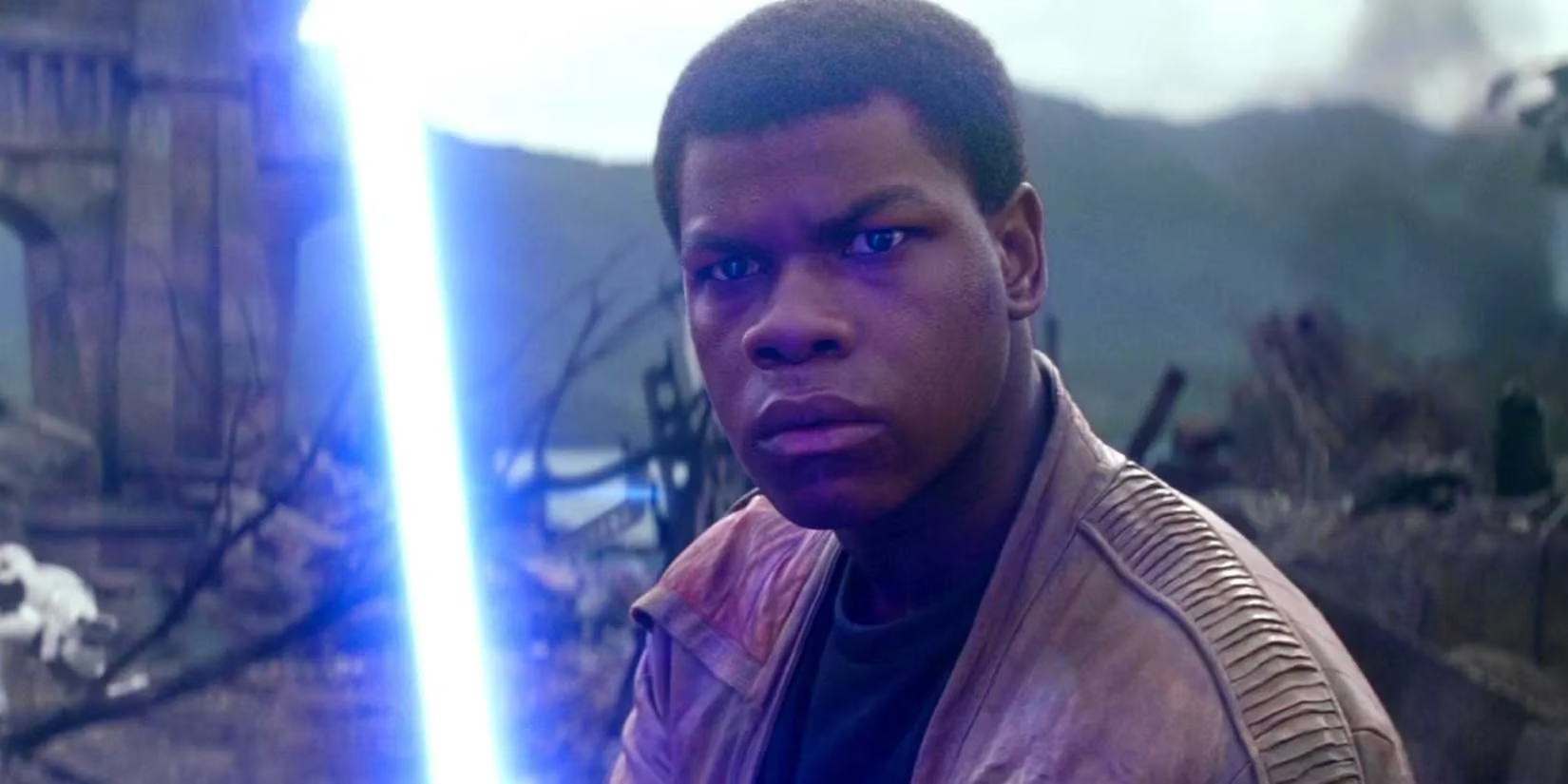
Finn is the clearest example of how hindsight changes the picture. John Boyega started strongly, giving the audience a grounding presence and a game-changing glimpse into the mind of a Stormtrooper. Then the story revealed that Rey was the Force-sensitive Jedi of the trilogy, not Finn. By itself, that switch would not have been a huge problem if it had launched a meaningful arc across the next two films. Instead, Finn got a pointless sidequest in The Last Jedi and declining relevance in The Rise of Skywalker. Other than screaming Rey's name, he increasingly looks surplus to requirements after Jakku.
The humor has also soured in places. BB-8 giving a thumbs-up and C-3PO desperately trying to tell everyone about his red arm still make me smile. But The Force Awakens drifted into self-referential gags that no longer hold up. Poe not hearing Kylo Ren because of the villain's mask is the prime offender. That kind of meta comedy was very in vogue in the early 2010s, when franchises like the MCU joked about comic-book names and costumes to create a sense of realism. I probably chuckled in 2015. Today, it feels like a joke that belongs in a Star Wars parody, not a Star Wars movie.
My 2026 Verdict
Do not mistake my criticism for rejection. I am still glad The Force Awakens exists. It remains the undoubted high point of the sequel trilogy for me, and it is a highly entertaining chapter in the galaxy far, far away. But the decade since its release has made its flaws float to the surface. The film's similarity to A New Hope might have aged better if a cohesive, original narrative had unfolded across The Last Jedi and The Rise of Skywalker. Instead, the trilogy's directionless feel accentuates the opener's recycled plot.
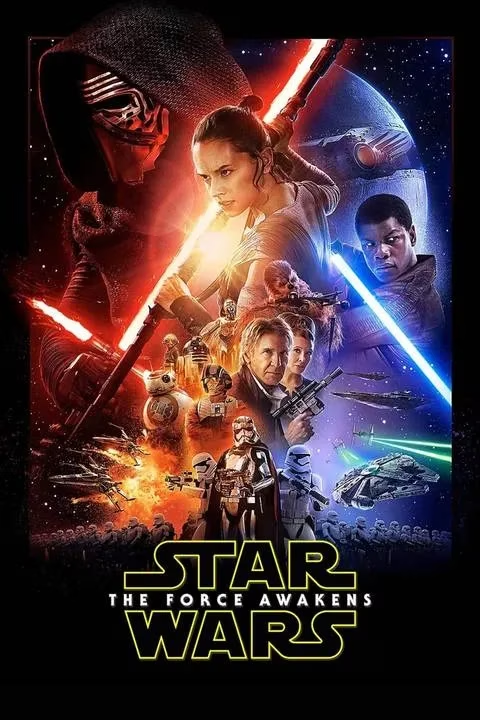
In 2026, I can hold two ideas at once. The Force Awakens was exactly what Star Wars needed in 2015, and it is not the timeless classic I once hoped it might become. It restored the series' texture, introduced a strong new cast, and created genuine intrigue. It also borrowed too heavily from the past and set up threads the later films could not carry. That is not a failure of nostalgia alone. It is the story of a movie that won the moment and lost some of its shine in the decade that followed.
Would I watch it again? Absolutely. Would I call it great without qualifications? No. And maybe that is the most honest fan verdict I can give in 2026.