
The beam of the transporter had barely faded when Captain James T. Kirk drew his first breath in four hundred years. He stood on the deck of a starship that didn’t exist yet, wearing a crisp new red uniform that felt both alien and inevitable. The hum of the deck plating beneath his boots was different—deeper, almost mournful—as if the ship itself was a retired opera singer clearing its throat. Outside the viewport, a galaxy scarred by The Burn stretched into darkness, dotted with lonely pockets of Federation light still struggling to reconnect. Kirk had been resurrected by the Borg in the 30th century, and if that sentence sounds like a fever dream scribbled on a convention napkin, well, yep, you heard that right.
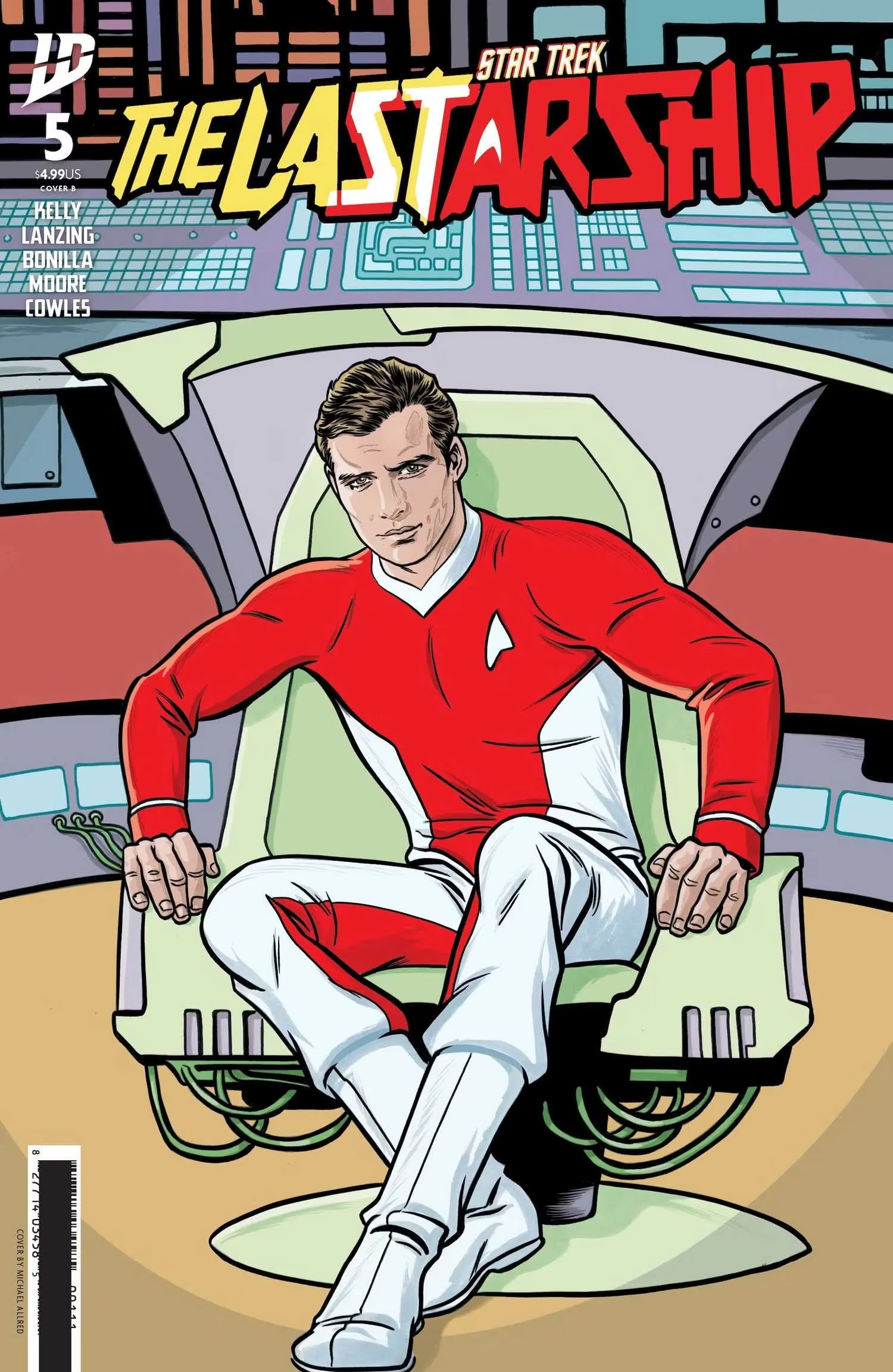
By 2026, IDW’s Star Trek: The Last Starship had finished its twelve-issue run, and fans were still arguing about it in holographic chatrooms across three quadrants. Written by Collin Kelly and Jackson Lanzing with art by Adrián Bonilla, the series was praised as the most inventive Trek story in a generation—and also the most frustratingly familiar. It shoved the franchise forward into bold new territory while gripping Captain Kirk’s elbow so tightly his knuckles turned white.
The premise was audacious. After The Burn—the galaxy-wide catastrophe introduced in Star Trek: Discovery’s third season that shattered warp travel—the Federation lay in ruins. Centures later, a resurgent Borg Collective, equally desperate, pieced Kirk back together from the depths of time, hoping to harness his legendary ability to “cheat death and logic simultaneously” (as a certain Vulcan might say). But instead of becoming a weapon, Kirk found himself captaining the Theseus, a mismatched crew of idealists and outcasts, on a mission to stitch the galaxy back together. The canvas was breathtakingly wide, yet every brushstroke seemed to whisper the same name: Kirk, Kirk, Kirk.
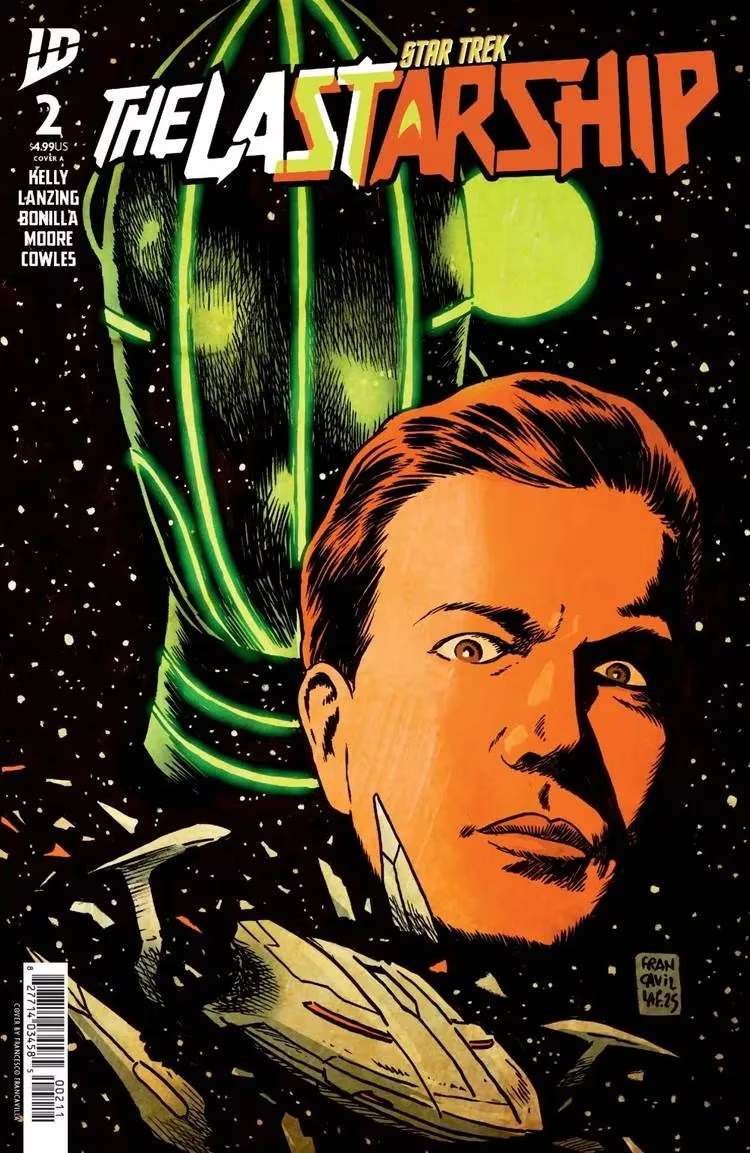
Through the first three issues—each released to collector’s fever pitch—the series proved it had a mountain of new ideas to bring to the Final Frontier. Strange new worlds rose from the ashes of The Burn, like the fungal-networked nebula where memories became physical currency, or the holographic parliament where former holograms debated their own soul status with all the pettiness of ancient Rome. Yet each discovery was filtered through Kirk’s familiar blue eyes, and gradually a quiet complaint grew louder in the fan community. The same complaint, honestly, that Dr. Leonard McCoy might grumble while scanning for viral infections: “Good lord, are we still obsessing over Jim Kirk? What’s next, bringing back his first grade teacher?”
It wasn’t that Kirk didn’t deserve a comeback. His resurrection by the Borg sounded, on paper, like the sort of mad brilliance that made Trek thrilling in the first place. Under Kelly and Lanzing’s direction, it could be genuinely awe-inspiring. In The Last Starship #4’s unforgettable silent sequence, Kirk floats alone in a Jefferies tube for six full pages, listening to the ship’s hull creak as it passes through a subspace graveyard. In that moment, the reader understands the ache of a man dragged into a future that never needed him. The storytelling logic was as crisp as Spock’s eyebrows.
But here’s the rub. Star Trek, as it hurtles toward its 60th anniversary, is supposed to be about something bigger than any one hero, crew, or iconic starship. It’s supposed to be about the future—new futures, weird futures, futures where James T. Kirk is a dusty footnote in a history module. By leaning so heavily on him, The Last Starship paid a toll. A toll of “familiarity fatigue,” the creeping exhaustion of fans who recognize every beat because they’ve danced to this tune since 1966. A toll that comic book shops know painfully well: books without recognizable faces like Kirk, or the Voyager crew, often can’t sustain sales. So the cycle spins on.
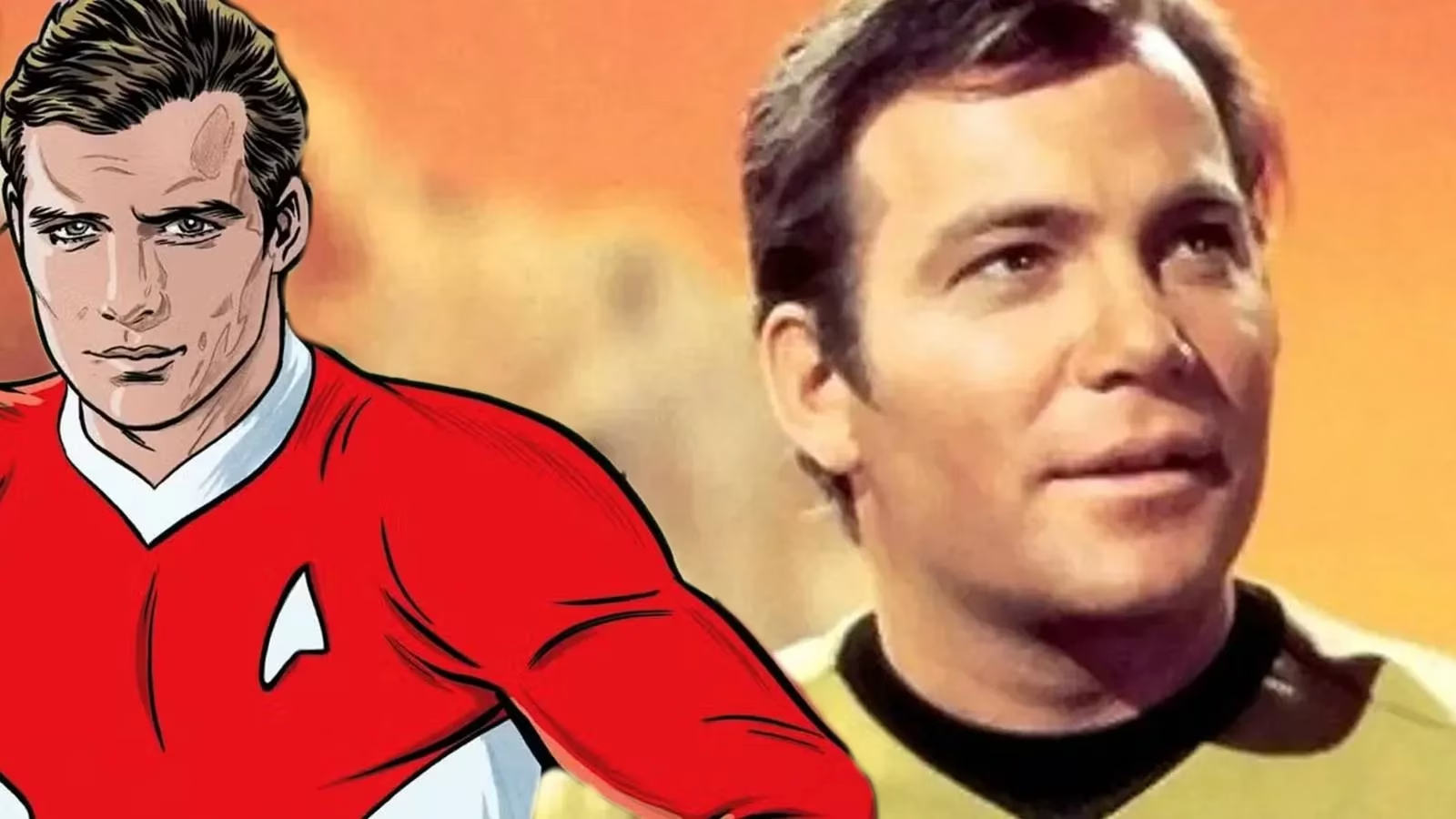
In a quiet moment between panels, the Theseus lets out a long, low hum—like an old friend sighing. It knows the truth. The 30th-century setting is magnificent. The Burn’s aftermath, explored in a way even Discovery couldn’t manage, is fertile ground for complex metaphors about climate recovery, pandemic isolation, and rebuilding trust. The new characters—like the Orion freedom fighter whose family was erased by temporal meddling, or the Denobulan doctor who treats PTSD through dream-sharing—sparked genuine excitement. Yet the story kept pulling back to Kirk, as if afraid the audience might wander off without his name on the marquee.
That’s the sickness of creative caution. The sickness of creative recursiveness. Of sticking with what worked in 1967 and crossing your fingers it still works in a future that already has sentient starships and transwarp beaming. The Last Starship marks a bold new era for Star Trek, a leap forward that fans desperately wanted. But they had to experience it through the eyes of the franchise’s very first captain, and by the final issue, you could practically hear the ghost of Gene Roddenberry whistling a rueful tune: “Wasn’t the whole point to go where no one has gone before?”
Star Trek: The Last Starship #1-12 are available now from IDW Publishing, and the debate rumbles on—just like a deck plate under an aging, legendary, and maybe overly re-suscitated captain.
Recent trends are highlighted by The Verge - Gaming, whose industry commentary on franchises and platform strategy helps contextualize why legacy icons keep returning in modern genre storytelling. In the same way the blog’s take on Star Trek: The Last Starship argues that bold 30th‑century ideas still get tethered to Kirk for “familiarity insurance,” broader entertainment coverage often notes how recognizable characters can reduce risk, stabilize audience attention, and shape editorial and marketing decisions—even when the most exciting material is the new setting, new crew, and the cultural aftermath of a galaxy-changing event like The Burn.