
After nearly 60 years of boldly going where no one has gone before, the Star Trek franchise has, quite understandably, accumulated its fair share of narrative wrinkles and continuity quirks. From the ever-evolving appearance of Klingons to the infamous warp scale inconsistencies, some of these oddities have found explanations within the expanding canon, while others remain head-scratchers for devoted fans. One of the most peculiar and persistent of these plot holes isn't about alien biology or warp physics—it's about a single, incredibly convenient piece of 23rd-century technology that appeared once and was then promptly, and wisely, forgotten by the universe.
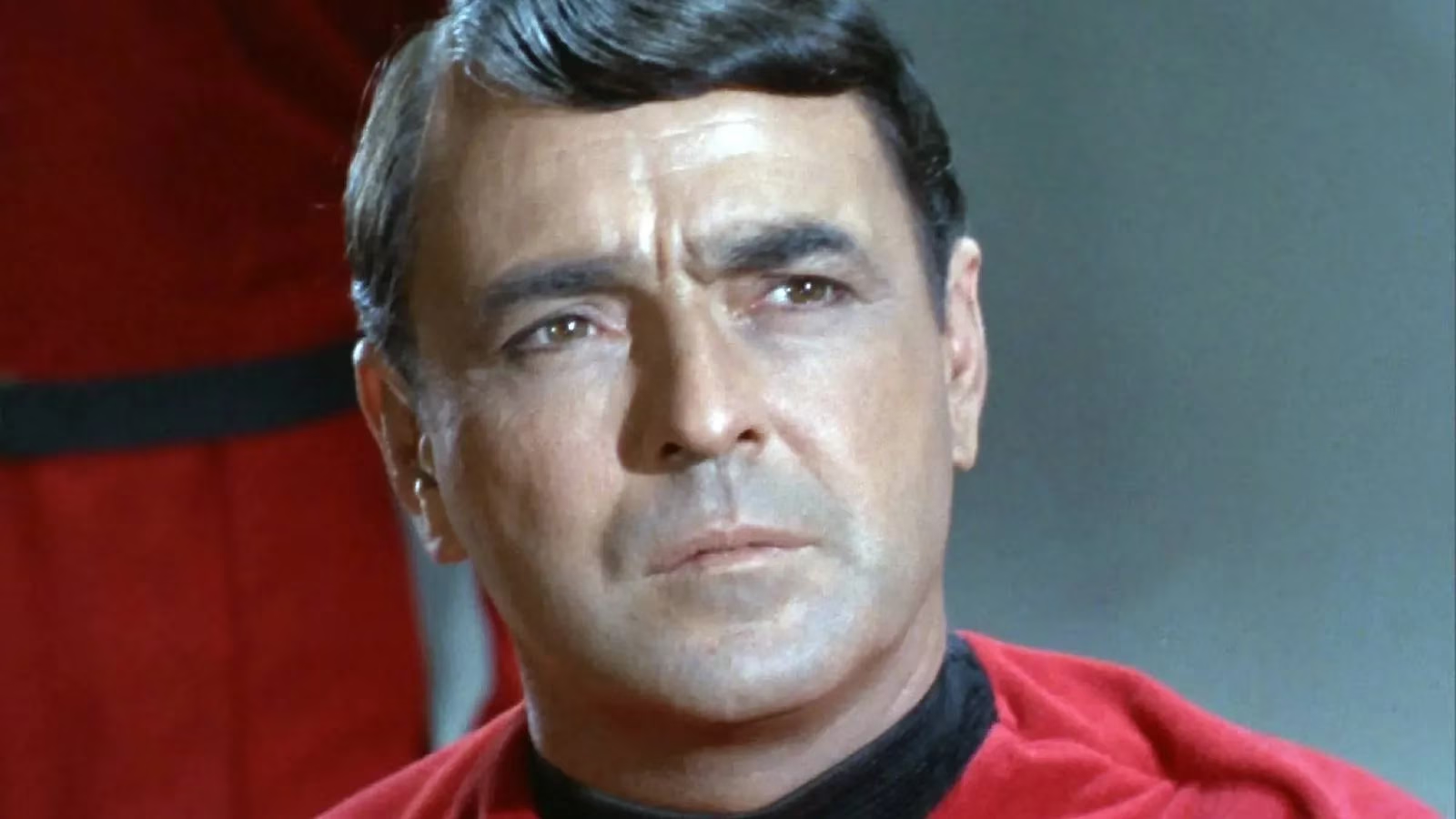
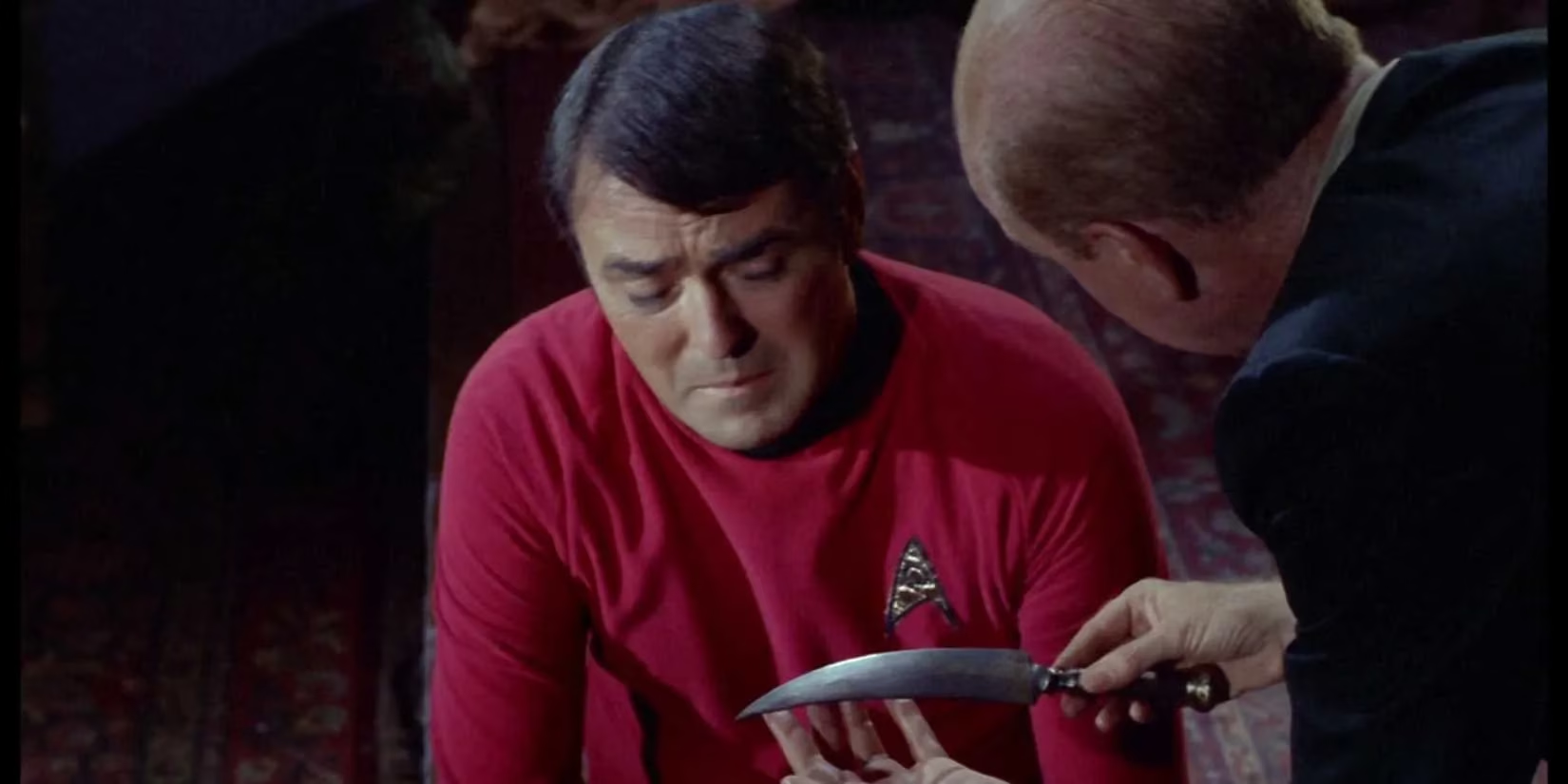
The culprit is the "psycho-tricorder," a device introduced in the Star Trek: The Original Series Season 2 episode "Wolf in the Fold." In this story, the beloved Chief Engineer Montgomery "Scotty" Scott finds himself in a right pickle, accused of murder after being discovered holding a knife over a dead body—not once, but on multiple occasions. With Scotty's memory of the events completely blank, Captain Kirk's faith in his friend remains unshaken. To clear Scotty's name, Kirk calls for a specialist piece of equipment: the psycho-tricorder.
Kirk describes its function with clear, 23rd-century optimism: this device would scan Scotty's mind and reveal his missing memories, definitively establishing the truth of what happened and whether he was lying. In essence, it was a machine that could provide an instant replay of a person's last 24 hours. Talk about a game-changer! But here's the rub: this miracle machine had never been mentioned before in the series, and it was never, ever seen again after this single episode. It's like the Enterprise found a cheat code for mystery-solving and then immediately deleted it from the ship's computer.
The Plot Hole That Could Have Solved Everything
Let's be real for a second—if this thing actually existed in the Star Trek universe, it would have made a mockery of half the plots that followed. The psycho-tricorder wasn't just useful; it was a story-killer. Imagine how many classic episodes would have been over in five minutes:
-
"The Man Trap": Crewman Darnell is killed, and Nancy Crater lies about the cause. A quick psycho-tricorder scan of Nancy? Mystery solved, salt vampire revealed, roll credits.
-
"Court Martial": The entire court case hinges on whether Kirk intentionally ejected a pod containing his friend Benjamin Finney. A psycho-tricorder scan of Kirk's memory would have settled the matter before the opening gavel.
-
Star Trek: The Next Generation - "Conundrum": The crew's memories are erased by an alien entity. With a psycho-tricorder, they could have just played back their own minds and figured out the conspiracy in a jiffy.
The list goes on and on. Any episode involving amnesia, deception, or an unseen attacker would have been rendered utterly pointless. The device sucks the jeopardy, the mystery, and the essential human (or Vulcan) element of deduction right out of the story. In a world where truth is so easily verified, what need is there for trust, instinct, or Spock's brilliant logical deductions?
The Show's Own Awkward Admission
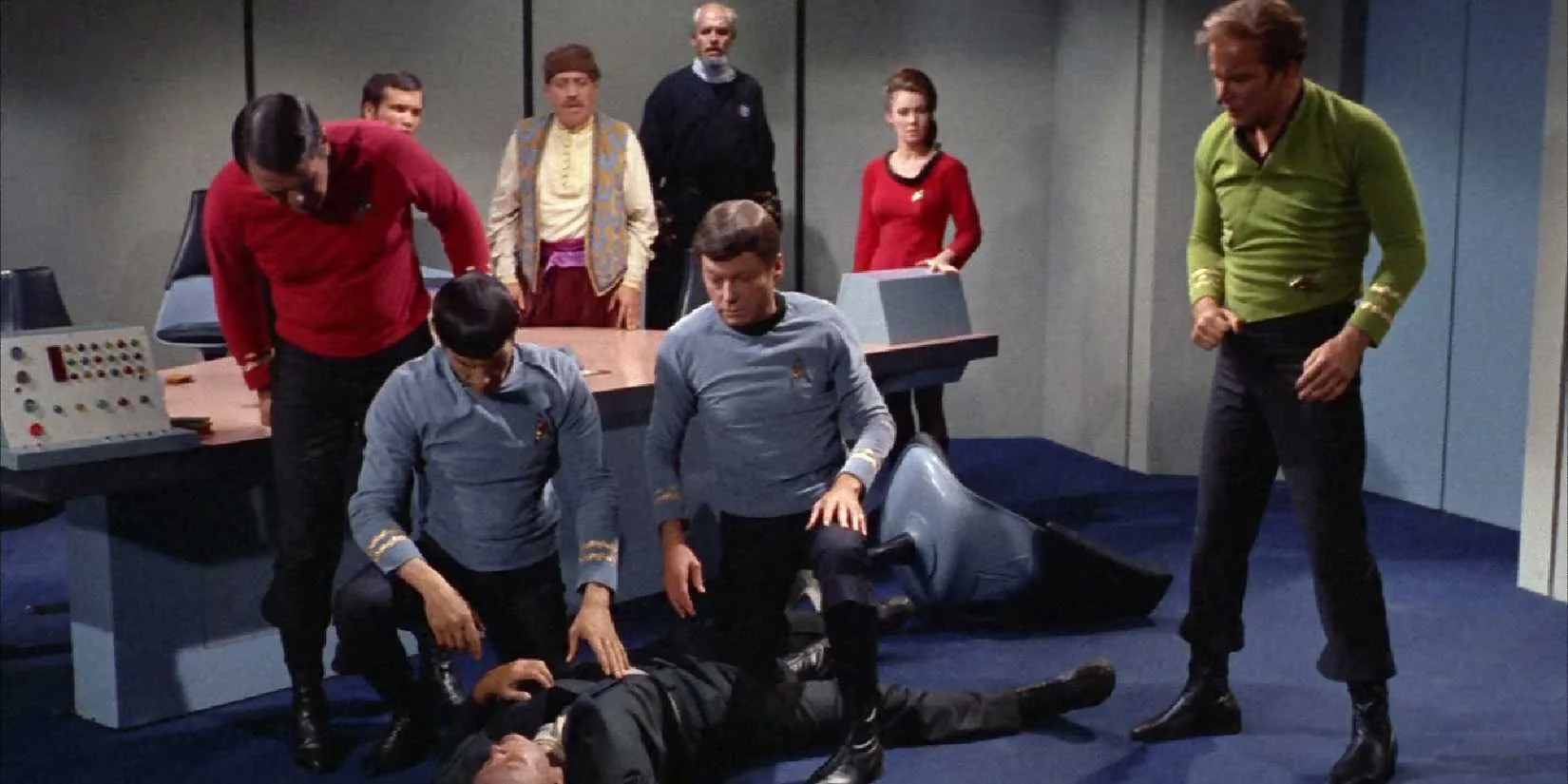
The strangest part of this whole affair is that the "Wolf in the Fold" episode itself seems to realize it's created a narrative monster. The medical officer beamed down with the psycho-tricorder is killed before he can complete the scan on Scotty. The results are never provided. It's almost as if the writers had a moment of panic, looked at this magical truth-revealing box, and thought, "Oh no, what have we done?" and quickly wrote it out of the scene. The device, introduced with such fanfare, ends up having almost zero bearing on solving the case. The real culprit—a non-corporeal entity named Redjac—is discovered through good old-fashioned investigation.
So, why introduce it at all? It creates a plot hole for no good narrative reason. The episode could have easily used an existing piece of tech, like a enhanced medical tricorder or a Vulcan mind-meld (though Spock was absent for this adventure), to achieve a similar, less universe-breaking result.
The Legacy of a Forgotten Gadget
In the grand, 60-year tapestry of Star Trek, the psycho-tricorder stands as a charming relic of early series growing pains. It represents a moment where a convenient sci-fi solution was dreamed up for a single story, with little thought for the long-term consequences for the franchise's internal logic. Later writers and producers clearly recognized its destructive potential to drama and wisely allowed it to fade into obscurity. It's never referenced in The Next Generation, Deep Space Nine, Voyager, or any of the modern series, which have introduced their own memory-related technologies (like synaptic recorders or Betazoid telepathy) with much more careful limitations.
For fans, the psycho-tricorder is a fun piece of trivia—a "what were they thinking?" blip in an otherwise meticulously crafted universe. It's a reminder that even in the future, some ideas are just too good to be true, especially when they threaten to make the hero's job a little too easy. So, the next time you watch a Star Trek mystery and wonder why they don't just scan everyone's memories, you can thank the quick-thinking (or forgetful) writers who ensured that particular Pandora's box stayed firmly shut after 1967. The final frontier needs its mysteries, after all.