
As we step into 2026, the neon-drenched rain of cyberpunk is pouring down harder than ever. I can feel the electric buzz in the air—this year is shaping up to be the year for the genre, with two titans leading the charge: Prime Video's Blade Runner 2099 and Apple TV's adaptation of William Gibson's Neuromancer. Talk about a dream matchup! It's like watching the two founding fathers of cyberpunk step back into the ring. But let's be real, with great legacy comes great pressure, especially for the Blade Runner franchise. It's got movies, shorts, comics, anime—you name it. Keeping up can feel like homework, and honestly, who's got time for that? I'm starting to get what they call 'MCU fatigue,' and I bet I'm not alone.
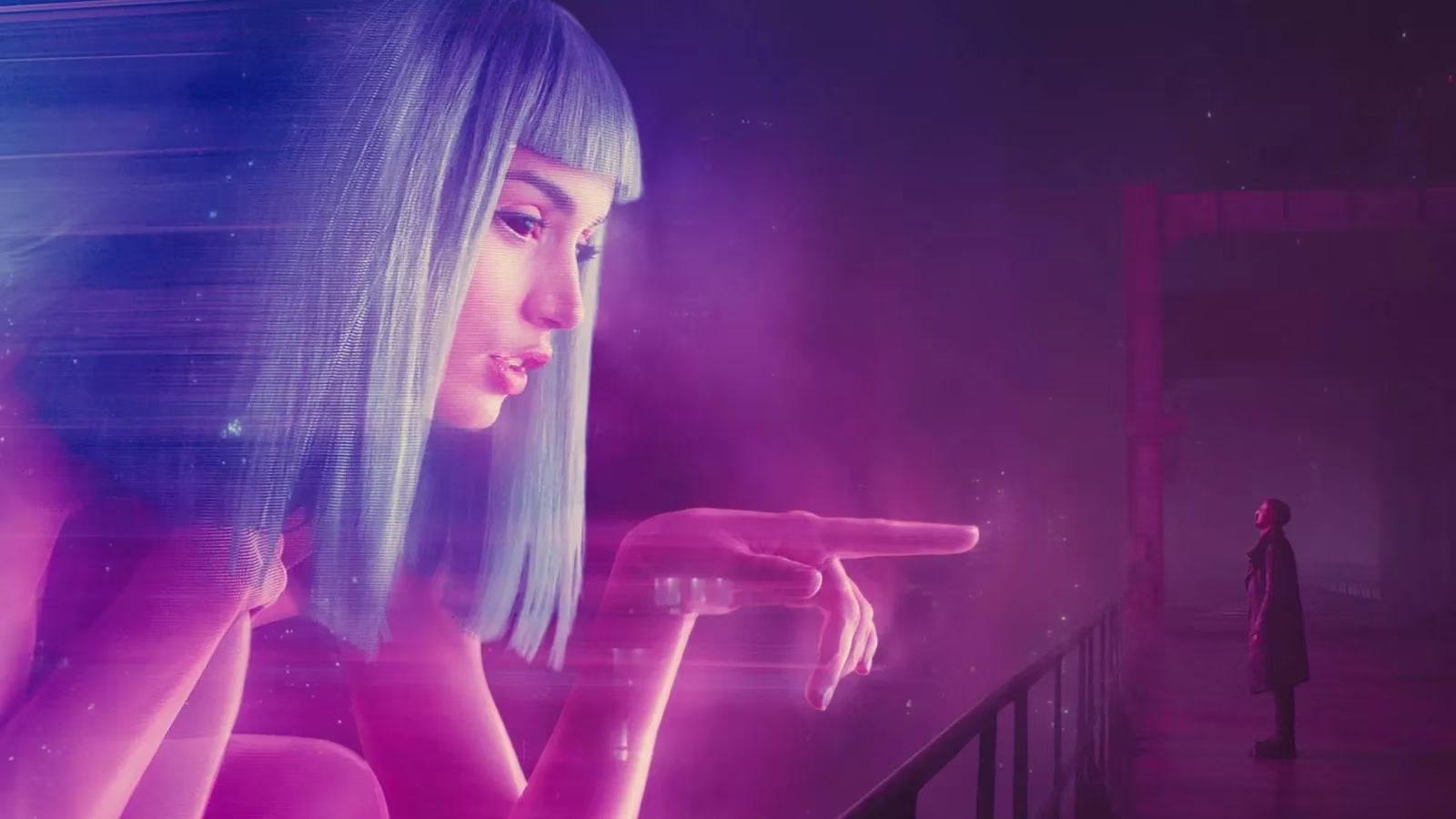
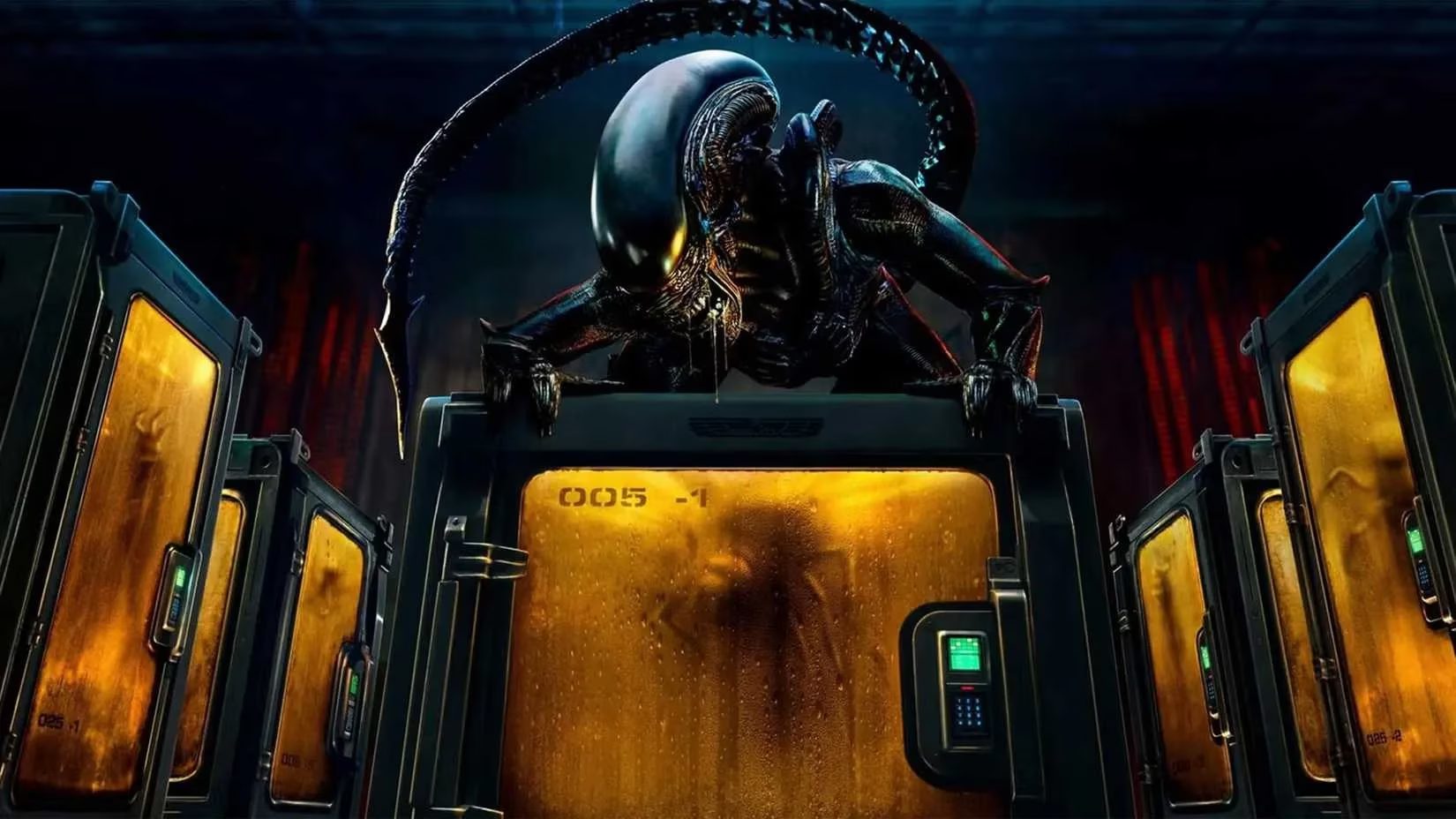
Here's the thing, though. Blade Runner 2099 has a golden opportunity to sidestep this whole exhaustion issue. How? By taking a page right out of Alien: Earth's playbook from last year. That show was a masterclass in how to exist within a massive universe without making you feel like you needed a PhD in Xenomorphology to enjoy it. Its story stood firmly on its own two (or six) legs, set in the same world but making perfect sense all by itself. For Blade Runner 2099, this isn't just a smart move—it's a necessary one.
Think about it. The franchise is over four decades old. Requiring new viewers to binge two movies and a stack of supplementary material just to understand the TV show is a surefire way to limit its audience. By being a true standalone, Blade Runner 2099 can throw open the doors to a whole new generation. Imagine a young viewer, maybe one who grew up on different sci-fi, diving into the rainy, neon-soaked dystopia for the first time and getting hooked. If the show is good, it becomes the perfect gateway drug, tempting them to go back and discover Rick Deckard's original journey. It's a win-win.
Now, I know what some hardcore fans might say: "But the connections are what make it rich!" And they're not wrong. The world Ridley Scott and Denis Villeneuve built is incredibly dense. But here's my take: Standalone doesn't have to mean disconnected. The show can—and should—sprinkle in those delicious bits of lore for the veterans. We could get a subtle nod to Deckard's fate, maybe even a confirmation of that long-running fan theory about him. But these should be the seasoning, not the main course. The central plot and the new characters, like those played by Michelle Yeoh and Hunter Schafer, need to be fully understandable on their own terms.
Let's look at the sequel, Blade Runner 2049. It's a gorgeous film, but is it a true standalone? Ehhh, that's where fans get split. Sure, you can watch it cold, but you'll miss the weight of those returning characters and referenced events. For Blade Runner 2099, the goal should be clearer. The worldbuilding from the films should enhance the experience, not be essential to it. An ordinary viewer should be able to grasp the rules of this world—the replicants, the off-world colonies, the pervasive gloom—through the show's own storytelling.

So, what would this look like in practice? Let's break it down:
| Element | Should Be | Should Avoid |
|---|---|---|
| Plot | Self-contained, with a clear beginning, middle, and end for its season. | Relying on knowledge of specific events from 2049 or the original. |
| Characters | New protagonists with their own motivations and arcs. | Making legacy characters the driving force of the narrative. |
| Lore | Explained organically through dialogue and setting. | Long exposition dumps about Tyrell Corp history. |
| Easter Eggs | Subtle visual or auditory nods for fans. | Plot-critical information hidden in an obscure reference. |
This approach isn't about dumbing things down; it's about smart, accessible storytelling. Alien: Earth proved it could be done with a horror icon. Now, it's cyberpunk's turn. With Neuromancer also hitting screens, 2026 is a massive moment for the genre. For Blade Runner 2099 to truly stand out in this crowded, brilliant field, it needs to be the show you can recommend to anyone—the friend who's never seen a synthwave sunset, the cousin who thinks sci-fi is all spaceships. It needs to be their first, unforgettable step into the rain, without needing a map of where to put their feet.
In the end, the potential is just... huge. The talent involved is top-notch, and the cyberpunk aesthetic has never been more visually ripe for television. But the key to unlocking that potential, to avoiding franchise fatigue and capturing a new era of fans, lies in one simple, powerful choice: tell a great story that can stand proudly on its own, right here in 2099. The rest, as they say in Los Angeles, will be history.
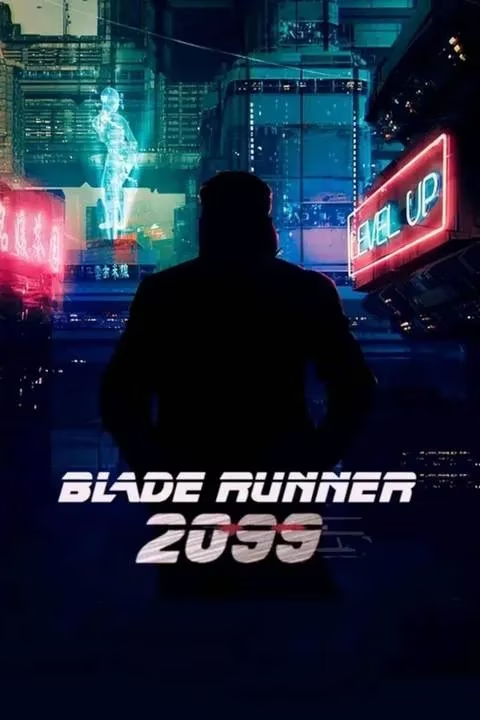
So, mark your calendars. The cyberpunk wave of 2026 is coming. Let's hope Blade Runner 2099 rides it as the accessible, stunning, and standalone hit it deserves to be. Fingers crossed, folks. 🤞