
So, I finally caught Avatar: Fire and Ash last week—yeah, I know, it’s been out since December 2025 and here I am in 2026 still buzzing about it like it dropped yesterday. Holy smokes, James Cameron really went all-in on the world-building, didn’t he? But the one thing that absolutely knocked my socks off wasn’t just the jaw-dropping visuals or the epic battle sequences—it was Oona Chaplin’s Varang, leader of the Ash People. I mean, talk about a character who comes out of nowhere and steals the show. She’s got this raw, feral energy that’s equal parts terrifying and heartbreaking, and I swear, I haven’t stopped thinking about her since the credits rolled.
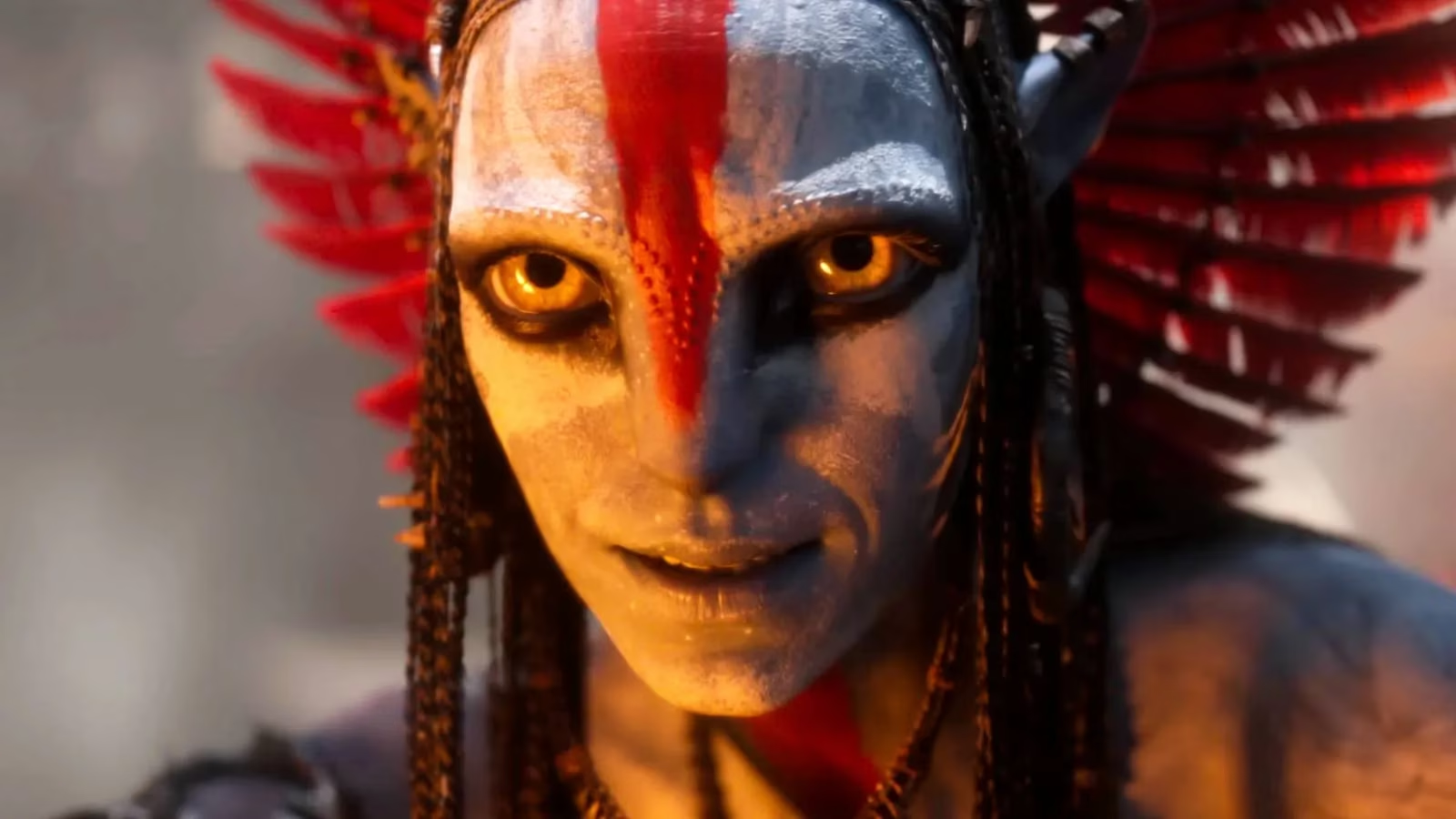
Let’s rewind a sec for anyone who’s been living under a rock—Varang is the chief of the Na’vi Ash People, a clan that got absolutely wrecked by some cataclysmic natural disaster way before the events of this film. Because of that, she’s done a complete 180 on Eywa, the deity most Na’vi worship. She’s gone from believer to embittered skeptic, leading her people with a very "trust no one, take what you need" mentality. And then in walks Quaritch—yeah, the recombinant Quaritch—and suddenly she’s got a partner in crime who blows her horizons wide open. Oona Chaplin herself said in an interview that Varang starts the film in full-on fight-or-flight mode, just laser-focused on survival. But after teaming up with Quaritch, she realizes she can actually take on Eywa and the other Na’vi clans in a much bigger way. That’s a game-changer, my friends.
What I find absolutely fascinating—and, honestly, a little too relatable—is how fear is like gasoline to her. Chaplin put it so perfectly: “Fear is like gasoline to her, although she’d never admit it.” I mean, geez, that line hit me like a freight train. How many of us have let our own terrors morph into a kind of toxic fuel? Varang is basically a walking cautionary tale about what happens when you let hatred become your default coping mechanism. She carries a heavy load of trauma, and instead of healing, she harnesses the power of her weakness and turns it into this blistering, almost unstoppable force. That’s not just good character writing—that’s a mirror held up to real human behavior, wrapped in a stunning blue alien package.
And get this—Chaplin also mentioned that Fire and Ash is essentially Varang’s coming-of-age story, even though she’s probably older than half the cast combined. In the beginning, she can’t see past the immediate threat; she’s stuck in survival mode. But by the end, thanks to Quaritch’s influence (of all people), her ambitions evolve. She starts to see the bigger picture—not just defending her territory, but actively challenging the very spiritual and social order of Pandora. That’s a delicious twist, you know? Usually we get villains who are just power-hungry or purely evil, but Varang’s motivation is rooted in genuine pain and disillusionment. It’s like she’s the anti-hero the franchise didn’t know it needed.
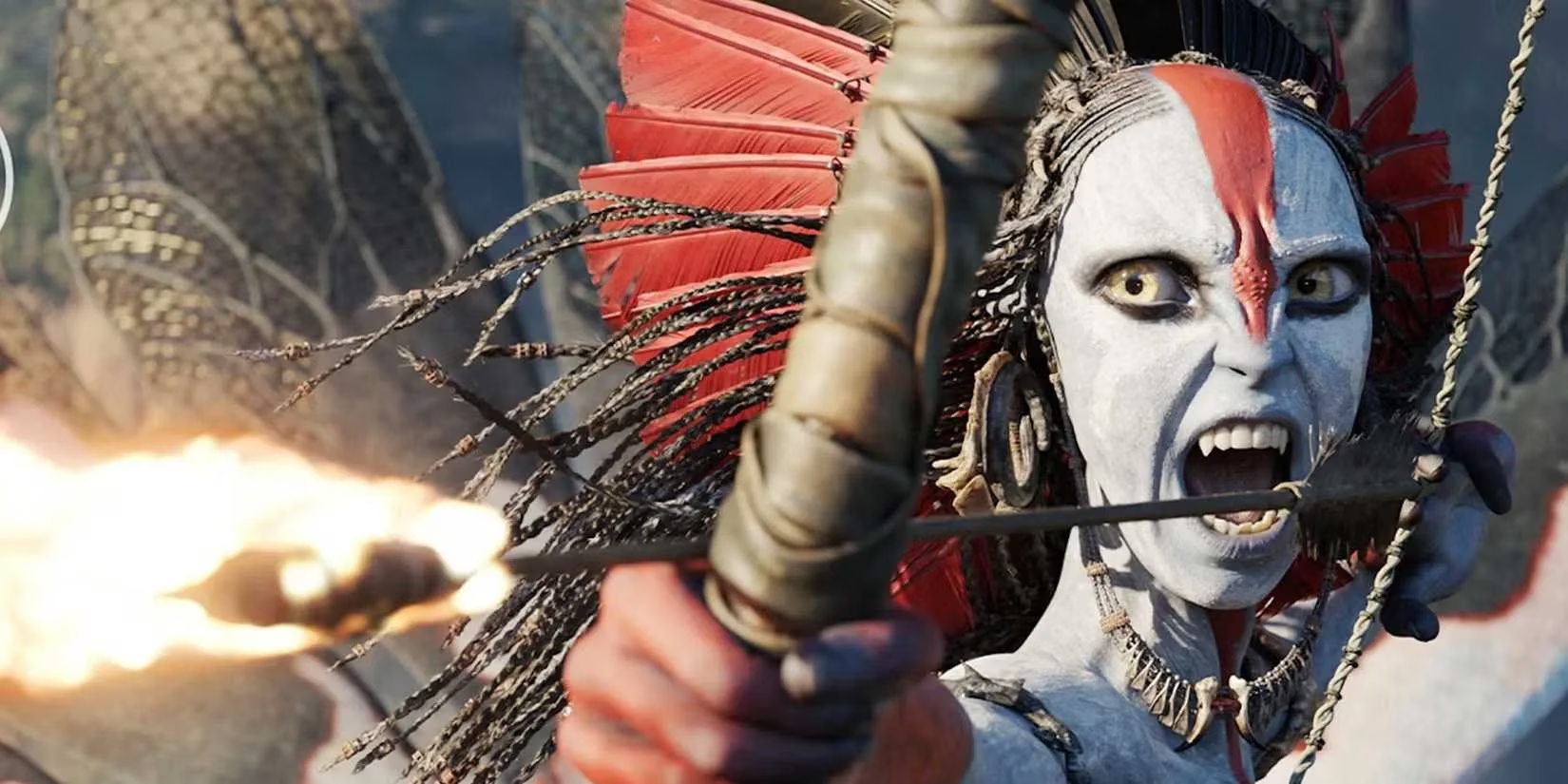
Now, I have to geek out about the future for a second. The final battle in Fire and Ash leaves Quaritch’s fate kinda hanging (no spoilers, but it’s ambiguous), and Varang definitely survives, so the door is wide open for her return. Chaplin said she’d have fought tooth and nail for Varang to stick around regardless, but thankfully it was already baked into the script. She even joked about playing her in Avatar 4, 5, 6, 7, 8, and 9—and honestly, I’m all for it. Imagine Varang over multiple sequels, evolving from a trauma-driven warlord into something even more complex. There’s already an interesting evolution set up for the Ash People and their role in the epic Pandora arc. Parts of Avatar 4 have been shot, and Chaplin is coy about whether she’s in that footage, but you just know there’s cool stuff coming. She teased “so many cool possibilities moving forward,” and my brain is already spinning theories.
The thematic depth here is what’s really sticking with me. Varang isn’t just another obstacle for Jake and Neytiri—she’s a dark reflection of what they could become if they let their grief and rage consume them. Jake and Neytiri are mourning their eldest son in this movie, and you can practically feel the rage simmering under Neytiri’s skin. Varang is the result when that fury takes the wheel. Chaplin even called her “a warning for what happens when you let hatred become your coping mechanism.” That’s heavy stuff, man. It makes me look back at my own life and think about the times I’ve clenched my fists instead of opening my hands.
If you haven’t seen Avatar: Fire and Ash yet, I can’t recommend it enough—it’s a solid 9 out of 10 in my book, and with a runtime of 197 minutes, you’d better buckle up. The Ash People and their ash-choked, volcanic landscape add a gritty new flavor to Pandora that we’ve never seen before. And Varang, with her piercing stare and uncompromising leadership, is the heart of that darkness. So here’s hoping Cameron keeps bringing her back, because I am absolutely here for this fractured, furious queen. Who knew a disillusioned Na’vi could make me root for the bad guys so hard? Crazy times, y’all. Crazy times.